
You Don’t Need More Time—You Need This System

Ever catch yourself thinking, “If I just had more time…”?
It’s one of the most common thoughts I hear from ambitious women. You’re juggling a full life, big dreams, and endless to-dos—and it can feel like time is always slipping through your fingers. But here’s the truth: You don’t need more time. You need a better plan.

Feeling overwhelmed doesn’t mean you’re behind.
It means your priorities aren’t clear, and your energy is being pulled in too many directions. The good news? There’s nothing wrong with you. You’re not lazy or scattered. You just haven’t been given a system that truly supports the way your mind, energy, and life actually work.

In this post, I’m going to show you exactly how to reset—without adding more to your plate.
We’ll walk through a 5-part functional planning method that helps you take aligned action, stay consistent, and create space for what matters most. This is the same system I use to run a business, manage my home, and pursue my goals without burning out.

Let’s shift the way you think about time—because when you have a system that works, your time starts working for you.

What Really Causes Overwhelm

We often think we’re overwhelmed because there’s just too much to do. But the real cause is deeper—and far more solvable. Overwhelm is usually a result of mental clutter, poor prioritization, and lack of structure. Let’s unpack that.

1. Mental Clutter

When your mind is filled with a running list of tasks, ideas, reminders, and worries, it’s nearly impossible to focus. Your brain isn’t meant to be a storage unit. Without a system to capture and organize your thoughts, your mind stays in a loop of stress and reactivity.

2. Poor Prioritization

If everything feels equally important, nothing truly gets the attention it deserves. We get stuck in busywork, checking boxes that don’t move the needle. The result? We feel exhausted, yet still unfulfilled.

3. Lack of Structure

Without a clear structure for your day or week, you end up reacting to what’s urgent instead of acting on what’s important. Your energy gets drained by constant decision-making and context-switching.


Overwhelm doesn’t mean you’re failing—it’s just feedback.
It’s your mind and body’s way of saying, “I need more clarity. I need a system that supports me.” And that’s exactly what we’re going to build next.

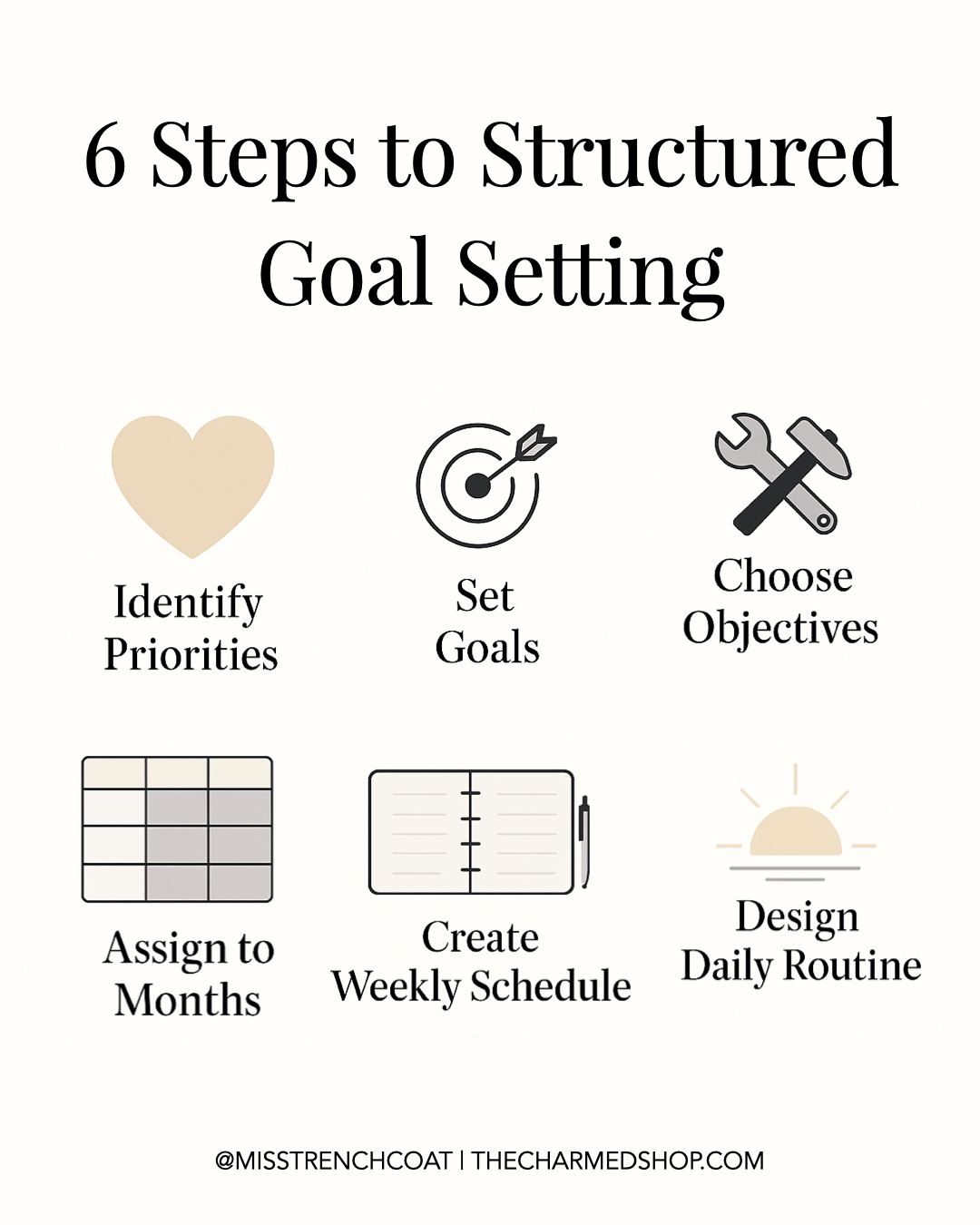
The 5-Part Planning System That Changes Everything

When you’re clear on your priorities and have a structure that supports your energy, you don’t need more time—you just need a better system. This 5-part planning method is simple, strategic, and designed to help you create consistency without overwhelm.

Let’s walk through each step so you can implement it today.


1. Capture Everything 🧠

The first step is to clear the mental clutter by capturing everything—every task, idea, commitment, or reminder swirling in your head. Think of this as your brain’s offloading process. Until your mind is clear, it’s nearly impossible to focus or make aligned decisions.

Here’s how to do it:

  • Set a timer for 10–15 minutes.
  • Grab a notebook, planner, or digital notes app.
  • Write down everything—work tasks, personal errands, emails to send, ideas you’ve been sitting on, even worries or reminders.

This process gives you a realistic picture of your current bandwidth and relieves your mind from holding onto details it doesn’t need to.

Prompt: What’s been weighing on my mind lately that I haven’t given myself space to fully acknowledge?

💡 Pro tip: Keep a dedicated “inbox” section in your planner to add new thoughts or to-dos throughout the day. That way, you’re not constantly switching focus just to remember something.

2. Clarify Your Top Priorities 🎯

Once you’ve captured everything, the next step is to bring order to the chaos. Not every task on your list is created equal—and treating them that way is a fast track to burnout. To move forward with focus, you need to get clear on your Top 3 Priorities each day.

These are your non-negotiables—the tasks that, if completed, will create real momentum toward your goals.

Here’s how to clarify them:

  • Review your captured list and ask: Which tasks directly support my current goals or responsibilities?
  • Identify the 3 most important items for the day. These are tasks that, if left undone, would create a bottleneck or setback.
  • Everything else can be scheduled, delegated, or deferred.

Use the Urgent vs. Important method as a filter:

  • Important + Urgent: Do these today.
  • Important + Not Urgent: Schedule for later in the week.
  • Not Important + Urgent: Delegate if possible.
  • Not Important + Not Urgent: Let them go.

Prompt: If I could only accomplish three meaningful things this month, what would they be—and why do they matter?

✨ Mindset shift: If everything is a priority, nothing is. Choosing your Top 3 helps you align with what truly matters—and frees you from guilt around doing it all.

3. Create Structure That Supports You 📆

Now that you’ve cleared your mind and defined your top priorities, it’s time to build the container that supports your focus: structure.

Structure doesn’t mean rigidity. It means giving your energy a clear direction. It means designing your time with intention so you can move through your day with flow, not friction.

Here’s how to create supportive structure:

  • Use Time Blocking: Set aside blocks of time for different types of work—admin, creative, deep focus, errands, rest.
  • Create an Ideal Weekly Routine: Map out when you’ll handle recurring responsibilities like content creation, client work, or planning.
  • Theme Your Days: Give each day a focus to reduce decision fatigue. For example: Monday = Admin, Tuesday = Deep Work, Wednesday = Meetings.

🎯 Goal: Let your calendar reflect your values. If rest, creativity, or deep work matter to you, give them a home in your week.

Prompt: What kind of weekly rhythm would support my energy, creativity, and wellbeing right now?

💡 Pro tip: Start small. Even a single 90-minute block each day for focused work can transform your productivity.

Structure isn’t about squeezing more into your schedule—it’s about protecting your capacity so you can show up fully where it matters most.

4. Organize by Objective, Not Just To-Do’s 🗂️

Once you’ve created structure, it’s time to shift from reactive task lists to intentional action plans. The difference? A to-do list is just a list of tasks. An objective gives those tasks purpose and direction.

Instead of asking, What do I need to get done?, ask:
What outcome am I working toward?

Here’s how to organize your work by objective:

  • Review your captured list and group tasks that relate to the same outcome.
    • Example: If “launch new product” is the objective, tasks might include writing email copy, updating the sales page, and filming a walkthrough video.
  • Choose 2–3 major objectives to focus on each week.
  • Allocate time blocks in your schedule to work on tasks tied to those objectives.

Why this works:

  • It helps you see the bigger picture and make better decisions about how to use your time.
  • It reduces mental switching and scattered effort.
  • It brings a sense of momentum and accomplishment—not just busyness.

Prompt: What outcomes am I working toward this month, and how can I align my tasks with those bigger goals?

🧠 Mindset shift: Productivity isn’t about how many boxes you check—it’s about whether the work you’re doing is actually moving you forward.

5. Leave White Space 🧘‍♀️

This step is often overlooked—but it’s essential.

White space is the margin in your day that allows you to breathe, reset, and handle the unexpected with grace. It’s not wasted time. It’s restorative time—and it’s a core part of being truly productive.

Here’s how to intentionally leave white space:

  • Schedule it: Block time between meetings or work sessions as buffer space.
  • Protect it: Treat it as sacred as your focus blocks or appointments.
  • Use it wisely: Take a walk, stretch, journal, or simply rest. White space isn’t about doing nothing—it’s about being with yourself without pressure.

The truth is, life rarely goes exactly as planned. White space creates the flexibility and resilience your system needs to keep you grounded, even when things shift.

Prompt: Where in my schedule can I create more margin for rest, joy, or spontaneity—and what might open up for me if I do?

✨ Reminder: You don’t have to earn rest. It’s not a reward for productivity—it’s a requirement for it.

What This System Unlocks for You

When you follow this 5-part planning method—Capture, Clarify, Structure, Organize, and Rest—you’ll feel the shift almost immediately.

✅ Your mind will feel clearer
✅ Your energy will feel more focused
✅ Your goals will feel within reach (not overwhelming)

You’ll finally stop spinning your wheels and start making meaningful progress—without burning out or hustling harder. Because the truth is: You were never behind—you were just missing the system that lets you show up with clarity and intention.


✨ Ready to Build Your Own System?

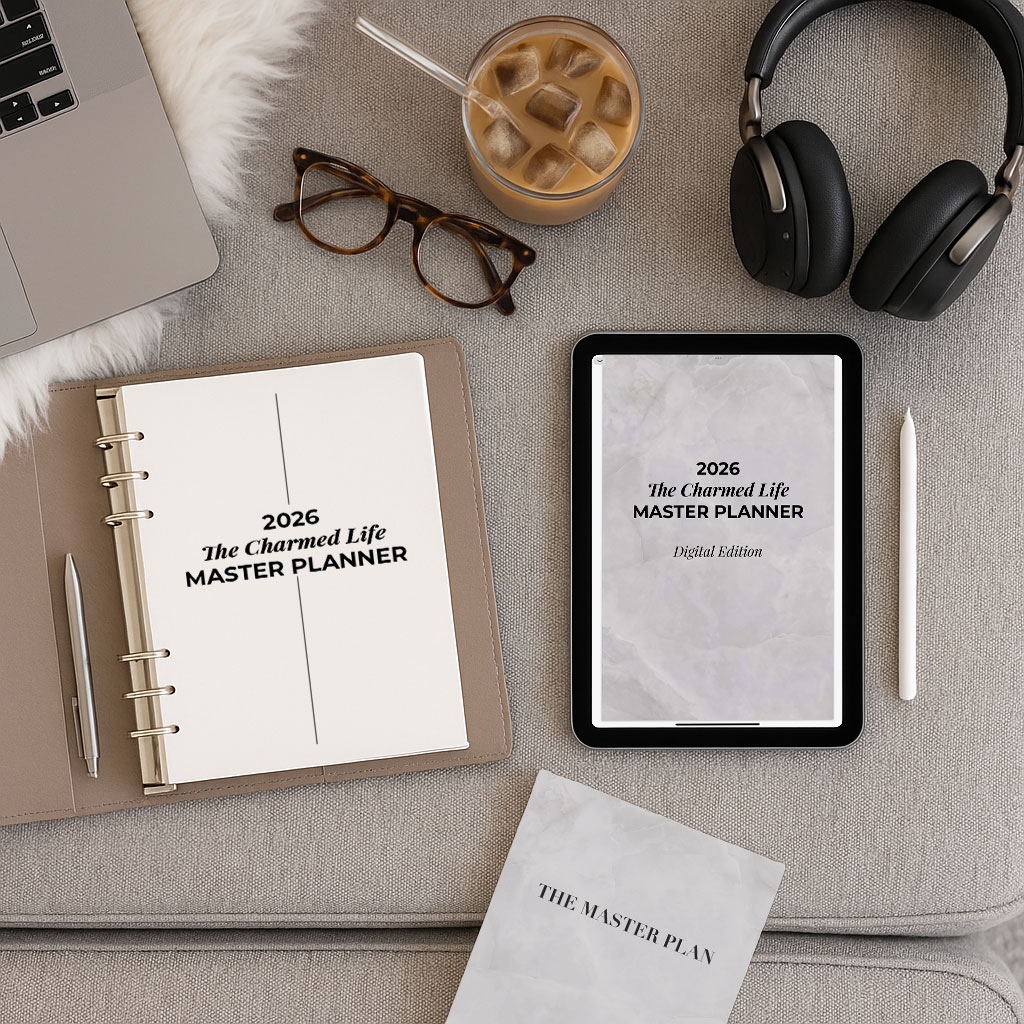
The Charmed Life Master Planner was designed exactly for this. It’s more than a planner—it’s a strategic tool that walks you through each phase of functional planning so you can take aligned action and make space for what truly matters.

For a limited time, use code MasterPlan2026 to get 25% off your copy.

Want a little digital support too? Don’t miss the Functional Planning Dashboard—your digital HQ for organizing tasks, projects, and goals with elegance and ease.

Head to the shop now and start planning like the Well Planned & Productive Woman you were born to be.

xoxo,

10 Ways to Organize Your Life with a Functional Planner

If you’re anything like most of the women in my community, you’re smart, ambitious, and juggling a lot. You’ve got personal goals you want to make progress on, work responsibilities that never seem to end, and a life at home that keeps your heart full—but your hands very, very busy.

You’ve probably tried planners before. Maybe even stacks of them. They were beautiful and full of potential… but none of them ever seemed to work. Not because you failed—but because they were missing something essential: a system.

A system that could hold the complexity of your life. A system that helps you turn your ideas into action. A system that guides you through the real work of getting organized and staying consistent—without burning out.

That’s exactly why I created the Charmed Life Master Planner. It’s more than just a planner—it’s a holistic productivity framework built for women like you. Women who want to do more than survive the chaos of everyday life… you want to design it. Live it. Lead it.

This planner gives you the clarity, structure, and flexibility you need to plan your goals, organize your time, and create a life that feels balanced and fulfilling.

If you’re new to functional planning, I’ve created a free companion resource called the Functional Planning Dashboard—it’s a guided tool to help you start building your own planning system step-by-step.

You can grab that for free right here.

Ready to see how it all comes together?

Here are 10 powerful ways you can use the Charmed Life Master Planner to organize your life with confidence and ease…

1. Define the Vision for Your Year

Without a clear vision, even your most well-intentioned goals can feel scattered, unfocused, and hard to stick to. That’s why one of the first and most foundational steps to organizing your life is to root your goals in your true priorities—what I call your Uppercase-P Priorities.

These aren’t vague categories like “health” or “career”—they’re the real, tangible people, places, and institutions in your life that matter most to you. And the very first priority? You. Because nothing in your life works if you’re not supported, nourished, and well.

Inside the Charmed Life Master Planner, the Goals Page helps you clearly define up to 5 of your personal priorities for the year. For each one, you’ll outline up to 3 specific goals that you want to bring to life. These goals aren’t random tasks—they’re meaningful outcomes that reflect your deeper desires and direction for the year.

Then, using the Vision Board spread, you’ll bring those goals to life in a visual and emotional way. This is more than a pretty collage—it’s a personal manifesto. Fill it with quotes that motivate you, images that capture your dream lifestyle, symbols of strength, rest, abundance, or whatever you’re calling into your life this year.

Example:

  • Priority: You
  • Goal: Run a 5K this year
  • Vision Board: Include an inspiring quote about strength, photos of running shoes, a scenic trail, and your favorite healthy recipes to keep you focused on how it feels to be energized and well.

When your goals are grounded in what matters most and visually reinforced with intention, you’ll feel connected to them—and far more likely to follow through.

2. Forward Plan Your Year

One of the most overlooked productivity habits is forward planning—looking ahead to understand how your year is likely to unfold, so you can make intentional decisions about what fits where. Because here’s the truth: if you don’t proactively plan your time, something else will fill it for you.

Forward planning is about making space in your year for what matters most—before your calendar gets overwhelmed with everyone else’s priorities.

Inside the Charmed Life Master Planner, two key inserts help you take control of your long-term schedule:

  • The Yearly Tracker gives you a bird’s-eye view of the entire year. You can use it to block off time for vacations, family events, work deadlines, content launches, or recurring appointments.
  • The Yearly Overview expands on this by allowing you to track multiple categories of your life—like school schedules, wellness routines, travel, or seasonal cycles (I personally love to track astrological transits here!).

Both spreads are essential for women managing layered responsibilities—whether you’re balancing career projects, family life, or your own creative business.

Example:

  • Use the Yearly Tracker to highlight summer vacation in July, holiday travel in December, and your product launch window in September.
  • In the Yearly Overview, create separate sections to track your partner’s travel schedule, your children’s school events, and your self-care commitments.

This kind of planning not only prevents burnout and scheduling conflicts—it gives you the confidence to say yes (or no) to new opportunities because you’ll know what’s realistic and aligned with your vision.

3. Design Your Ideal Day

When your days feel chaotic or disjointed, it’s often because you’re reacting to life instead of designing it. Productivity doesn’t come from doing more—it comes from creating intentional rhythms that support your energy, your goals, and your wellbeing.

That’s why designing your ideal day is such a game changer. It’s not about building the “perfect” routine—it’s about crafting a flexible structure you can return to when life gets busy and your focus starts to slip.

Inside the Charmed Life Master Planner, the My Ideal Day insert is your space to do exactly that. It includes:

  • A weekday layout with a time-table format—perfect for blocking your workday or planning a high-output day from morning to evening.
  • A weekend layout with flexible boxes—ideal for less structured days when you want a simpler flow without the pressure of a schedule.

Use this spread to build a daily cadence that reflects your priorities. Start by blocking time for the essentials—work, meals, rest—and then layer in space for habits and routines like reading, workouts, creative time, or evening wind-down rituals.

Example:

  • Block 8:00–9:00 AM for your morning routine (journal, tea, movement).
  • Schedule focused work time from 10:00 AM–1:00 PM.
  • Add a walk or rest break around 3:00 PM.
  • In the evening, reserve 8:00–9:00 PM for reading or intentional downtime.

This insert becomes your personal rhythm map—something to ground you when your schedule gets thrown off track and a helpful tool to reflect on how you’re actually spending your time.

4. Build Your Ideal Weekly Schedule

If your days are the building blocks of your productivity, your weeks are the blueprint. While many people try to cram everything into a 24-hour window, the truth is—you don’t need to do it all in one day. You just need to know when things happen in your week.

That’s the magic of designing your ideal weekly schedule.

Inside the Charmed Life Master Planner, the My Ideal Week spread helps you zoom out to see the big picture of how your 168 hours are being used. This layout allows you to:

  • Visualize how your work, rest, and responsibilities are distributed.
  • Identify where your time is leaking.
  • Allocate space for your priorities across a full week.

This isn’t about filling every block. It’s about creating a default rhythm you can return to week after week—so your days aren’t ruled by urgency, but guided by intention.

Example:

  • Block Monday/Wednesday/Friday mornings for focused work.
  • Dedicate Tuesday afternoons to errands or appointments.
  • Reserve Sunday evenings for planning and self-care rituals.

With this kind of weekly map, you no longer feel like you’re constantly starting from scratch. You have a template that supports your goals and adapts with your life—so everything important gets time, without everything happening at the same time.

5. Capture and Prioritize Your Tasks

When your to-do list is overwhelming, it’s usually not because you have too much to do—it’s because you haven’t had the chance to sort through what truly matters. Your brain is overloaded with open loops, and without a system to process them, you stay stuck in reaction mode.

That’s why one of the most empowering things you can do is capture and prioritize your tasks intentionally.

In the Charmed Life Master Planner, this process begins with the Brain Dump insert. Think of it as your mental inbox. This is where every idea, task, obligation, or worry gets written down—freeing up your mind to think strategically instead of just holding on to clutter.

Once you’ve emptied your thoughts onto paper, you’ll move to the Organize & Act spread. This layout guides you through the Eisenhower Matrix, a powerful tool to prioritize your tasks based on urgency and importance:

  • Do Now (urgent + important)
  • Schedule for Later (important but not urgent)
  • Delegate or Systemize (urgent but not important)
  • Delete or Defer (not urgent or important)

Example:

  • Write everything from emails you need to send, errands to run, ideas for your side hustle, upcoming events, and routines you want to build.
  • Then categorize:
    • Urgent: Pay bills, respond to client.
    • Important but not urgent: Start outlining your course.
    • Delegate: Grocery shopping (Instacart).
    • Delete: RSVP to event you no longer feel aligned with.

This insert is a turning point in your planning process—because it takes your swirling mental chaos and turns it into clear, actionable steps. You’ll walk away knowing exactly where your time and energy should go next.

6. Brainstorm Your Brilliant Ideas

Productivity isn’t just about checking off tasks—it’s about giving yourself the time and space to think creatively and strategically. If you’re constantly stuck in execution mode, you miss the opportunity to design better systems, solve problems, or chase bold new ideas.

That’s why brainstorming is a core part of the functional planning process.

In the Charmed Life Master Planner, the Plan & Prep + Brainstorm spread is designed to help you move from raw ideas to structured plans. This two-part insert gives you:

  • A mind map layout to explore your ideas, identify problems, or build out a concept visually.
  • A brainstorm page to organize your final insights into tasks, notes, or next steps.

This is where you get to explore freely before committing to a plan. It’s ideal for content creation, project strategy, decision-making, or anytime you need to see your thoughts take shape.

Example:

  • Let’s say you want to launch a new offer.
    • Use the Plan & Prep section to outline the key pieces: content ideas, tech setup, timeline, audience.
    • Then move to the Brainstorm page to break those down into specific action steps or additional resources you need to gather.

Too many planners skip this part. But you need space to think and be messy before you get organized. This spread ensures that inspiration doesn’t get lost—and that you’re not building plans on unclear ideas.

7. Balance Your Workload

One of the biggest reasons women fall behind on their goals isn’t because they’re unmotivated—it’s because they try to do everything at once. Without a system for pacing your goals across the year, it’s easy to overload yourself in January and burn out by March.

That’s why balance isn’t just a feeling—it’s a strategy. And inside the Charmed Life Master Planner, the Objectives Matrix is your built-in tool to create that balance.

This spread helps you map your objectives—whether they’re projects, systems, or habits—across the full year using a visual grid. You’ll define:

  • Short-term objectives (monthly focus)
  • Mid-term objectives (quarterly goals)
  • Long-term objectives (half- or full-year commitments)

By assigning your objectives in this way, you ensure that your goals are spaced out, manageable, and aligned with the natural rhythm of your year.

Example:

  • January: Start a wellness habit (morning movement),
  • Q2: Launch your new digital product,
  • September: Begin a decluttering project for the home,
  • Ongoing: Weekly family dinners or business admin routines.

This spread gives you peace of mind—because it shows you that yes, you can do it all… just not all at once. It allows you to say no to what doesn’t fit now, knowing it’s scheduled for later. That clarity alone can transform your entire year.

8. Create Strategic Action Plans

Ideas are exciting. Goals are motivating. But what actually gets things done? A strategic action plan.

When it’s time to turn your objectives into results, the Objective Plan insert in the Charmed Life Master Plannerbecomes your roadmap. This spread is designed to help you fully define, structure, and execute your goals in a way that feels focused and doable.

Each plan allows you to:

  • Name the type of objective (project, system, or habit)
  • Describe what you’re doing and why it matters
  • Identify the due date, frequency, or cue for when to act
  • List any resources or tools you need
  • Break the goal into step-by-step actions with due dates
  • Capture notes or related ideas

This approach ensures you’re not just writing “Launch Course” on a to-do list and hoping it gets done. You’re laying out exactly how to make it happen, when to do it, and what it requires.

Example:

  • Objective: Launch a 4-week group coaching program
    • Type: Project
    • Why: To expand your impact and revenue
    • Due Date: April 15
    • Resources: Zoom, email software, sales page
    • Steps: Outline curriculum, create slides, write sales copy, schedule marketing emails

This insert is where dreams become plans—and where clarity becomes progress. Once your objective is mapped out, you can distribute those tasks across your weekly and daily agenda spreads for seamless execution.

9. Focus In on Your Month

Productivity thrives when you have a clear short-term plan. A full year can feel abstract—but 30 days? That’s a manageable container for focused, intentional progress.

Each month inside the Charmed Life Master Planner, you’ll use a combination of spreads to clarify your schedule, organize your tasks, and align your goals:

  1. Monthly Plan (choose from 1-page or 2-page layouts)
  2. Monthly Tasks
  3. Monthly Tracker

Start with your Monthly Plan to map out important dates. Whether you prefer a full 2-page calendar view with room for weekly priorities, or a cleaner 1-page layout with color-coded blocks, you’ll have space to log:

  • Appointments
  • Events
  • Deadlines
  • Holidays
  • Travel
  • Weekly focus goals

Next, use the Monthly Tasks list to identify what you want to complete in this specific month. Pull tasks from your objective plans or brainstorm sessions and park them here so you’re not trying to keep everything in your head.

Finally, track your most important habits and recurring systems using the Monthly Tracker. This spread lets you log:

  • Up to 3 objective-based projects
  • 5 weekly routines (like content creation, laundry, or date night)
  • 6 daily habits (like journaling, water intake, or bedtime routines)

Example:

  • Monthly Focus: Prep for spring launch
  • Key Events: March 5 (webinar), March 18 (trip), March 31 (launch deadline)
  • Tasks: Finalize sales page, test tech, prep emails
  • Tracker: Daily movement, weekly CEO time, progress on launch checklist

Together, these spreads ensure your month isn’t just full—it’s focused. You’ll move forward on what matters, without losing track of your vision.

10. Seize the Day

Productivity doesn’t happen in your planner—it happens in your day. That’s why daily execution is the heartbeat of functional planning. Once you’ve set your goals, mapped your objectives, and planned your month, the final step is to show up each day with clarity and intention.

The Charmed Life Master Planner offers several weekly and daily layout options so you can choose the level of structure that suits your lifestyle. No matter your pace, each layout gives you space to define your top priorities and manage your tasks in a way that actually works for you.

Here’s a quick overview of your choices:

  • WO1P (Week on 1 Page): Minimal structure with a weekly task list, top 3 goals per day, and a “Remember” box for notes or reminders.
  • VWO2P (Vertical Week on 2 Pages): Column-style days with top 3, task lines, and an open box for notes. Great for structured days with a flow.
  • HWO2P (Horizontal Week on 2 Pages): Dashboard with two task lists (business and personal), objectives, reminder boxes, and a weekly habit tracker. Plus a weekly overview with top 3 and space for time block, additional tasks or notes.
  • DO1P (Daily on 1 Page): Full daily breakdown with top 3, a schedule, detailed to-do list, and space for gratitude and daily reminders.

Use these spreads to bring your plans to life. Each morning, check your objectives, identify your Top 3 priorities, and map out your tasks or appointments accordingly.

Example:

  • Top 3: Finish slide deck, follow up with client, schedule Instagram posts
  • Task List: Pack orders, call vet, research CRM tool
  • Schedule: Block 10am–12pm for focused work, 2pm meeting, 4:30pm errands

These layouts turn your planner into your personal assistant. You’re not just reacting to the day—you’re directing it with purpose.

And best of all? When life gets chaotic (because it will), these spreads help you recalibrate quickly. Open your planner, check your priorities, and take one step forward.

Ready to Organize Your Life with a Functional System?

The truth is, staying organized isn’t just about having the right planner pages—it’s about having the right framework. The Charmed Life Master Planner isn’t just a collection of inserts; it’s a complete, proven system that helps you think clearly, prioritize intentionally, and take aligned action.

Whether you’re a solopreneur managing a business, a working mom balancing family logistics, or a multi-passionate woman with big dreams, this planner gives you the tools to plan your life with confidence—not chaos.

And if you want to get a taste of how this functional system works before you dive in, I invite you to download the Functional Planning Dashboard—a free resource that introduces you to the key routines of functional planning and helps you start organizing your life today.

✨ The 2026 Charmed Life Master Planner is now available!
Choose your preferred layout and finally get the structure you need to stay consistent with your goals.

Grab Your Planner Now and Start Building Your Charmed Life! 

Want even more support, accountability, and structure? The Charmed Life Master Mind is the next step in your journey—a private membership filled with live trainings, on-demand resources, and a community of women doing the work alongside you.

Let this be the year you stop trying to manage your life with a half-filled notebook and finally commit to a functional system designed for your success.

xoxo,

Why You Can’t Stick With Planning—And How to Finally Fix It

Why You Can’t Stick With Planning—And How to Finally Fix It

If you’ve ever started the year with the perfect planner, a fresh pen, and high hopes—only to lose momentum a few weeks later—you’re not alone.

So many of us struggle with planning consistently. Not because we’re lazy or disorganized, but because we’ve never been taught how to plan functionally. We’re expected to open up a blank calendar and somehow create structure, progress, and productivity from scratch.

Over the years, I’ve worked with thousands of women who all shared the same frustration: “Why can’t I stick with my planner?”

Through that work, I’ve identified the three most common reasons we fall off our planning routines—and more importantly, I’ve developed a system to fix them.

Whether you’re brand new to planning or have a graveyard of half-used planners in your desk drawer, this post will walk you through exactly what’s getting in your way, and how to make planning a sustainable, empowering part of your life.

💡 And if you’re ready to dive deeper into functional planning, don’t miss the free Functional Planning Dashboard—a downloadable tool that introduces you to the method and helps you implement it in your own life.

Let’s get into it.

🧱 1. You Haven’t Built the Planning Habit (Yet)

Most people don’t realize that planning is a habit, not a personality trait.

You’re not born “good at planning.” It’s not something you either have or don’t have. Like drinking more water, working out, or flossing regularly, planning is a behavior you build over time.

That means it’s completely normal to struggle with consistency at first.
It’s also normal to go through seasons where you’re totally in sync with your planner… and others where it collects dust for weeks.

Falling off isn’t failure—it’s part of the process. What matters most is whether you can pick up where you left off.

🛠️ So how do you actually build the habit?

Here’s what I recommend:

📅 Schedule your planning time.
Add planning to your daily and weekly routines as a non-negotiable appointment with yourself. This can be 10 minutes in the morning to review your day, and 20–30 minutes on Sunday to map out your week.

📲 Set a reminder.
Use your phone or computer to send yourself an alert. You’re more likely to follow through when your tools are helping you stay accountable.

💗 Give yourself grace.
Missed a week? A month? Don’t “start over.” Don’t scrap the entire plan. Just take the next step in your system. Turn the page. Planning is like a book—you don’t go back to chapter one every time you take a break.

“Consistency isn’t about never missing a day. It’s about knowing how to keep going.”

🧠 Functional Planning Supports Habit Formation

When you use a planner that includes built-in routines (like the Charmed Life Master Planner), it actually helps you build this habit more easily.

Instead of wondering what you’re supposed to do, you follow a rhythm. You learn to move through the phases of functional planning: capturing, organizing, and scheduling your tasks in a way that feels natural over time.

This is what makes functional planning different—and why I created the Functional Planning Dashboard as a free tool to help you get started. It introduces you to my 3-phase method and gives you a simple template to implement your first planning habit today.

🔄 2. You Don’t Have a Reliable Planning Routine

Let’s say you do remember to open your planner—but then what?

Do you know what to plan? What to focus on? What’s most important today, this week, or this month?

If you’ve ever found yourself staring at a blank planner page wondering what to write, you’re not alone. One of the biggest reasons people give up on planning is because they don’t have a clear, repeatable routine that guides them.

Instead, they try to figure it out from scratch every time. That’s mentally exhausting—and it’s one of the fastest ways to burn out on planning.

🧠 This is where Functional Planning makes all the difference.

The Functional Planning Methodology is the system I created after years of personal trial, client work, and research. It’s not just about writing to-do lists—it’s about creating a sustainable rhythm for planning your life.

This method gives you a clear structure for what to plan and when to plan it:

📥 Daily: Set your top 3 priorities, schedule your time, and prep for the day ahead
📆 Weekly: Review your accomplishments, reset your priorities, and assign your upcoming tasks
🌙 Monthly: Clarify your focus areas and map your goals
🌱 Quarterly: Set meaningful objectives and break them down into actionable projects and habits

When you use this rhythm consistently, your planner becomes a tool for real progress—not just a place to store reminders.

“A good planning routine doesn’t add work to your day—it organizes the work you already have.”

🧰 Want to start following a reliable planning rhythm?

That’s exactly what the Functional Planning Dashboard was created to help you do. This free download walks you through the 3 phases of functional planning and gives you a simple structure to follow daily, weekly, and monthly—so you never sit down to a blank page again.

And if you want the entire system done for you?
The Charmed Life Master Planner was built around this method. It’s the only planner that doesn’t just help you plan—it teaches you how to think functionally while you use it.

📒 3. You Don’t Have a Functional Planner

Here’s the truth most people don’t realize:

Most planners aren’t actually designed to help you plan.
They’re designed to look pretty, sell quickly, and follow the same old calendar-agenda format that hasn’t changed in decades.

You open them up and find a few monthly spreads, a weekly layout, and maybe a goal page or two if you’re lucky. But where’s the space to:

  • Brain dump all the ideas swirling in your head?
  • Organize your tasks into a step-by-step strategy?
  • Track your progress across long-term projects and goals?

Without that structure, you’re left to figure it out on your own—which means planning feels chaotic instead of clarifying.

“You can’t build a productive life using a planner that only helps you remember, but doesn’t help you think.”

🛠️ That’s Why I Created the Charmed Life Master Planner

The Charmed Life Master Planner isn’t just a set of pages—it’s the only planner built around a complete, proven planning system. It guides you through every phase of the Functional Planning Methodology, helping you:

📥 Capture everything that matters—tasks, goals, ideas, and inspiration
🎯 Set Objectives and map out your priorities with strategy and intention
🗓 Allocate Your Time with smart scheduling tools that align your tasks to your capacity

As you use the planner, you begin to rewire the way you approach your time. You think differently—more clearly, more efficiently, more strategically.

It’s not just planning anymore. It’s functional thinking.

💬 Real Users Say It Best

Don’t just take my word for it—here’s what users of the Charmed Life Master Planner have shared:

“This planner is an absolute necessity. It has helped me plan out projects I thought I would never get around to doing. I’ve struggled with multiple planners, and now I finally feel in control.” — Dominique

“The functionality is unmatched. The system of inserts provides clarity in my daily, weekly, and monthly plans. It’s a game-changer.” — Tonya

“I’ve tried hundreds of dollars’ worth of planners and none of them worked for me—until I found this one. I finally feel like I’m all in.” — Kristie

Whether you prefer a printable planner or a digital one you can carry everywhere, the Master Planner adapts to your life and your style of working. More importantly, it becomes the planning tool that supports your actual growth over time.


🙋‍♀️ How I Stay Consistent With My Planning Routine

Now that we’ve talked about why it’s hard to stick with planning and what you can do about it, I want to share how I personally stay consistent.

Because I’ve been through all the same struggles: skipping weeks, forgetting tasks, and feeling like I was constantly starting over. But once I created the Functional Planning Methodology and built it into my own systems, everything changed.

Here’s what my routine looks like now:

🧭 I follow quarterly and monthly rhythms

Inside my Charmed Life Master Mind, we walk through a full review and reset process every month and quarter. This gives me built-in accountability and helps me course-correct regularly instead of drifting too far off track.

📆 I get weekly reminders

We have a weekly planning post inside our private Slack channel that prompts members (and me!) to review our plans and prep for the week ahead. It’s a small touch—but it keeps planning top of mind and helps the habit stay strong.

🗒 I make planning part of my daily startup routine

Every morning before I dive into work, I sit down with my planner and:

  • Review my schedule
  • Identify my top 3 priorities for the day
  • Make sure I’m aligned with my current goals and objectives

It takes just 10 minutes, but it makes the rest of my day infinitely more focused.

📱 I use tools that support my routine

Right now, I use the digital version of the Charmed Life Master Planner on my iPad Pro. It’s synced across my devices so I can access it anytime, anywhere. But for years I used (and loved) the printable version—and I still recommend it if you prefer pen and paper!

✨ The key isn’t using a “perfect” planner—it’s having a system that makes planning easier to stick with. And that’s exactly what the Charmed Life Master Planner does for me.

🎯 Wrapping Up: Planning Gets Easier When You Have the Right Tools

If you’ve ever struggled to stay consistent with your planner, it’s not a personal failing—and it doesn’t mean you’re not a “planner person.”

You probably just haven’t had the right combination of habit, routine, and tools to support you.

To recap:

🧠 You need a planning habit that’s built into your daily and weekly routines.
🔁 You need a reliable planning method that guides you on what to plan and when.
📒 And you need a functional planner that gives you space to think, organize, and track your life—not just record random reminders.

When you start using a system that reinforces these three things—like the Functional Planning Methodology—you build momentum. You begin to think more strategically, plan more effectively, and move through your days with more intention and clarity.

And the best part? It gets easier over time.


Ready to take the next step?

Start with the free Functional Planning Dashboard—it’s a simple, beautifully designed tool that introduces you to my method and helps you set up your first functional routine today.

If you’re ready to go deeper, the Charmed Life Master Planner is the full system I’ve designed to help you become not just more organized, but more empowered in how you use your time.

And if you’d love support and accountability along the way, join me inside the Charmed Life Master Mind. That’s where the real transformation happens—through guided routines, coaching, and community.
Here’s what members are saying:

“Alexis gives 110%, and you get so much more than you expect.” — C.L.

“I’m no longer afraid to plan—I’m excited!” — D.T.

“It’s amazing to be part of a group where metaphysics and intuition are valued alongside productivity.” — R.M.

Whether you’re rebuilding your routine or starting fresh, everything you need to make planning a powerful part of your life is already here.

✨ You just have to begin.

xoxo,

3 Things You Actually Need to Turn Your Year Around in Just 6 Months

You’re Not Behind — You’re at the Turning Point

It’s July. You might feel behind, overwhelmed, or like the year has slipped through your fingers. Maybe you had big goals in January that somehow got buried under the weight of daily life. Maybe you’ve been stuck in survival mode, or chasing your tail with no real traction. If that’s you, take a deep breath — and know that you’re not alone.

Here’s the truth: you’re not behind. You’re simply at the turning point.

The second half of the year isn’t about catching up — it’s about choosing a new path forward. One with clarity. One with strategy. One with the kind of support that keeps you moving when motivation fades.

Because in just six months, your entire life can look different.

You can build a routine that supports your wellbeing. You can finally make progress on that goal that’s been lingering in the back of your mind. You can wake up in December feeling proud, grounded, and clear — instead of exhausted and regretful.

Real change doesn’t require a miracle.
It requires a plan.

Why 6 Months of Focus Works

Six months might not sound like much — but it’s more than enough to completely change your life when you show up with intention.

In fact, science supports this. Studies show it takes an average of 66 days to build a new habit — not a lifetime, not a year, but just over two months of consistent, focused effort. And thanks to neuroplasticity, your brain is wired to change — to build new pathways, reframe old patterns, and adopt more empowering behaviors, especially when reinforced with repetition and structure.

In six months, you can:

  • Build a solid foundation for your business
  • Establish a healthier lifestyle and sustainable wellness routines
  • Get your finances in order and begin building real security
  • Design and stick to a daily schedule that prioritizes what matters most
  • Reconnect with your purpose — and begin acting on it

And I’ve seen it happen firsthand.

One master mind member, Veronica, had been thinking about launching her first in-person retreat for her business — but she wasn’t sure she could actually implement it. During one of our group coaching calls, we talked through her vision, and she realized she’d been overthinking and overcomplicating the entire idea. Once she had clarity on a simple, actionable way to bring it to life, she moved quickly — and had sign-ups almost immediately.

That’s the power of focused momentum.

With the right plan and support, 6 months is more than enough to change your life.

You don’t need more time — you need to use the time you already have differently. That shift starts with how you plan it.

KEY 1: Structure → The Right Planner

Trying to change your life without structure is like trying to build a house with no foundation. You start, stop, and scramble — chasing scattered to-do lists, missing appointments, losing momentum. Days blur together. Time leaks. Goals slip through the cracks.

That’s where the Charmed Life Master Planner comes in.

This planner isn’t just a calendar — it’s a complete planning system designed to help you hold the vision, stay focused, and simplify your life. Whether you’re mapping out your week, time blocking your days, tracking habits, or setting meaningful goals, this is the tool that keeps it all aligned.

Another member, Jennifer, shared that after struggling for years to keep up with her classes, she changed her planning systems using the Master Planner — and it made all the difference. For the first time, she was able to take on a full course load, pass her classes, and raise her GPA.

This planner isn’t a notebook. It’s your foundation — a clear, flexible structure to carry your goals from idea to reality.

🔗 [Link to planner]

KEY 2: Strategy → The Right System

Most women don’t fall off track because they’re lazy — they fall off because they don’t have a system. They don’t know how to break down their goals, how to stay on course, or how to recover when life gets messy.

That’s why I created the Charmed Life Master Mind — a guided path that gives you step-by-step planning support, with live accountability and coaching throughout the month.

Inside, you’ll find planning calls, monthly masterclasses, goal review sessions, and an ever-growing library of tools to help you stay on track — not just for a week, but for the long game.

One member, Luisa, had long struggled with the disconnect between what she knew she needed to do to stay on track — and actually doing it. But after joining the Master Mind, the structure and accountability of the live calls helped her finally implement the systems that work for her. With that consistent support in place, she followed through on one of her biggest dreams: she wrote and self-published her first book on Amazon this year.

You don’t have to figure everything out on your own anymore. We’ll take it one week, one plan, one quarter at a time — together.

You don’t need to DIY your growth anymore. Inside the Master Mind, I’ll guide you through each month, each quarter — step-by-step. All you have to do is show up.

🔗 [Link to Master Mind]

KEY 3: Support → The Right Mentorship

Sometimes you know you’re meant for more — but the how keeps getting in the way. You start, stop, overthink, research, and scroll… but never quite move forward. Not because you’re not capable, but because the path feels too unclear — or too complicated to follow alone.

That’s where The Well Planned and Productive Woman Private Coaching comes in.

This is high-touch, personalized support for the woman who’s ready to move from spinning to streamlined — fast. Sometimes, you don’t need another course or more time. You need clarity, strategy, and someone to walk you through a plan that works for your life.

One of my private clients, Ximena, had been trying to start her own business for years. She dreamed of writing and inspiring others, but found herself stuck — overwhelmed by the pressure to keep up with a blog, Instagram, an email list, and everything else that comes with being visible online. She wasn’t even sure what she was going to sell, and the constant research and indecision kept her from taking action.

After a private coaching session, we mapped out a simple and strategic plan: she’d launch a Substack newsletter to serve as both her blog and email platform, and repurpose that content onto Instagram with ease. This streamlined her entire content strategy, solved her time and task overwhelm, and gave her a clear path forward to start earning income.

She didn’t need a year — or even six months. She just needed clarity and support. And within a few weeks, her new platform was up and running.

If you’re ready to go deeper — to move quickly and powerfully toward the life you’ve imagined — this is for you. You bring the vision. I’ll help you make it real.

🔗 [Link to coaching]

Your Mid-Year Reset Plan

So now that you know change is possible — and that structure, strategy, and support are the keys — let’s talk about how to actually reset your year from where you are right now.

You don’t need to wait for January. You don’t need to overhaul your entire life. You just need to pause with intention and create a new plan for how you want to move through the rest of the year.

Here’s a simple 5-step Mid-Year Reset Ritual you can do this week:

1. Reflect: What’s worked so far?

Take stock of the first half of the year. What routines, decisions, or habits made you feel like your best self? What moved you forward — even a little? Keep those.

2. Release: What’s no longer serving you?

Let go of what isn’t working — outdated goals, draining commitments, overcomplicated routines. Simplify. Create space.

3. Recommit: What actually matters to you right now?

Choose 1–3 key focus areas for the rest of the year. These could be personal, professional, wellness-based — anything that feels aligned and meaningful.

4. Restructure: Design a weekly routine that supports your goals

Create a sustainable structure that reflects your real life. Block time for what matters most. Build in rest. Protect your energy. If you need a tool to help you build this out, the Charmed Life Master Planner is designed for exactly this.

5. Receive: Say yes to the support that will carry you forward

Decide: What kind of support do you need in this season?

  • Do you need a functional planning system to stay on track?
  • A community and strategy framework to help you stay accountable?
  • Or 1:1 coaching to create a fast, personalized action plan?

Give yourself permission to not do this alone.

A reset doesn’t mean you have to start over. It just means you begin again — but this time, with intention and alignment.

And six months from now?
You could be holding your finished book.
Running the business you’ve only dreamed of.
Resting in a life that feels like yours again.

The next six months are going to pass either way.
Let’s make them count.

The Next 6 Months Are Yours to Claim

You’re not behind — you’re at the beginning of something new.

With six months left in the year, you have more than enough time to shift your habits, simplify your routines, and finally bring your goals to life. But you don’t have to do it alone, and you don’t have to figure it all out from scratch.

Whether you’re craving structure, needing a system, or ready for high-level support, the tools are here:

  • The Charmed Life Master Planner will help you plan with clarity and follow through with ease.
  • The Charmed Life Master Mind will walk you step-by-step through each month and quarter so you can stay focused and accountable.
  • And private coaching through The Well Planned and Productive Woman will give you the clarity, direction, and personal support to move fast and confidently toward what you want most.

You already have the desire. You already have the dream.
Now it’s time to create the plan — and walk it forward.

Because six months of focused, aligned action?
It can change everything.

xoxo,

5 Signs Your Planner Isn’t Working (And What to Do About It)

Are you using a planner but still feeling behind? You’re not alone.

Many people invest in planners hoping to get organized, stay on top of their tasks, and finally feel in control of their time. But what happens when your planner… just doesn’t work?

In this post, we’re breaking down the five most common signs your planner isn’t working — and what you can do to fix it.


Why Your Planner Might Not Be Working

A planner should be more than a notebook or calendar. Ideally, it should help you:

  • Stay focused
  • Prioritize your time
  • Manage projects and goals
  • Build daily and weekly routines

But most planners on the market don’t do that. They give you blank boxes and call it productivity. The result? You’re still overwhelmed, still disorganized — and feeling like the planner is more of a burden than a tool.

Let’s look at the key signs your planner is part of the problem.


1. You Feel Disorganized

You’ve got a planner — maybe even a beautiful one — but you don’t use it consistently. Or you sit down to plan and feel stuck. Your life still feels chaotic.

Why this happens:
Most planners give you pages to fill but no clear process. You’re expected to know how to turn scattered thoughts into a structured plan — with no guidance.

The solution:
Implement functional planning routines. A good planner should guide you step-by-step so that planning becomes automatic and helpful — not another to-do on your list.


2. You’re Always Running Late

If you’re constantly forgetting appointments, showing up late, or scrambling at the last minute, your planner might not be helping you visualize your schedule effectively.

Why this happens:
Your planner likely doesn’t give you enough space to lay out your day or plan ahead meaningfully. You’re not able to seeyour time, so it slips away.

The solution:
You need a planner that allows you to block time, track appointments, and clearly lay out your schedule. Visibility leads to preparation — and peace of mind.


3. You Struggle With Consistency

Do your days feel like a constant reset button? You wake up unsure what to do and spend more time figuring out your day than living it.

Why this happens:
Your planner isn’t helping you build routines. Without structure, you’re reacting to your day rather than leading it.

The solution:
Look for a planner that supports daily and weekly routines — something that brings rhythm to your days so you can build momentum over time.


4. You’re Always Putting Out Fires

Missing deadlines? Rushing to finish things at the last minute? Constantly feeling behind?

Why this happens:
Your planner doesn’t support task prioritization. You may be listing things, but you’re not identifying what’s urgent or important — so things fall through the cracks.

The solution:
Choose a planner that lets you capture all your tasks, sort them strategically, and prioritize what matters most. That way, you’re ahead of deadlines instead of reacting to them.


5. You’re Out of Time for What Matters

You’ve got big ideas and goals… but somehow no time to work on them. Life is full, but it’s not moving in the direction you want.

Why this happens:
Your planner is likely functioning as a basic calendar — not a productivity system. It’s not helping you optimize how you use your time.

The solution:
A functional planner should help you capture, organize, and prioritize. With the right structure, you can reclaim time for your passions, goals, and personal priorities.


Does Using a Planner Really Make You More Productive?

Yes — but only if it gives you a system.

Here’s what most store-bought planners provide:

  • Calendar spreads
  • A to-do list section
  • A few blank pages for notes

What they don’t give you:

  • ✅ Task prioritization tools
  • ✅ Space for idea development and brainstorming
  • ✅ Project planning templates
  • ✅ Goal mapping over time
  • ✅ Support for building habits and routines

A planner without a strategy won’t help you manage your time or progress toward your goals.


Introducing the Charmed Life Master Planner

When I realized these gaps, I created something better — the Charmed Life Master Planner.

It’s the first Functional Planner designed to help you do more than track appointments. It gives you a complete productivity system built around a proven framework.

✅ Phase 1: Capture Brilliant Ideas

  • Brain dumps
  • Brainstorm pages
  • Space for clarity and prioritization

✅ Phase 2: Organize Your Work

  • Project trackers
  • Goal planning templates
  • Yearly vision mapping

✅ Phase 3: Track and Allocate Your Time

  • Daily, weekly, and monthly spreads
  • Habit trackers and routines
  • Strategic space to focus your energy

With over a dozen thoughtfully designed inserts, this planner is built to help you plan smarter, not harder.


Ready to Plan Smarter?

If any of these signs resonated with you, it might be time for a different approach.

✨ Discover the Charmed Life Master Planner — your partner in turning ideas into action.

✨ Not quite ready to switch planners?
Start with my free Functional Planning Dashboard — a simple worksheet that teaches you the three-phase system and helps you start planning more effectively right away.

👉 [Download the Functional Planning Dashboard Here]

Your most productive year starts with the right system — and it can start today.

xoxo,

Checklist: Prepare for a Productive Night Watch

Waking up in the middle of the night can feel frustrating—unless you learn to work with your body’s natural rhythm instead of against it. If you experience biphasic sleep (sleeping in two phases with a wakeful period in between), you can turn your Night Watch into a productive, peaceful, and even enjoyable experience.

The key? Preparation.

By setting yourself up for success before bedtime, you can make your wakeful period feel intentional rather than disruptive. Use this checklist to create a calm, structured, and productive Night Watch routine that works for you.


Prepare for a Productive Night Watch Checklist

1. Keep a Notebook or Planner by Your Bed

How often do you wake up in the middle of the night with a brilliant idea—only to forget it by morning? 🤯

Having a notebook or planner nearby makes it easy to:
✅ Capture ideas before they slip away
✅ Brain dump thoughts that might be keeping you awake
✅ Outline a plan for the next day

This simple habit clears your mind and helps you transition back to sleep more easily.


2. Have a Soft, Warm Light Source Nearby

Turning on bright overhead lights in the middle of the night can make it harder to fall back asleep. Instead, use:
💡 A dimmable lamp
🕯️ A Himalayan salt lamp
🕯️ A candle (if safely monitored)
📖 A book light for reading

Soft lighting keeps your space cozy and signals relaxation rather than alertness.


3. Choose a Calming, Quiet Activity Ahead of Time

When you wake up at night, it’s easy to reach for your phone and start scrolling—but that often leads to overstimulation and frustration.

Instead, have a pre-planned activity ready to go, such as:
📖 Reading a book (fiction or self-development)
📝 Journaling or gratitude writing
🎧 Listening to a guided meditation or soothing music
🧘‍♀️ Doing light stretching or yoga

Choosing your activity ahead of time helps eliminate decision fatigue and ensures your Night Watch is peaceful and intentional.


4. Keep a Cozy Blanket or Robe Ready

You don’t want to spend your Night Watch shivering! Keep a warm blanket, plush robe, or fuzzy socks within reach.

Staying comfortable and cozy helps you:
✅ Feel relaxed instead of restless
✅ Enjoy your wakeful time rather than rushing back to bed
✅ Transition back to sleep more easily when ready


5. Set a Gentle Reminder That Waking Up Is NORMAL

One of the biggest mindset shifts you can make is realizing that biphasic sleep is completely natural. Instead of panicking when you wake up, remind yourself:

💭 “This is normal, and I can use this time wisely.”
💭 “I don’t need to force myself back to sleep—my body will naturally rest when it’s ready.”
💭 “I can enjoy this peaceful time instead of stressing about it.”

Having this perspective eliminates sleep anxiety and allows you to embrace your Night Watch as a unique part of your productivity and self-care routine.


Final Thoughts: Set Yourself Up for Success

Your Night Watch doesn’t have to feel like an inconvenience—it can be a peaceful, productive, and even enjoyable part of your sleep cycle. By preparing ahead of time, you’ll eliminate frustration and make the most of your wakeful hourswithout disrupting your rest.

📝 Quick Recap:
✅ Keep a notebook or planner nearby
✅ Use soft, warm lighting
✅ Pre-select a quiet activity
✅ Stay warm with a cozy blanket or robe
✅ Shift your mindset—biphasic sleep is normal!

The next time you wake up in the middle of the night, embrace it instead of resisting it—and watch how much calmer and more productive you feel.

💬 Do you experience a Night Watch period? How do you spend your time when you wake up at night? Let me know in the comments! ⬇️

xoxo,

25 Productive Things to Do During Your Night Watch (That Take 2 Hours or Less)

Waking up in the middle of the night doesn’t have to be frustrating—it can actually be a golden opportunity for quiet, uninterrupted time. If you experience biphasic sleep (sleeping in two phases with a wakeful period in between), you can use this time for something meaningful rather than lying in bed, stressing about lost sleep.

Here are 25 productive ways to spend your “Night Watch” period, all of which take two hours or less and can help you feel accomplished before you even start your day!


Creative & Reflective Activities

If you find your mind buzzing with ideas during the night, use that energy to create and reflect.

  1. Journaling – Free-write your thoughts, emotions, or dreams.
  2. Brainstorming – Jot down new ideas for projects, goals, or problem-solving.
  3. Writing – Draft a blog post, personal essay, or even a book chapter.
  4. Doodling or Sketching – Tap into your creative side by drawing or mind-mapping.
  5. Planning Your Day or Week – Outline your tasks and goals to set yourself up for success.

Self-Care & Mindfulness

Your Night Watch can be the perfect time to nurture your mental and emotional well-being.

  1. Meditation – Listen to a guided meditation or practice mindful breathing.
  2. Gratitude Practice – Write down things you’re grateful for to cultivate positivity.
  3. Breathwork Exercises – Try deep breathing techniques to calm your nervous system.
  4. Self-Massage or Gua Sha – Relieve tension and improve circulation with gentle self-care.
  5. Tea Ritual – Make a warm herbal tea and sip it mindfully in silence.

Learning & Growth

Use this quiet time to expand your knowledge and skills.

  1. Read a Book – Fiction, non-fiction, personal development—whatever inspires you.
  2. Listen to an Audiobook or Podcast – Absorb new ideas while lying comfortably.
  3. Study a New Language – Practice vocabulary or listen to language lessons.
  4. Take an Online Course – Watch a short class on a topic that interests you.
  5. Read a Thought-Provoking Article – Learn something new and take notes on key insights.

Household & Organization Tasks

Small, quiet tasks can help you feel productive without disrupting the household.

  1. Fold Laundry – Get a head start on your chores by tackling laundry.
  2. Declutter a Small Area – Organize your bedside table, closet, or junk drawer.
  3. Plan Your Meals – Write out a meal plan or prep ingredients for the next day.
  4. Tidy Up a Space – Do light cleaning like wiping down counters or clearing surfaces.
  5. Sort Emails & Digital Files – Organize your inbox, delete old emails, or declutter digital folders.

Gentle Movement & Body Care

Low-impact movement can help you feel refreshed without overstimulating your body.

  1. Stretching Routine – Loosen up tight muscles with gentle nighttime stretches.
  2. Yoga – Try a short restorative or yin yoga session.
  3. Short Walk Indoors – Walk around your home to get light movement in.
  4. Foam Rolling – Release muscle tension with gentle rolling exercises.
  5. Progressive Muscle Relaxation – Tense and relax different muscle groups to promote relaxation.

Final Thoughts

Instead of fighting your natural sleep rhythm, lean into it and make the most of your wakeful period. Whether you choose to create, reflect, learn, organize, or relax, the goal is to use this time intentionally—without guilt or stress.

So the next time you find yourself awake at 2 AM, try one of these activities, embrace your Night Watch, and wake up feeling more accomplished than ever!

💬 What’s your go-to activity when you wake up in the middle of the night? Let me know in the comments!

xoxo,

A Sleep Strategy to Improve Your Productivity

We all know that getting enough sleep is essential for maintaining our energy levels and, ultimately, our productivity. But what happens when your sleep is interrupted? If you’re someone who wakes up in the middle of the night and struggles to fall back asleep, you might think you have a sleep problem—but what if that’s not actually the case?

Instead of fighting against your natural rhythm, there’s a way to work with it. The idea that we need a full, uninterrupted eight hours of sleep is actually a relatively modern concept, developed during the Industrial Revolution. Historically, humans followed a biphasic sleep pattern—sleeping in two distinct phases with a period of wakefulness in between.

In this post, I’m going to share how understanding this natural sleep cycle can help you feel more energized and even use your nighttime wakefulness as a productivity advantage. If you’ve ever found yourself wide awake at 2 AM with ideas buzzing in your mind, this strategy may be exactly what you need to turn a frustrating sleep pattern into a powerful tool for getting more done.

Understanding Interrupted Sleep: A Common Pattern

Have you ever woken up in the middle of the night—completely alert and unable to fall back asleep? It’s not the groggy kind of wake-up where you roll over and drift off again. Instead, you feel awake, like your brain is ready to start the day, even though the clock says it’s the middle of the night.

For many women, this kind of interrupted sleep can feel like a problem—something to be fixed. We assume that because we didn’t sleep straight through the night, we must be doing something wrong. We try different sleep hacks, force ourselves to stay in bed, or reach for a book in hopes of lulling ourselves back to sleep.

But what if this isn’t a problem at all? What if waking up in the middle of the night is completely normal?

For a long time, I struggled with this kind of interrupted sleep. I would fall asleep easily, get about four solid hours, and then wake up feeling completely awake. Sometimes I’d read, scroll on my phone, or even get up and work on creative projects before going back to bed for another three or four hours. At first, I thought this was a frustrating sleep issue, but after doing some research, I discovered that this pattern has been part of human history for thousands of years.

Rather than fighting against this natural rhythm, I realized that I could lean into it—using my wakeful period intentionally instead of seeing it as a disruption. If you’ve ever experienced something similar, you might not need to fix your sleep at all. Instead, you may need to rethink how you use your night watch time.

The Science Behind Sleep Cycles

To understand why waking up in the middle of the night isn’t necessarily a bad thing, we need to take a closer look at how sleep actually works.

Our sleep is structured around REM cycles, which last approximately 90 to 120 minutes. When we fall asleep, our body moves through different sleep stages, with REM (Rapid Eye Movement) being the deepest and most restorative phase. Completing a full REM cycle helps us wake up feeling refreshed, while waking up in the middle of a cycle often leaves us feeling groggy and disoriented.

This explains why many people who experience interrupted sleep wake up feeling fully alert. If you naturally wake up after about four hours, it’s likely because you’ve completed a full sleep cycle—meaning your body isn’t struggling to stay asleep, it’s actually following a natural rhythm.

But here’s where things get really interesting: The idea that humans are supposed to sleep for a solid eight hours straight is a relatively new concept. Historical records and scientific research show that biphasic sleep—or sleeping in two distinct phases—was actually the norm for most of human history.

For thousands of years, people went to sleep for a few hours, woke up for a period of time, and then went back to sleep for another cycle. This period of wakefulness, known as “The Watch,” was often used for reflection, quiet activities, or even socializing. It wasn’t until the Industrial Revolution that the idea of an uninterrupted eight-hour sleep became widespread, largely due to the demands of factory work and structured work hours.

So if you’ve been struggling with interrupted sleep and feeling like something is wrong with you, take comfort in the fact that your body might actually be doing exactly what it’s designed to do. Instead of forcing yourself back to sleep, what if you embraced this wakeful period and made it work for you rather than against you?

Embracing the Biphasic Sleep Strategy

If you naturally wake up in the middle of the night, the key is to stop seeing it as a problem and start seeing it as an opportunity. Instead of lying in bed frustrated, trying to force yourself back to sleep, you can work with your body’s natural rhythm and use this wakeful period to your advantage.

1. Shift Your Perspective

The first step is understanding that biphasic sleep is normal. If your body naturally wakes up after a few hours of sleep, that doesn’t mean you have insomnia or a sleep disorder. It’s a completely natural pattern that has been followed for thousands of years.

Rather than resisting it, embrace it. This simple mindset shift—going from “I have a sleep problem” to “This is how my body works”—can completely change how you experience sleep.

2. Plan for Your Wakeful Period

Once you accept this rhythm, you can begin to use the wakeful period intentionally. Instead of tossing and turning, try engaging in activities that feel calming, fulfilling, or even productive. Some ideas include:

  • Journaling or Brainstorming – Capture ideas, reflect on your day, or plan out your goals.
  • Reading or Learning – Read a book, study, or listen to an educational podcast.
  • Meditation or Breathwork – Use this time for quiet reflection, breathwork, or guided meditation.
  • Gentle Movement – Try light stretching, yoga, or even a short walk indoors.
  • Small Household Tasks – If it doesn’t disturb others, fold laundry, tidy up, or prep meals for the next day.

3. Use This Time to Your Advantage

Think about the things you never seem to have time for during the day. Could you use this quiet, undistracted time to check something off your list? Some people even find that they are their most creative during this period, making it a great time for writing, problem-solving, or brainstorming.

By leaning into your natural energy cycle instead of resisting it, you can turn what once felt like a sleep problem into a secret productivity tool. Then, when you feel ready, you can go back to sleep for your second phase of rest—waking up feeling refreshed and already having accomplished something during the night.

4. Let Go of Sleep Guilt

One of the biggest barriers to embracing biphasic sleep is society’s expectation that “good sleep” means sleeping through the night. But the truth is, good sleep is about getting the rest your body needs, not fitting into a rigid sleep schedule.

If you find yourself waking up at night, trust that your body knows what it’s doing. Instead of stressing about getting back to sleep, use the time meaningfully, and you’ll likely find that your energy levels—and even your productivity—improve as a result.

Debunking the Myth of Blue Light and Sleep Disruption

One of the most common sleep “rules” we hear is that blue light from screens—phones, tablets, and TVs—disrupts our sleep and should be avoided at night. You’ve probably been told that using your phone in bed will suppress melatonin production and mess with your circadian rhythm, making it harder to fall asleep.

But recent research suggests that this isn’t entirely true.

1. Blue Light Isn’t the Real Problem

Studies have shown that the amount of blue light emitted by our devices isn’t strong enough to significantly impact melatonin levels or disrupt the body’s natural sleep cycle. The truth is, light exposure in general can affect sleep, but the small amount of blue light from a phone or tablet is not the major factor preventing sleep.

In fact, some sleep researchers argue that the bigger issue isn’t the light itself—it’s what you’re doing on your devices. Scrolling endlessly on social media, engaging in stimulating conversations, or watching emotionally charged content can keep your brain too engaged to wind down, but that’s due to mental stimulation, not the screen’s light.

2. The Real Sleep Disruptor: Overstimulation

If you’re lying in bed binge-watching a suspenseful TV show or getting into heated discussions online, that’s going to make it harder to fall back asleep—not because of blue light, but because your brain is too active.

On the other hand, if you’re using your device to:

  • Read an e-book
  • Listen to a guided meditation
  • Watch something relaxing
  • Write out thoughts in your notes app

These activities aren’t likely to disturb your ability to go back to sleep. In fact, they might even help you wind down faster.

3. Use Your Devices Intentionally

Instead of avoiding screens altogether, be intentional about how you use them during your wakeful period. If you wake up in the middle of the night, you don’t have to force yourself to stare at the ceiling. You can use your phone or tablet as a tool to help relax, reflect, or even get something done.

Here’s how to use screens wisely at night:

  • Dim your screen brightness or use night mode to reduce strain.
  • Stick to relaxing content—read a book, listen to calming music, or journal.
  • Avoid highly stimulating activities like social media debates, dramatic shows, or intense work.

The key takeaway? Blue light isn’t ruining your sleep. It’s how you engage with your devices that matters. If using your phone at night helps you make the most of your wakeful period, go for it—just choose activities that support relaxation and productivity rather than overstimulation.

Productive Activities for Your ‘Night Watch’

If you naturally wake up in the middle of the night, instead of fighting it, why not use this time to your advantage? Your Night Watch (the historical term for the wakeful period between two sleep phases) can be a great opportunity to check things off your list, engage in self-care, or work on personal development—without distractions.

The key is to choose activities that align with your energy levels and intentions. Some nights you might feel mentally alert and ready to brainstorm ideas, while other nights you might prefer something soothing and meditative. Here are some ideas to help you make the most of this time:

1. Creative & Reflective Activities

If your mind is buzzing with ideas, take advantage of this clarity:
✅ Journaling – Write about your thoughts, dreams, or reflections on the day.
✅ Brainstorming & Planning – Jot down ideas for projects, to-do lists, or upcoming goals.
✅ Writing – Draft blog posts, book chapters, or social media content.
✅ Sketching or Doodling – If you’re a visual thinker, use this time for creative expression.

2. Self-Care & Mindfulness

Use this quiet time to recharge mentally and emotionally:
✅ Guided Meditation – Listen to a meditation to calm your mind and help transition back to sleep.
✅ Breathwork – Try deep breathing exercises to relax your nervous system.
✅ Gratitude Practice – Write down three things you’re grateful for.
✅ Gentle Yoga or Stretching – Release tension with slow, mindful movements.

3. Learning & Growth

If you enjoy using this time to expand your knowledge:
✅ Read a Book – Fiction or non-fiction, whatever inspires you.
✅ Listen to a Podcast or Audiobook – Choose a calming or educational topic.
✅ Study Something New – Learn a new language, explore a subject of interest, or take an online course.

4. Light Household Tasks

For those who prefer to get small tasks done:
✅ Folding Laundry – A quiet and productive way to use your time.
✅ Meal Prep – Chop vegetables or prep ingredients for the next day’s meals.
✅ Decluttering & Organizing – Tidy up a small area of your home.

5. Movement & Gentle Activity

If you wake up with restless energy:
✅ Go for a Short Walk Indoors – A slow, mindful walk around your home can be calming.
✅ Do a Quick Stretching Routine – Loosen up tight muscles before going back to bed.
✅ Practice Tai Chi or Qi Gong – These slow, meditative exercises can help with relaxation.

The Goal: Use the Time Wisely & Gently

The point isn’t to treat this time like a work shift—it’s about aligning with your natural rhythm and using the energy you already have in a way that serves you. Choose activities that feel productive but not overwhelming, so that when you go back to sleep, you feel a sense of accomplishment without overstimulation.

By embracing your Night Watch, you may find that you wake up in the morning feeling even more accomplished and refreshed—because you’ve already made progress on something before the day even begins!

Conclusion: Work With Your Sleep, Not Against It

If you’ve been struggling with waking up in the middle of the night, I hope this post has helped you see that your sleep isn’t broken—it’s just different. Instead of stressing over interrupted sleep, you can embrace your natural rhythm and work with it rather than against it.

Biphasic sleep isn’t a flaw—it’s a historically natural sleep pattern that many people experience. By recognizing that this wakeful period is normal and using it intentionally, you can turn what once felt like an inconvenience into a powerful productivity tool.

Here’s what to remember:
✅ Your sleep pattern is not a problem. Waking up at night doesn’t mean you’re sleeping “wrong.”
✅ Use your wakeful period intentionally. Whether it’s journaling, meditating, reading, or tackling a small task, choose activities that support your goals and well-being.
✅ Let go of sleep guilt. The idea that we must sleep a full eight hours uninterrupted is a modern construct. Trust your body’s rhythms.

The next time you find yourself waking up in the middle of the night, don’t stress. See it as an opportunity. Use your Night Watch time to engage in activities that support your productivity, creativity, or self-care. Then, when you go back to sleep, you’ll wake up feeling more aligned, accomplished, and energized for the day ahead.

So, how do you plan to use your Night Watch? Have you already been embracing biphasic sleep without realizing it? Let me know in the comments—I’d love to hear about your experience!

xoxo,

The Sunday Reset Checklist: How to Plan Your Week in 20 Minutes or Less

Sunday is the perfect day to reset, reflect, and prepare for the week ahead. Without a plan, Monday can feel overwhelming, leading to a stressful and unproductive start. But with a simple Sunday Reset Routine, you can set yourself up for success in just 20 minutes.

This checklist will help you organize your schedule, set priorities, and create a clear plan so you can step into the new week feeling calm, prepared, and in control.


Step 1: Reflect on the Past Week (5 Minutes)

Before planning ahead, take a few minutes to review the past week. This reflection will help you recognize your wins, learn from setbacks, and refine your approach for the upcoming week.

✅ What went well? Celebrate small and big wins.
✅ What didn’t go as planned? Identify what felt overwhelming or unproductive.
✅ What adjustments can you make? Look for ways to improve efficiency and balance.

🔹 Pro Tip: Keep a simple journal or planner where you track key insights from each week.


Step 2: Brain Dump & Prioritize (5 Minutes)

Clearing mental clutter is essential for a productive week. Take a few minutes to brain dump everything on your mind—tasks, appointments, deadlines, errands, and ideas.

✅ List out everything you need to do for work, personal life, and self-care.
✅ Categorize tasks by priority: Must-do, should-do, and could-do.
✅ Identify your top 3 priorities for the week—these are your non-negotiables.

🔹 Pro Tip: Keep your list realistic—if everything is a priority, nothing is. Focus on what truly moves the needle.


Step 3: Plan Your Weekly Schedule (5 Minutes)

Now that you have your priorities, it’s time to schedule them into your week.

✅ Block out fixed commitments (meetings, deadlines, appointments).
✅ Assign time slots for top priorities (projects, workouts, meal prep, self-care).
✅ Schedule white space for flexibility and unexpected tasks.
✅ Theme your days (e.g., Monday for deep work, Tuesday for meetings, Friday for catch-up).

🔹 Pro Tip: Use a digital or paper planner to map out your week visually. A weekly overview prevents overloading any single day.


Step 4: Prepare Your Space & Tools (3 Minutes)

A cluttered environment can lead to a cluttered mind. Spend a few minutes resetting your space so you’re starting the week fresh.

✅ Clean and declutter your workspace—a clear desk boosts productivity.
✅ Restock essentials (notebooks, pens, chargers, coffee, etc.).
✅ Check your calendar and to-do list—ensure everything is set up and ready to go.

🔹 Pro Tip: Organizing your space on Sunday helps you avoid the chaotic Monday morning rush.


Step 5: Set Your Mindset for the Week (2 Minutes)

How you approach the week mentally is just as important as how you plan it.

✅ Set an intention for the week (e.g., “I will prioritize focus and balance”).
✅ Choose a mantra or affirmation to keep you motivated.
✅ Visualize your ideal week—imagine yourself handling challenges with ease.

🔹 Pro Tip: Writing down a simple weekly intention in your planner helps reinforce it throughout the week.


Final Thoughts: Make the Sunday Reset a Habit

By taking just 20 minutes every Sunday, you can eliminate stress, reduce decision fatigue, and step into the new week feeling organized and in control.

Use this checklist to make the Sunday Reset Routine a weekly habit. The more consistent you are, the more natural it will become.

Want a more in-depth guide to balancing your schedule and setting up a productive week? Sign up for my free training and workbook, “How to Plan for a Balanced and Successful Life,” and learn how to design a time management system that works for you. Click here to get instant access!

xoxo,

10 Time Management Hacks to Balance Work and Life Without Feeling Overwhelmed

Balancing work, personal life, and everything in between can feel impossible when your to-do list never seems to end. But the secret to managing it all without burnout isn’t about doing more—it’s about doing things more efficiently. The right time management strategies can help you stay productive, protect your energy, and create a sense of balance in your daily life.

Here are 10 powerful time management hacks to help you juggle work and life without feeling overwhelmed.


1. Plan Your Week in Advance

Instead of figuring out what to do each day on the fly, set aside 15–20 minutes at the start of each week to plan your schedule. Outline key deadlines, meetings, personal commitments, and self-care activities so you know exactly where your time is going.

🔹 Pro Tip: Use the Sunday Reset method—review your goals, plan your top priorities, and set up your environment for success.


2. Use Time Blocking to Structure Your Day

Rather than jumping between tasks, assign specific time blocks for different types of work. Dedicate focused blocks for deep work, admin tasks, and meetings, ensuring that each type of activity has its place.

🔹 Pro Tip: Include buffer times between tasks to prevent your schedule from feeling too rigid.


3. Identify Your High-Energy Periods and Work Around Them

Not all hours of the day are equal. Identify when you feel most focused and energized—whether it’s morning, afternoon, or evening—and schedule your most demanding tasks during those peak periods.

🔹 Pro Tip: Use low-energy periods for routine, repetitive tasks like responding to emails or organizing files.


4. Batch Similar Tasks to Minimize Distractions

Constantly switching between tasks wastes mental energy and reduces efficiency. Instead, group similar tasks together and complete them in one dedicated time block.

🔹 Example: Answer emails in one session instead of checking your inbox throughout the day.


5. Create a Default Weekly Schedule

Instead of making decisions about your time every single day, establish a default weekly schedule that assigns specific activities to certain days.

🔹 Example: Mondays for planning and deep work, Tuesdays for meetings, Fridays for personal development and catch-up time.


6. Set Daily Non-Negotiables

Rather than overloading your to-do list, pick three essential tasks that absolutely must get done each day. This keeps you focused on what truly matters instead of feeling scattered.

🔹 Pro Tip: Prioritize tasks based on impact, not urgency—what moves the needle the most?


7. Schedule White Space for Flexibility

An overly packed schedule leads to stress. Leave white space in your day for breaks, unexpected tasks, or spontaneous moments of rest.

🔹 Pro Tip: A 5–10 minute break after 90 minutes of focused work can significantly improve productivity and prevent burnout.


8. Use the Two-Minute Rule for Small Tasks

If something takes two minutes or less, do it immediately rather than adding it to your to-do list. This helps prevent small tasks from piling up and becoming overwhelming.

🔹 Example: Responding to a quick email, filing a document, or tidying up your workspace.


9. Implement Themed Workdays

Assigning a focus to each day of the week can help streamline your workflow and reduce decision fatigue.

🔹 Example:

  • Monday: Deep work and strategic planning
  • Tuesday: Meetings and collaboration
  • Wednesday: Creative tasks
  • Thursday: Marketing and outreach
  • Friday: Catch-up and personal development

10. Protect Your Personal Time Like an Appointment

Work can easily creep into personal life if you don’t set boundaries. Treat personal time—whether it’s exercise, family dinner, or a hobby—like a non-negotiable appointment and schedule it accordingly.

🔹 Pro Tip: Set a hard stop to your workday and create an evening routine that signals it’s time to unwind.


Final Thoughts

Balancing work and personal life isn’t about squeezing more into your day—it’s about being intentional with your time. By using these time management hacks, you can create a schedule that supports your goals, reduces stress, and allows you to focus on what truly matters.

Ready to take the next step in creating a balanced and successful life? Sign up for my free training and workbook, “How to Plan for a Balanced and Successful Life,” and start building a time management system that works for you! Click here to get instant access.

xoxo,