

Why Hustle Steals Joy From the Season
If there’s one word most women use to describe the last quarter of the year, it’s busy.
The final stretch of the year always seems to come with a whirlwind of expectations—work deadlines to hit before year-end, family traditions to uphold, travel to coordinate, and social invitations to juggle. Add in the pressure of wrapping up personal goals before December 31st, and suddenly Q4 feels less like a season of joy and more like a marathon of obligations.
We’ve been conditioned to believe that the only way to “make the most” of the season is to hustle harder, do more, and check off every seasonal bucket list item. But hustle steals the very joy it promises. Instead of feeling fulfilled, you’re left burnt out, scattered, and wondering where the season went.
Here’s the truth: you don’t need to do everything to have a meaningful Q4. You only need to do the right things—the commitments, activities, and rituals that align with your values and priorities. That’s where intentional action comes in.
Intentional planning isn’t about cramming more into your days. It’s about creating clarity, choosing deliberately, and making space for the experiences that matter most. In fact, the most joyful seasons come not from doing everything, but from intentionally choosing less—and savoring it more.
In this post, I’ll show you how to trade the hustle for intention by focusing on three key elements of seasonal planning: Expected Events, Seasonal Activities, and Memory Making. Together, they’ll help you craft a Q4 that feels abundant, not exhausting.
Key #1: Expected Events — Anchor Your Calendar With Fixed Commitments
The first step to planning a meaningful Q4 is to get clear on what’s already happening.
Expected events are your non-negotiables—the deadlines, obligations, and commitments that are going to take up space in your calendar whether you acknowledge them or not. Ignoring them doesn’t make them go away; it just makes everything else harder to plan.
Think of expected events as the anchor points for your season. When you identify them upfront, you create a realistic picture of the time and energy you actually have available. Without this step, it’s easy to fall into the trap of overcommitting and wondering later why you feel so overwhelmed.
Examples of expected events:
- End-of-quarter work projects and reporting deadlines
- Thanksgiving dinner or other family gatherings
- Kids’ school concerts, sports, or recitals
- Annual conferences or seasonal events at work
- Pre-planned travel for the holidays
How to anchor your Q4 with expected events:
- Open your planner or digital calendar. Block out October through December.
- List every known commitment. Include work, family, and personal categories. Don’t forget travel days—they take more energy than you think.
- Color code or categorize. Assign each commitment a label (Work, Family, Travel) to visualize balance.
- Step back and review. Where are the heavy weeks? Where are the lighter weeks?
This step alone can reduce anxiety. Suddenly, you’re no longer reacting to what pops up—you’re acknowledging what’s already there.
Reframe: Instead of seeing expected events as obstacles, view them as guideposts. They’re not stealing your freedom; they’re giving you clarity. Once you’ve acknowledged them, you can plan the rest of your season with intention.
Key #2: Seasonal Activities — Choose What Lights You Up
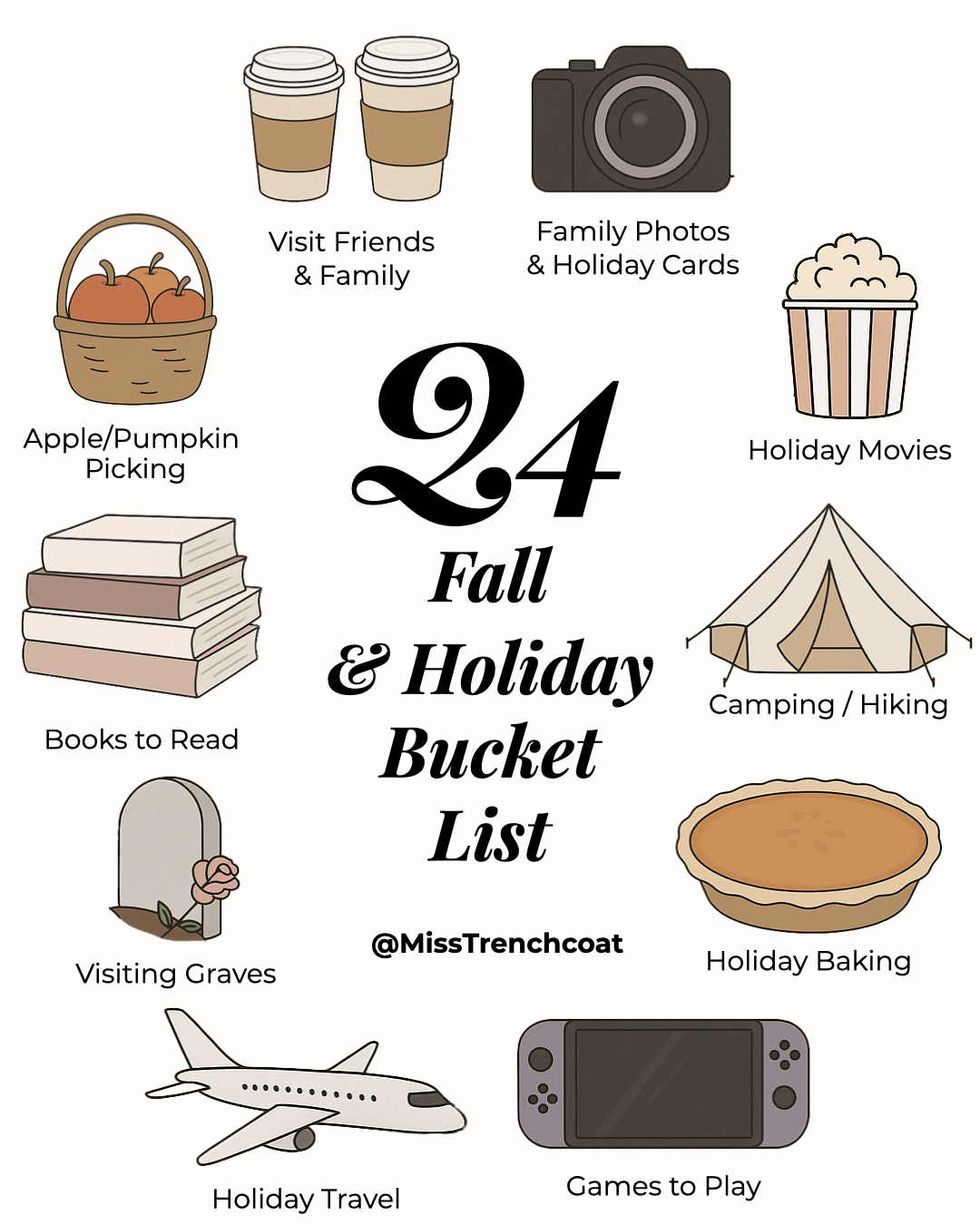
Once you’ve identified the structure of your season, it’s time to decide what joy-filled activities you want to sprinkle in. These are your seasonal activities—the experiences that make Q4 feel magical and memorable.
Here’s the catch: you don’t need to do all of them. The fastest way to drain the magic out of the season is by treating it like a checklist. The goal isn’t quantity—it’s depth.
Examples of seasonal activities:
Fall:
- 🍂 Visiting a pumpkin patch
- Apple picking with friends
- Baking pumpkin bread or pies
- Decorating the house with autumn touches
Winter/Holidays:
- 🎄 Strolling through a holiday market
- Decorating the tree
- Baking cookies as a tradition
- Hosting or attending holiday gatherings
New Year:
- Journaling your reflections from the past year
- Setting intentions and goals for the year ahead
- A cozy at-home celebration to mark the transition
How to choose seasonal activities intentionally:
- Make a seasonal wish list. Write down everything that comes to mind that you’d like to do in Q4.
- Circle 2–3 favorites. Ask yourself: Which ones truly light me up? Which ones would I be sad to miss?
- Schedule them early. Don’t wait until December 23rd to decide if you want to visit that market—it won’t happen. Put it in the calendar now.
- Release the rest. A season well-lived is not about maximizing—it’s about savoring.
Reframe: Seasonal activities don’t need to be elaborate to matter. Sometimes the simplest traditions—like lighting a candle every evening in December or baking bread on Sundays—are the ones that create the most lasting joy.
Key #3: Memory Making — Schedule Downtime & Rituals
Here’s where many women go wrong: they fill their calendars with obligations and activities but forget to create space.
Downtime isn’t wasted time. It’s where meaning lives. It’s in the quiet evenings, the simple rituals, and the pauses that we create our most cherished memories.
This is what I call memory making—the intentional practice of slowing down to soak in the season. These aren’t the big events or bucket-list activities. They’re the little moments you’ll remember long after the year has passed.
Examples of memory rituals:
- Evening walks to enjoy the crisp fall air
- Cozy reading nights with tea and candles
- Watching holiday movies together every Friday in December
- Journaling about your reflections before the New Year
- Making soup and bread on Sundays as a seasonal rhythm
How to create memory making in Q4:
- Block downtime into your calendar. Literally schedule blank space. Write “Family Night” or “Cozy Reading.” If you don’t, it will get filled.
- Establish simple rituals. Pick one thing you can repeat weekly (movie night, journaling, baking) to create rhythm.
- Protect this time. Treat it like any other non-negotiable. Just because it’s restful doesn’t make it optional.
Reframe: Busyness doesn’t create memories—presence does. Productivity isn’t about squeezing in more; it’s about protecting space for what matters most.
Hustle vs. Intention
At the heart of it, the difference between hustle and intention is simple:
- Hustle says: Everything matters, so you must do it all.
- Intention says: Only the right things matter, so you can focus deeply and joyfully.
When you hustle, you end the season exhausted and disconnected. When you plan with intention, you end it with clarity, peace, and memories that actually mean something.
So as you step into Q4, I encourage you to pause and ask yourself:
- What’s already happening that I need to anchor into my calendar?
- Which seasonal activities would bring me the most joy?
- How can I schedule downtime and rituals that make the season memorable?
That’s it. That’s the plan. Everything else? You can let it go.
Because this season isn’t about proving you can do it all. It’s about living meaningfully.
And intentional action will always beat hustle—every time.
✨ Want support creating your intentional Q4 plan? Join me for the Q4 Crescendo Workshop where I’ll walk you through the exact mindset, goal-setting, and master planning process to end your year strong and aligned.
xoxo,