How I Plan and Organize My Life & Business: The Planners and Routines I Use Each Year

A behind-the-scenes breakdown of the functional planning system that helps me manage a multi-offer business and a well-balanced life year after year.


Being productive and organized is something that takes consistency. Like anything else you may want to find success at in life, you have to put systems in place and keep those systems up and running. Being a productive and organized person isn’t something that you set up once and then you’re done forever.

However, the systems you use can be decided on once, and then all you have to do is show up to maintain them. That’s what I’ve created for myself—a full-spectrum functional planning system that supports my business and my life.

Today I’m walking you through the planners and tools I use and the five core routines—yearly, quarterly, monthly, weekly, and daily—that make it all work.

If you’re someone who wants to:

  • Run your life and business with more ease and intention
  • Stay consistent and organized with your tasks and goals
  • Reduce decision fatigue and planning overwhelm

…this post will help you lay the foundation for your most productive and peaceful year yet.


Part 1: Yearly Planning — Setting the Vision

The purpose of my yearly planning routine is to set the vision and direction for the year. You can’t create the life or business you want unless you know what that looks like—and create a plan to get there.

Each December, I:

  • Set my goals for the new year
  • Break larger goals into milestones
  • Define objectives for how I’ll achieve each milestone
  • Assign major projects to quarters or months
  • Populate my planner with known events and timelines

This high-level planning ensures that my schedule reflects my priorities. It helps me visualize the big picture while grounding me in what’s most important.

My Tools:

  • You Got Goals Workshop + Planner: helps me clarify and break down annual goals
  • CEO Retreat Workshop + Workbook: outlines my business goals and sets strategic monthly focuses
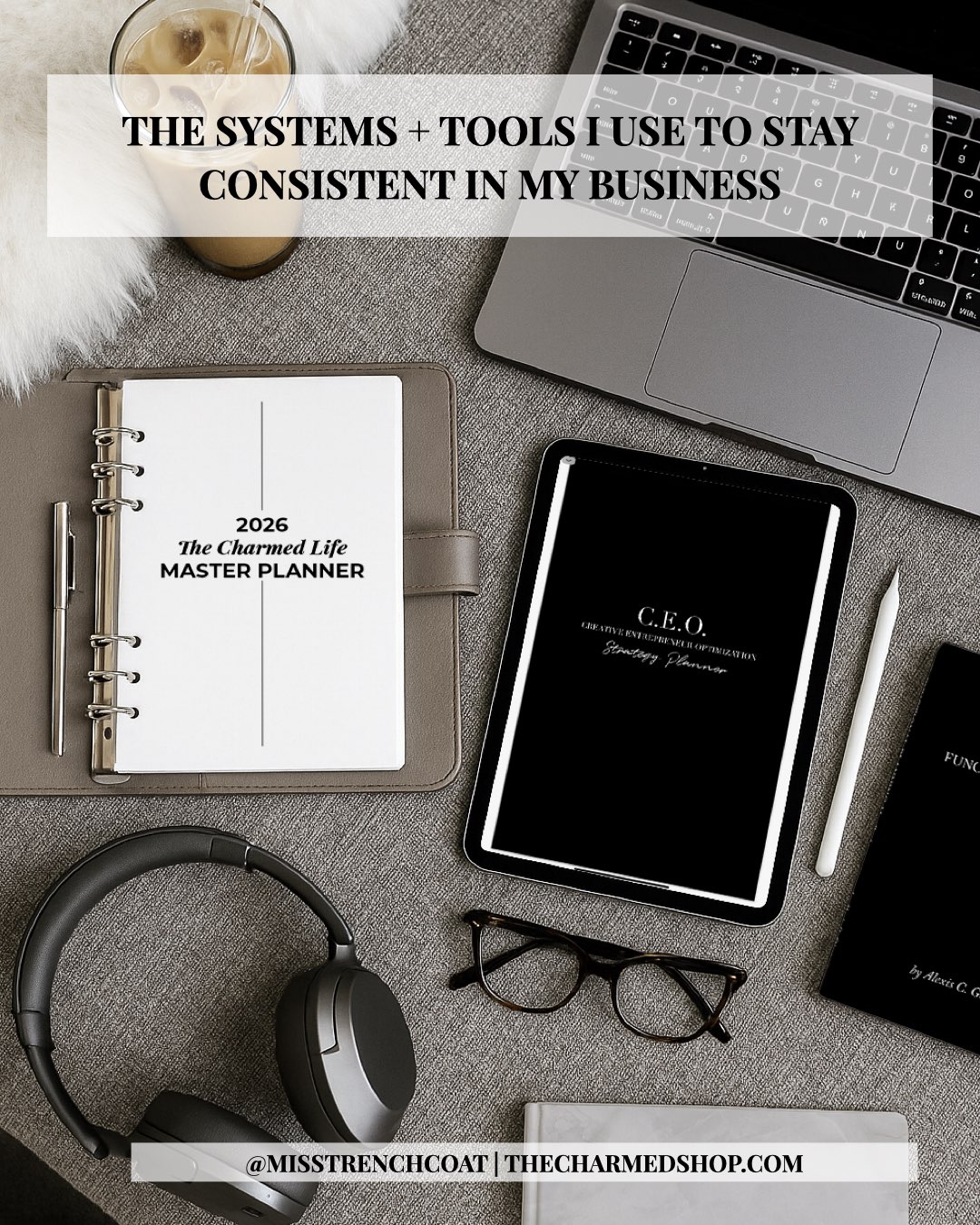
  • 2026 Charmed Life Master Planner (Vertical Digital): holds my schedule, routines, and life management
  • CEO Strategy Planner (Digital): organizes my business objectives, launch timelines, and offers

I view my CEO Strategy Planner as a supplementary tool. It gives me space to think deeply about business strategy, but the Charmed Life Master Planner is the hub for execution. Any business tasks or deadlines I define in the CEO planner ultimately get scheduled in my Master Planner.

This two-planner system creates a balance of big-picture thinking and daily focus.


Part 2: Quarterly Planning — Creating the 90-Day Focus

The purpose of my quarterly planning routine is to check in on my goals and break them down into manageable, actionable segments.

Too often people try to plan their whole year in detail from the start, but the truth is—you learn and adjust as you go. That’s why I plan my year broadly first, and then plan strategically one quarter at a time.

Each quarter (usually at the end of the previous one), I:

  • Review progress toward goals and milestones
  • Adjust any timelines or expectations
  • Define my business focus for the next 90 days
  • Break down large projects into smaller tasks
  • Assign tasks to the appropriate months

This quarterly check-in gives me a moment to breathe and re-align. I get to zoom in and ask:

  • What’s still relevant?
  • What’s no longer aligned?
  • What deserves my focus now?

My Tools:

  • Charmed Life Master Planner
  • CEO Strategy Planner

For example, if I scheduled a product launch in April during my yearly planning, my Q2 planning session is where I’ll map out the timeline, prepare assets, and distribute tasks into April’s monthly tracker.

Quarterly planning is also when I take stock of my time capacity. If life feels full or energy is low, I adjust accordingly. I’d rather scale back than push forward misaligned.


Part 3: Monthly Planning — Clarifying the Scope

Monthly planning is about setting clear expectations and managing scope.

It’s so common to see people overloaded with long lists of intentions, habits, and to-dos—and by week two of the month, they’re already overwhelmed and off track. That’s why my monthly routine includes intentional limitations to protect my time, energy, and momentum.

Each month, I:

  • Brain dump all new ideas, tasks, and obligations
  • Populate my calendar with key dates, events, and deadlines
  • Revisit any ongoing project plans
  • Fill out my monthly master task list
  • Prioritize the top 1–3 projects or habits to focus on
  • Begin distributing tasks to weeks of the month

In the Charmed Life Master Planner, I’ve designed structure around how many projects, systems, and habits you can reasonably track. This helps me—and my customers—self-edit.

Instead of juggling a dozen goals or routines at once, I choose a few things that matter. This lets me actually build momentum and success.

Everything I decide on in the CEO Strategy Planner, like launches or campaign prep, gets moved into my Master Planner for day-to-day execution.

This process makes my month feel like a strong container for progress—not a chaotic list of unfinished ideas.


Part 4: Weekly Planning — Structuring the Flow

Weekly planning is where the magic happens. This is how I manage my energy and time across the 168 hours we all get in a week.

Each week, I:

  • Review my priorities for the month
  • Choose 3–5 main objectives for the week
  • Slot tasks and projects into daily blocks
  • Check my calendar for appointments and commitments
  • Make space for self-care, rest, and personal rituals
  • Confirm alignment with my partner, team, or collaborators

At the beginning of the year, I set up an Ideal Weekly Schedule inside my Charmed Life Master Planner. This template includes time blocks for household management, business admin, content creation, CEO work, errands, and personal routines.

Each week, I simply layer my current priorities on top of this template. This saves me time and energy and ensures my most important routines get done—even during busy seasons.

Themed workdays also help. I dedicate specific days for:

  • Admin and batching
  • Content creation
  • Coaching or calls
  • CEO deep work

Having this rhythm in place makes planning and showing up feel simple.


Part 5: Daily Planning — Taking Aligned Action

This is where it all comes together.

Daily planning is about knowing exactly what needs to happen today—and trusting the plan you’ve created.

Each day, I:

  • Review my weekly priorities and appointments
  • Assign a Top 3 for the day (the three tasks that move the needle)
  • Add any bonus or admin tasks if time allows
  • Reference my Ideal Daily Routine to keep the day structured
  • Leave white space for flexibility, rest, or unexpected events

Just like I use a weekly template, I also use a Daily Routine Template to hold the structure of my day. It includes:

  • Morning routine
  • Work blocks (deep work, meetings, batching)
  • Meals and breaks
  • Self-care and movement
  • Evening wind-down

This daily plan is flexible, but it creates guardrails. I don’t waste energy deciding what to do—I already know. And because my tasks are scoped and scheduled in advance, my daily list is realistic, achievable, and aligned.

If I ever need to map out a more intensive day, I use a Day on One Page spread from my planner. But most days, my Top 3 + Routine holds me steady.


Final Thoughts: Why This System Works

This system has been the key to building and sustaining my business for over a decade. And not just any business—a spacious business, one that supports my life instead of consuming it.

What makes this system powerful isn’t how much I plan. It’s how intentionally each layer supports the next:

  • My yearly vision gives me a sense of purpose
  • My quarterly plan keeps me focused
  • My monthly scope keeps me grounded
  • My weekly plan gives me flow
  • My daily plan drives action

This method is both strategic and self-honoring. It lets me stay productive without hustling. I get things done and I have space to rest, recharge, and enjoy life.


Want to Plan This Way Too?

You don’t need to guess or start from scratch. I’ve created tools to help you:

✨ Start with the CEO Braindump Triggers List (free download!)
🧠 Clarify your vision with the You Got Goals Workshop
📘 Get the CEO Strategy Planner to organize your business plans
🗂 Use the Charmed Life Master Planner to integrate your full life
🌟 Join the Charmed Life Master Mind for ongoing coaching and support

Everything is linked in this post, and if you have any questions, feel free to email me.

I’d love to help you implement this system in your own life, so you can experience more peace, purpose, and progress in the year ahead.

xoxo,
Alexis

Feeling Scattered? Here’s How to Organize Your Business Ideas and Clear Your Mind

Start the year with clarity and structure using this simple business planning process.


If you’re a business owner or aspiring entrepreneur who feels overwhelmed by all the ideas, tasks, and goals swirling around your mind, you’re not alone. The beginning of the year brings a renewed sense of purpose and ambition—but without the right systems in place, that energy can quickly turn into chaos.

You may have a list of ideas for content you want to create, products you want to launch, or strategies you want to try. But when you sit down to plan or take action, you get stuck. The ideas are there, but they feel jumbled, disconnected, and disorganized.

This post is for you if:

  • You feel like your brain is constantly “on,” but you’re not making progress.
  • You have tons of notes, digital files, or half-started plans that don’t connect.
  • You’re excited about building your business this year but aren’t sure where to start.

Let me introduce you to one of the most foundational productivity and business planning tools I use: the CEO Braindump.


What Is a Business Braindump (and Why You Need One)?

A business braindump is exactly what it sounds like: it’s a process of taking everything in your head related to your business—ideas, tasks, goals, reminders, to-dos—and getting them out onto paper.

This practice gives your thoughts a home outside your mind so you can finally:

  • See what you’re working with
  • Organize your ideas
  • Prioritize what matters
  • Create plans that make sense

It’s the first step I take each year when planning for my business, and it’s something I return to monthly, weekly, or anytime I feel mentally cluttered.

Without this process, it’s easy to fall into the trap of idea overwhelm where everything feels urgent and nothing gets done.

Signs You Need to Braindump:

  • You procrastinate because you don’t know what to work on first
  • You start projects but abandon them midway
  • You can’t clearly explain your business plan or goals
  • You’re always “working” but not moving forward

Sound familiar?

It’s time to clear the clutter and get your business ideas organized.


Step 1: Capture Everything

Set aside 30-60 minutes of quiet time and grab a notebook or planner. This is your CEO meeting with yourself.

Start by writing down everything that comes to mind related to your business:

  • Project ideas
  • Content you want to create
  • Marketing strategies
  • Products or offers you want to launch
  • Admin or tech tasks you’ve been putting off
  • Education or resources you want to explore

This isn’t about filtering or judging what comes up—just let it flow. Think of this like a full brain sweep.

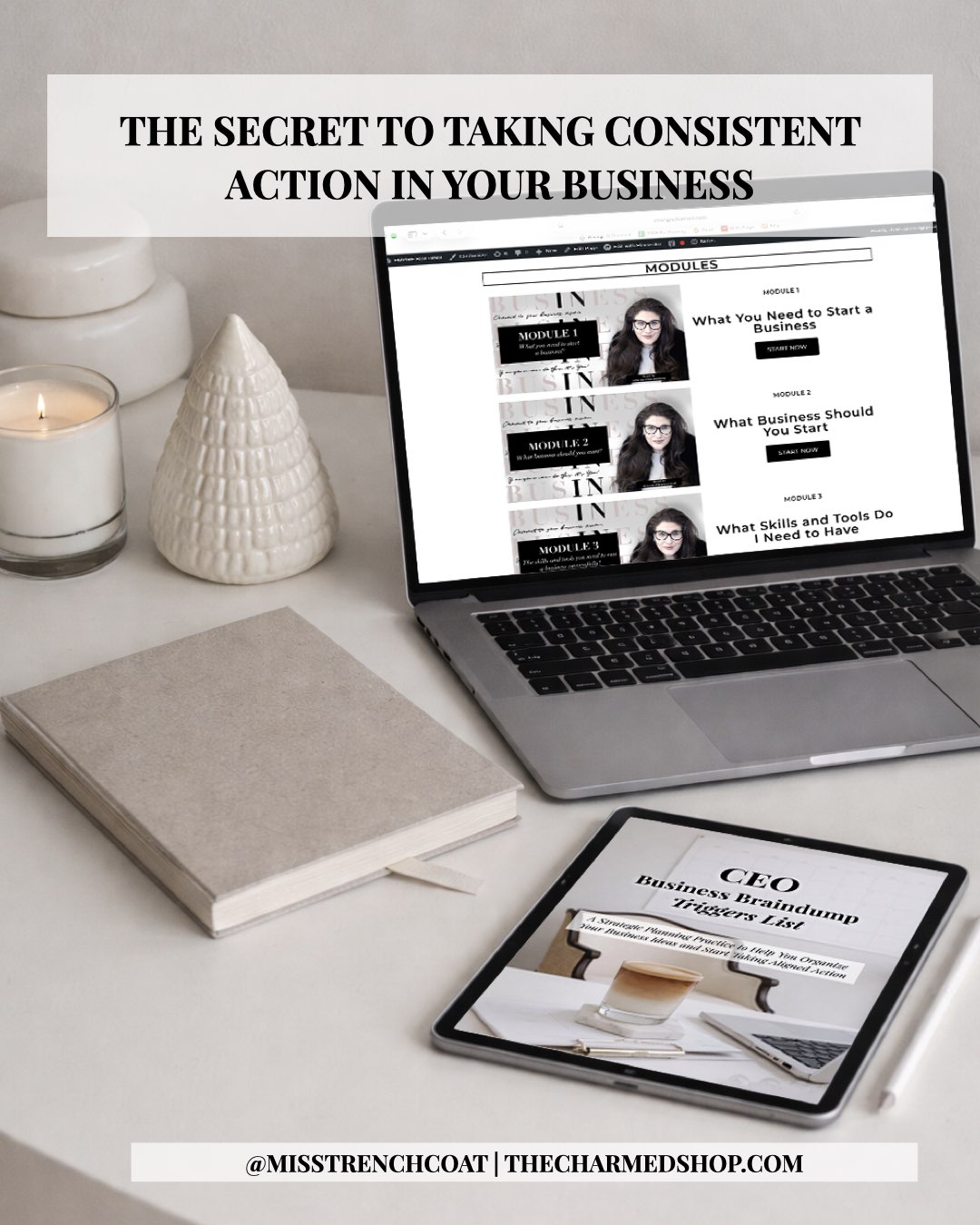
If you’re not sure where to begin, I created the CEO Braindump Triggers List, a free download with 50+ prompts to help jog your memory and make sure you capture everything. You can grab it [here].


Step 2: Categorize Your Thoughts

Once you have your big list of ideas, start grouping them into categories. This helps you make sense of the chaos.

Here are some simple categories to use:

  • Content (blog, YouTube, podcast, social posts)
  • Products/Offers (what you’re selling or want to sell)
  • Marketing (email, launches, funnels, collaborations)
  • Operations (admin, systems, customer service)
  • Education (courses, books, coaching, mindset work)

Using colored pens, highlighters, or symbols can help you visually sort your thoughts. The goal here is to turn the raw data into a more organized view of your business.


Step 3: Prioritize Based on Your Goals

Once you’ve organized your list into categories, it’s time to identify what really matters.

Ask yourself:

  • What is essential to move my business forward right now?
  • What can wait?
  • What ideas are exciting but don’t align with my current direction?

Not every idea needs to be pursued immediately—or even at all. This step helps you discern what belongs in your business strategy and what’s just noise.

Tip: Choose 1-3 focus areas for the quarter and let the rest go (for now). This prevents burnout and builds momentum.


Step 4: Create an Actionable Plan

Now that you’ve filtered your list, you can start mapping out your next steps.

For each priority area, ask:

  • What is the goal?
  • What needs to happen to achieve it?
  • What specific tasks will move this forward?

Break larger goals down into manageable tasks. From here, you can assign them to specific weeks or days using a tool like the CEO Strategy Planner, which is what I personally use to manage my business goals and keep myself accountable.


Why This Works

This process may seem simple, but it’s incredibly effective. Here’s why:

  1. It gives your ideas structure. Most people stay stuck because their thoughts are a swirl of inspiration, fear, and to-dos. This process helps you separate and structure them.
  2. It calms your mind. Getting everything out on paper releases mental pressure. You don’t have to carry it all in your head.
  3. It reveals priorities. Once everything is visible, it becomes easier to see what actually matters.
  4. It sets you up for action. Clarity leads to confidence. And confidence leads to consistent action.

Tools I Recommend

If you’re ready to go deeper with your business planning, here are the tools and systems I recommend:

  • CEO Braindump Triggers List (Free Download): Use this every time you feel mentally cluttered. [Grab it here.]
  • CEO Strategy Planner: This is my ultimate tool for organizing goals, projects, and tasks in a streamlined system. Perfect for quarterly and monthly planning.
  • CEO Retreat Workshop: A guided experience where I walk you through the exact business planning process I use each year. Available on demand!
  • IN BUSINESS Program: If you’ve struggled to take consistent action on your business goals, this course will help you build the mindset and habits to follow through.

You Don’t Need to Do It All. You Just Need to Start.

If you’re still reading this, I know your heart is in the right place. You care about your business, your goals, and your potential. You’re just overwhelmed.

That doesn’t mean you’re unqualified or incapable. It just means you need a better system.

Start with a braindump. Get clear. Organize your thoughts. Choose your focus. Then build a plan.

You don’t have to get it perfect—you just have to get it out of your head.

And I promise, when you do, you’ll feel the shift.

You’ll go from chaos to clarity.

And that’s how you finally move in business.


Ready to clear your mind and organize your business ideas? Download my free CEO Business Braindump Triggers List and get started today.

xoxo,

Planner Peace: How to Stop Switching Planners and Build a System That Sticks

If you’ve ever thought “Maybe I just haven’t found the right planner yet”—this post is for you.

Because here’s the truth most people don’t want to admit:

You don’t need another planner.
You need Planner Peace.

Planner Peace isn’t about the perfect size, the perfect layout, or the prettiest aesthetic. It’s not found in a new launch, a TikTok recommendation, or your fifth planner setup of the year.

Planner Peace is what happens when your planner finally supports your life instead of distracting you from it.

Let’s talk about why so many women keep switching planners—and how to build a system that actually sticks.


Why Planner Hopping Feels Productive (But Isn’t)

In the planner community, buying a new planner feels productive.

There’s novelty.
There’s dopamine.
There’s the illusion of a fresh start.

But if you find yourself:

  • Constantly switching planners
  • Using multiple planners at once
  • Spending more time setting up than actually planning
  • Feeling excited… then overwhelmed… then behind

That’s not a planner problem. That’s a system problem.

Planner hopping interrupts momentum. Every time you switch, you reset your learning curve, your routines, and your trust in yourself.

Planner Peace comes from consistency, not novelty.


What Planner Peace Actually Means

Planner Peace is the calm confidence that:

  • You know where everything lives
  • You trust your system
  • Your planner supports your priorities
  • You stop second-guessing your setup
  • You use your planner as a tool, not a distraction

It’s not about doing more.
It’s about thinking clearly and acting intentionally.

And that requires structure.


The 5 Reasons You Haven’t Found Planner Peace (Yet)

Let’s get honest—most planner struggles fall into one of these categories:

1. Shiny Object Syndrome

New planners promise transformation, but constant switching prevents follow-through.
Fix: Commit to one planner for a set period (90 days minimum).


2. Relying on Other People’s Setups

What works for someone else’s life may not work for yours.
Fix: Build a planner around your goals, energy, and responsibilities.


3. Valuing Form Over Function

A beautiful planner doesn’t mean a functional one.
Fix: Prioritize clarity, planning, and decision-making over aesthetics.


4. Thinking You’re the Problem

If your planner doesn’t support real planning, of course it feels hard to use.
Fix: Learn functional planning skills instead of blaming yourself.


5. Using an Incomplete System

Calendars alone don’t create clarity—they just record information.
Fix: Use a planner that supports the entire planning process, not just scheduling.


What Makes a Planner System Actually Work

A planner that sticks doesn’t rely on motivation—it relies on structure.

A functional planning system supports three essential phases:

1️⃣ Capture

You need space to brain dump ideas, tasks, and thoughts so they’re not living in your head.

2️⃣ Organize

Your planner should help you group tasks into objectives, projects, and priorities.

3️⃣ Allocate

Only after planning should tasks be scheduled into your days and weeks.

Most planners skip the first two phases—and that’s why people feel overwhelmed, behind, or scattered even when they’re “using a planner.”

Planner Peace comes from having one system that supports all three.


Consistency Feels Boring… Until You See Results

Here’s something no one tells you:

Consistency can feel boring—especially if you’re used to novelty.

But boredom isn’t a sign something isn’t working.
It’s a sign you’re building momentum.

When you stop switching planners:

  • You move faster
  • You think less about your system
  • You make better decisions
  • You trust yourself more

That’s Planner Peace.


Want Help Building a System That Sticks?

If you’re ready to stop planner hopping and start planning with confidence, I created a free resource to help you get started:

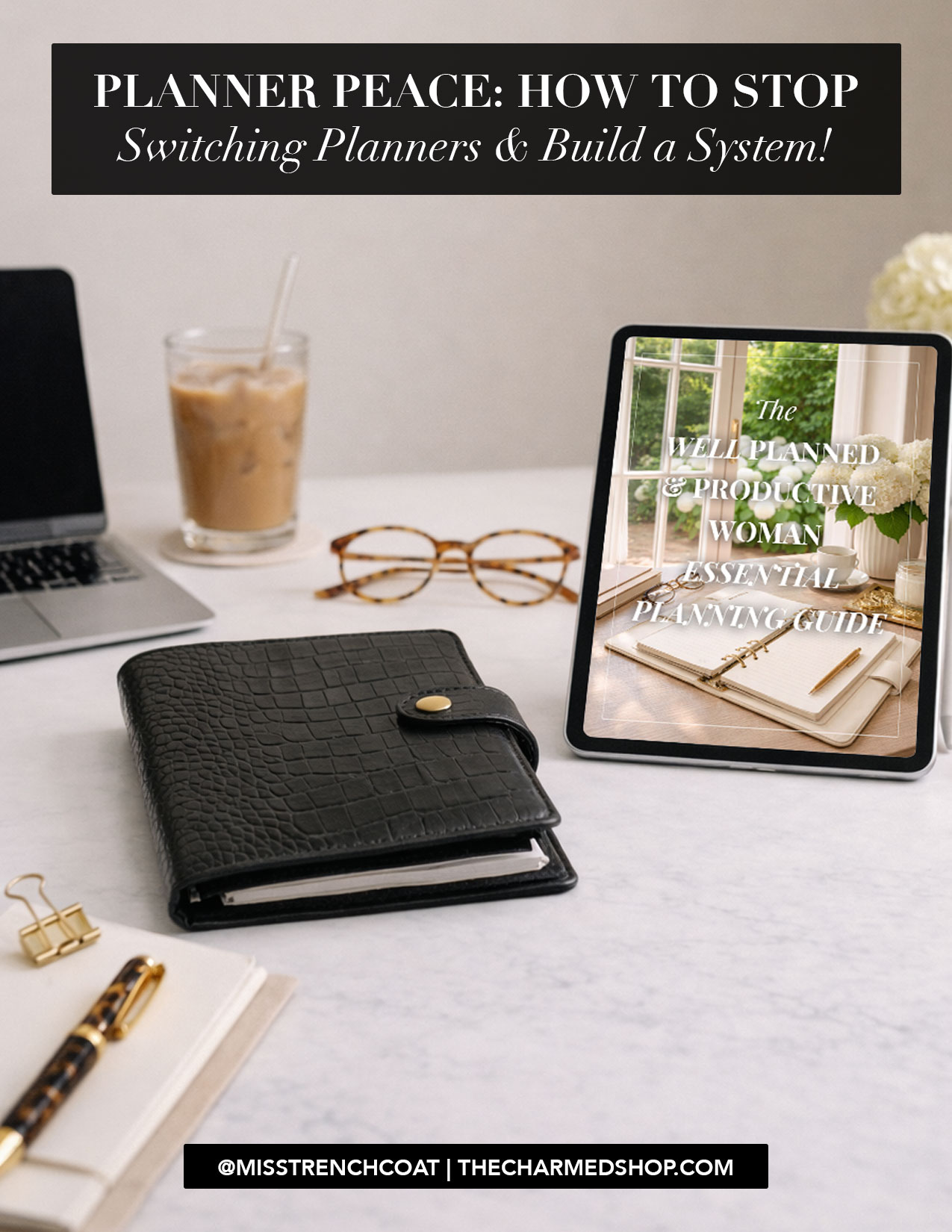
🎁 The Well Planned & Productive Woman Essential Planning Guide

Inside, you’ll find:

  • My 5 foundational planning routines (daily → yearly)
  • 50 powerful planning prompts
  • Guidance to help you build structure without overwhelm

It pairs beautifully with the 2026 Charmed Life Master Planner, which is designed as a complete, functional planning system—not just a calendar.

✨ Use code FRESHSTART2026 to get 25% off planners and planning supplies this month at thecharmedshop.com.


Final Thought: Planner Peace Is a Decision

Planner Peace doesn’t come from finding the “perfect” planner.

It comes from deciding:

  • To stop chasing novelty
  • To trust a system
  • To give yourself time to learn and grow
  • To plan with intention, not pressure

You don’t need another fresh start.
You need a system that supports the life you’re building.

And that’s something you can have—starting now.

xoxo,

How to Turn Daily Planning Into a Ritual You’ll Actually Look Forward To

When it comes to planning, consistency is everything—but let’s be honest: sticking to a daily planning routine can feel like just another item on the to-do list. One more task, one more “should,” one more thing to remember.

But what if planning your day was the most nourishing part of it?

That’s the shift I want to invite you into: turning your planning routine into a daily ritual—a calm, intentional, sacred practice that grounds you, clears your mind, and reconnects you with your goals.

Not a chore. Not a hustle. A ritual.

Let me show you how.


Why Most People Don’t Stick with Daily Planning

If you’ve ever found yourself skipping your planner after a few days, you’re not alone.

Here’s what usually happens:

  • You start with good intentions
  • Life gets busy
  • You forget to check your planner
  • You feel guilty for not following through
  • You quit… and start again later

The truth? Daily planning isn’t the problem. It’s how we approach it.

When planning feels like a task you’re supposed to do, it loses its magic. But when it becomes a ritual—something you get to do—it transforms into a moment of peace and power in your day.


Turn Planning Into a Ritual with This Habit Stack

One of the easiest ways to make your planning practice stick is by turning it into a habit stack—pairing your planning time with other meaningful activities.

Here’s the ritual I personally love (and you’re welcome to borrow or customize it!):


1. Tidy Your Space

“Clear desk, clear mind.”

Before you open your planner, take a minute to reset your space. Dust your desk, straighten your pens, put away clutter. This small act of care signals to your brain that something intentional is about to happen.


2. Light a Candle or Set an Intention

Rituals need a moment of presence. Lighting a candle or silently setting an intention for the day brings mindfulness to your planning and anchors your energy.

Try this:

“Today, I will make space for what matters.”


3. Sip a Beverage

A cozy drink creates comfort and cues routine. Whether it’s coffee, tea, or a protein shake like I prefer—it makes the moment feel warm and personal. It turns planning from productivity into pleasure.


4. Play a Focus Playlist

Music can train your brain for focus. Classical or lofi instrumental tracks help set a rhythm for your planning and get you into flow.

Need a playlist? I’ve got a few favorites saved—DM me on Instagram if you want them!


5. Check Your Vision Board or Goals

Before you list your to-dos, take a moment to reconnect with your bigger vision. Glance at your vision board, reread your goals, or journal one sentence on why you’re doing what you’re doing.

This small act creates alignment between your daily actions and your long-term dreams.


Make Planning the Most Sacred Part of Your Day

The power of this daily ritual isn’t in how long it takes—it’s in how it makes you feel.

Even 5–10 minutes of intentional planning in the morning (or evening) can:

  • Reduce overwhelm
  • Improve clarity
  • Help you prioritize aligned action
  • Build trust in yourself and your process

Your planner becomes your calm in the chaos. Your daily reset. Your sacred space to return to what matters most.


Want to Build a Planning Routine You Actually Stick With?

If this post inspired you, I created a beautiful free resource to help you go deeper:

🎁 The Well Planned & Productive Woman Essential Planning Guide
This guide includes:

  • ✅ My 5 foundational planning routines (daily to yearly)
  • ✅ 50 powerful planning prompts
  • ✅ Guidance to help you create your own rituals and systems

It’s the perfect companion to the 2026 Charmed Life Master Planner, which is 25% off this month with code FRESHSTART2026.

👉 Click here to download the guide now
👉 Shop the planner with the code FRESHSTART2026 at thecharmedshop.com


Gentle January Reminder

Inside the Charmed Life Master Mind, we’re embracing a season of Gentle January—a slower, more intentional start to the year. If you’re craving structure that supports your well-being, I’d love to welcome you inside.


You don’t need to force yourself to plan every day.
You just need to make it something you look forward to.
That’s the difference between a routine… and a ritual.

Here’s to turning your to-do list into a sacred practice.

xoxo,

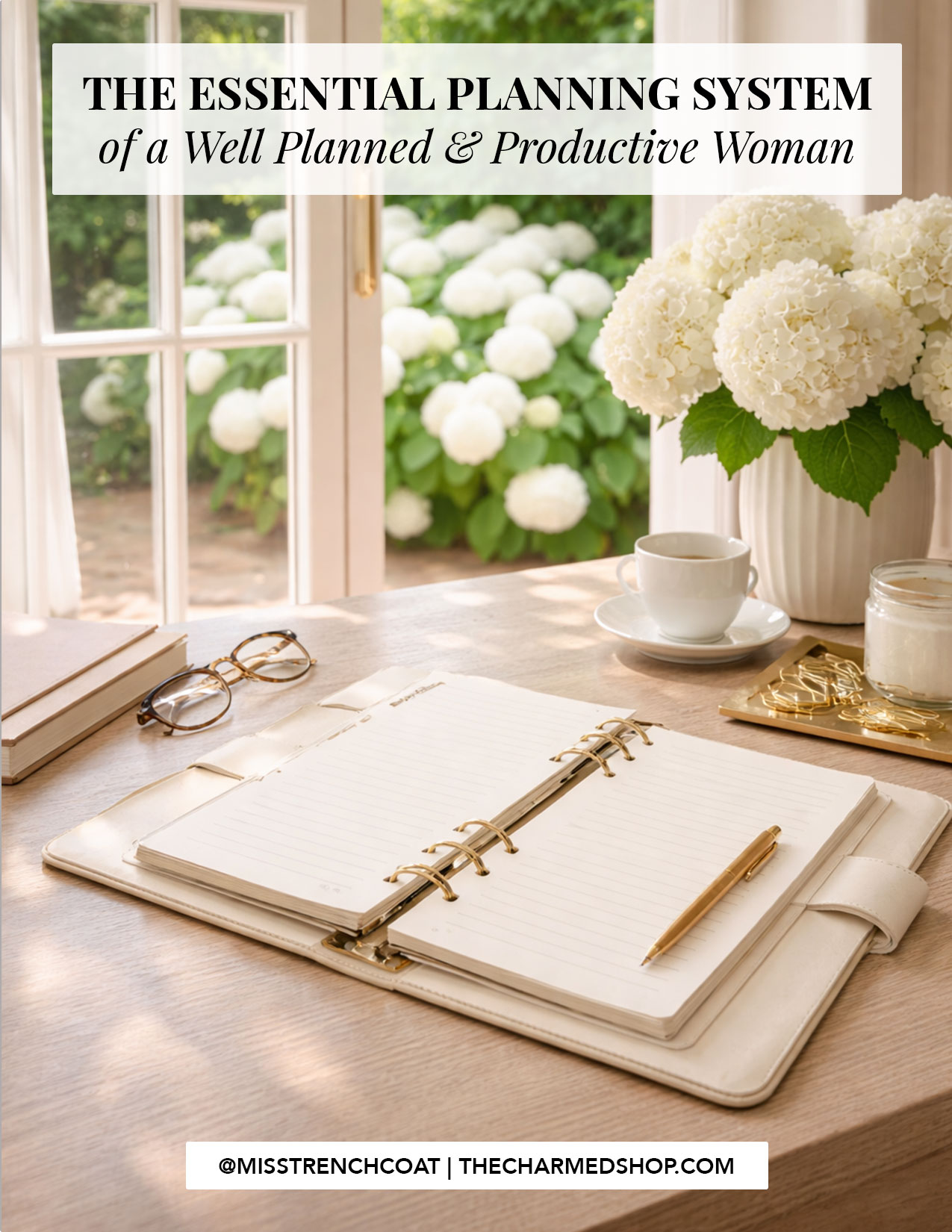
The Essential Planning System of a Well Planned & Productive Woman

THE REAL REASON YOU CAN’T STAY ORGANIZED

If you’ve ever felt like planning just doesn’t work for you… you’re not alone. So many high-achieving women tell me they struggle to stay organized, keep up with their goals, and maintain consistency—not because they’re unmotivated, but because they’re trying to operate without a system.

In reality, most women were never taught how to plan in a way that works with their life, their energy, or their priorities. They’re managing households, careers, businesses, and relationships—all while juggling an invisible load of decisions and expectations.

This post is here to change that. Let me show you the 5 essential routines every Well Planned & Productive Woman uses—and how you can use them, too. With this structure, planning becomes less overwhelming and more empowering.

WHY ORGANIZATION FEELS SO HARD FOR WOMEN

Women carry a unique set of challenges:

  • Always doing for others before themselves
  • Struggling to find time for their own goals
  • Facing perfectionism, burnout, and decision fatigue
  • Feeling like they’re constantly catching up

The truth? You’re not disorganized—you just don’t have a system yet.

Productivity isn’t about doing more. It’s about aligning your time with what matters most. When you use routines and planning prompts that guide your thinking, everything changes.

Let’s take a look at what that transformation looks like.

Before: Overwhelmed, reactive, scattered, unsure what to focus on each day, struggling to follow through.

After: Calm, intentional, clear on your priorities, showing up consistently, making real progress without the burnout.

That’s what happens when you become a Well Planned & Productive Woman.

THE 5 ROUTINES OF FUNCTIONAL PLANNING

These routines work together to give your life rhythm, structure, and space.

🧠 YEARLY PLANNING: VISION

  • Set goals that align with your long-term vision
  • Break them into milestones
  • Assign them across quarters or months

Why it matters: This anchors your dreams in a structured plan.

📅 QUARTERLY PLANNING: FOCUS

  • Check progress every 90 days
  • Adjust for obstacles and opportunities
  • Choose key objectives and focus areas

Why it matters: Keeps your goals relevant and manageable.

📝 MONTHLY PLANNING: PRIORITIZE

  • Brain dump new ideas or tasks
  • Identify top goals for the month
  • Schedule projects and routines intentionally

Why it matters: Helps you take consistent action without overcommitting.

WEEKLY PLANNING: EXECUTE

  • Break down goals into actionable tasks
  • Schedule meetings, priorities, and rest
  • Balance work, home, and self-care

Why it matters: You lead your week, instead of reacting to it.

DAILY PLANNING: ALIGN

  • Set your Top 3 priorities
  • Review your schedule and energy
  • Make space for what matters

Why it matters: Creates focus and flow each day.

Together, these routines form a sustainable system that keeps you organized and productive—without burning you out.

THE SECRET INGREDIENT: PLANNING PROMPTS

Even with the right routines, many women still feel unsure where to start. That’s where prompts come in.

Planning prompts are guiding questions that:

  • Spark clarity and intention
  • Help you prioritize wisely
  • Keep you focused on what matters most

Here are a few examples:

  • What does a successful week look like for me?
  • What’s one habit I want to focus on this month?
  • What’s my big-picture vision for the year?

The beauty of prompts is that they take the pressure off. You don’t have to think from scratch every time you sit down to plan. They give your mind direction, which gives your life momentum.

A SYSTEM THAT ACTUALLY WORKS

You don’t need more motivation. You need a functional system—a set of routines and prompts that make it easy to follow through.

This is the exact system I teach in my free workbook: The Well Planned & Productive Woman’s Essential Planning Guide.

Inside, you’ll find:

  • My complete 5-routine planning system
  • 50 transformational prompts to use at each level

When you apply this system, you’ll:

  • Feel more in control of your time
  • Gain clarity on your next steps
  • Build habits that stick
  • Create space for your dreams to flourish

START HERE: DOWNLOAD THE FREE GUIDE

If you’re ready to stop spinning your wheels and start planning with purpose, this guide was made for you.

📥 Download The Well Planned & Productive Woman’s Essential Planning Guide to get started.

You’ll also find a soft introduction to:

  • The Charmed Life Master Planner, designed for this system
  • The Charmed Life Master Mind, where we plan together live each month

No more guesswork. No more chaos. Just a system that works.

Let’s make this your most organized and intentional year yet.

xoxo,

Your Guide to a Gentle January and an Intentional New Year

January arrives with pressure.

New goals. Fresh starts. Big dreams. The unspoken rule seems to be: start strong, go big, do more.

But what if you didn’t need to hustle to make progress?
What if the most productive thing you could do right now… was pause?

Welcome to Gentle January.

This is your invitation to start 2026 differently. With more ease, more clarity, and more control over how your year unfolds.

Because you don’t need more to do.
You need space to think. Structure that supports you. And systems that actually help you make progress on what matters.


What is Gentle January?

Inside the Charmed Life Master Mind, we’re kicking off the year with a 31-day challenge designed to ease you into aligned productivity.

Each day in January, members receive a short but powerful journaling or planning prompt. These are designed to help you:

  • Reflect on where you are and where you want to go
  • Reset your routines and planning practices
  • Reconnect with your goals and values
  • Release the overwhelm and embrace intention

This isn’t about pushing yourself harder. It’s about softening into the structure that supports the woman you want to become.

Here’s a peek at a few of the prompts:

  • “What’s one word or theme you want to embody this year?”
  • “Sketch out your ideal week—with white space included.”
  • “Do an energy audit: When do you feel most focused in a day?”
  • “Reflect: What are you ready to release from last year?”
  • “Write a thank-you note to yourself for showing up with intention.”

You can begin anytime in January. All prompts and support are available inside the Master Mind.

[Join the Charmed Life Master Mind Now]


2026 is a Number 1 Year in Numerology — What That Means for You

In numerology, each year has a number associated with its energy. 2 + 0 + 2 + 6 = 10, which simplifies to 1.

2026 is a Number 1 Year: a year of beginnings, leadership, and fresh energy.

It’s a time to:

  • Start something new
  • Lead yourself with confidence
  • Get clear on who you are becoming

This energetic reset is powerful—but only if you meet it with intention.

A fresh start doesn’t require a full calendar or endless goals.
It requires clarity.
It requires a plan.
It requires prioritizing the few things that truly matter.

Use this moment to ask:

  • What am I ready to leave behind?
  • What identity am I stepping into?
  • What would it look like to build a year aligned with my values?

This is where the real magic of Gentle January begins. You aren’t just starting a new year. You’re setting the tone for an entirely new chapter.


What an Intentional Year Looks Like

An intentional year isn’t packed. It’s purposeful.

It’s less about doing more and more about doing what matters most.

To create that kind of year, you need:

  • Clarity on your priorities
  • A plan to support your goals
  • The discipline to follow through with ease

That’s where functional planning comes in.

Functional planning is the system we use inside the Charmed Life Master Mind and in all of our planners. It’s a three-phase method:

  1. Capture – Get everything out of your head and onto paper
  2. Organize – Turn tasks into action steps under clear objectives
  3. Allocate – Strategically plan what happens when so you stay on track

This isn’t about being rigid or over-planning your life.
It’s about building flexible structure that supports flow.

You know what to focus on. You know what can wait. And you finally feel like you’re in the driver’s seat of your day.


Tools to Support Your Gentle & Aligned Year

Want to make 2026 your most intentional year yet?
Start with the right tools.

🗓️ The 2026 Charmed Life Master Planner
Our best-selling planner system that helps you integrate planning with personal growth. Use it to set goals, create routines, and manage your time with elegance.

💼 The CEO Strategy Planner
Designed for entrepreneurs and creative business owners who want to run their business with intention. Map out your offers, marketing plans, and revenue goals.

💸 Use code FRESHSTART2026 to get 25% off all planning and goal-setting tools in the shop:
👉 thecharmedshop.com

Don’t just set goals this year—plan for the life you want.


The Charmed Life Master Mind: Your One-Stop Shop for Support in 2026

If you’re craving more accountability, structure, and aligned community this year, the Charmed Life Master Mind is where it all comes together.

Here’s what we’re doing this January:

🎓 Master Class: You Are the Masterpiece – Quarter 1 Planning
Saturday, January 10th
Create a focused, aligned plan for Q1 that supports your energy and goals.

🎉 Office Hours: 2026 Vision Board Party
Tuesday, January 20th
A cozy, creative session to dream, design, and visualize the life you’re building.

📆 Power Hour: Monthly Planning Session
Saturday, January 31st
Get your February plan in place with the support of our community.

📚 Book of the Month: The One Thing by Gary Keller
We’ll read and discuss this productivity classic together—because narrowing your focus is the most powerful move you can make in a number 1 year.

Plus: You’ll get access to the full Gentle January challenge, planning templates, coaching support, and a community of women who are done with hustle and ready for harmony.

Join us now and make 2026 the year you lead your life with clarity, intention, and ease.
👉 [Join the Master Mind Here]


Your Gentle Reset Starts Now

Take a breath.
Take a beat.

You don’t have to rush.
You just have to begin.

This is your year to build something beautiful. Not by doing more than ever before—but by doing what matters most.

So whether you’re:

  • Just starting to think about your goals
  • Feeling behind already
  • Or craving a different way to approach your life and time…

Know this: Gentle is still powerful.

And you get to choose a new way forward.

Join the Master Mind. Grab your planners. And let’s make 2026 the year of your most intentional and aligned self.

With grace, structure, and your dreams at the center.

xoxo,

Create a Vision Board That Actually Works in 2026

You’ve probably created a vision board before—beautiful, full of dreams, and full of hope. But then… quietly it ends up folded in a drawer, forgotten by February. That’s not your fault. The problem isn’t your desire—it’s often the method. A vision board should be more than pretty pictures—it should be a functional tool that keeps your goals alive all year. In this post, I’ll walk you through how to craft a vision board that aligns with your goals, supports your systems, and actually works in 2026.

Why Most Vision Boards Don’t Work

Many boards fail because they’re:

  • purely aesthetic with no action tie‑in
  • disconnected from the actual goals and planning system
  • created and then never referenced again
    When your board is not anchored to your reality, it becomes decoration instead of direction. Vision boards can and do work—but only when they’re designed with intention and integrated into your systems. 

Step 1. Connect to Your Vision for 2026

Before you start gluing or designing, spend time with your feelings. Ask: “What do I want my life to feel like in 2026?”Reflect across key areas:

  • Yourself
  • Your home
  • Relationships
  • Career or business
  • Finances
  • Health + wellness
    Choose your primary life priorities and let those feelings guide your board. A vision board grounded in your why becomes an energetic anchor for your goals.

Step 2. Set Goals First, Then Build the Board

Your vision board isn’t the goal-setting step—it’s the after‑step that supports goals mapped into action. Set your aligned goals first (see last week’s post) and then choose visuals and words that represent them. This way your board reflects what already matters, rather than what’s trendy. 

Step 3. Choose Your Format: Digital or Physical

Decide what you’ll use based on your life and planner system:

  • Physical board: poster, cork board, notebook insert
  • Digital board: Canva, Pinterest, tablet wallpaper
    Choose what you’ll see and use—because use is what gives power, not perfection.

Step 4. Curate With Strategy, Not Just Aesthetics

Go deeper than images. Choose visuals that evoke the feelings you want. Include meaningful words or affirmations. Keep a cohesive palette and layout. Some tips:

  • Use a photo of you or a strong symbol of the year you’re building
  • Add your Word of the Year or Core Desired Feelings
  • Avoid clutter—each element should serve a purpose
    Research shows vision boards enhance clarity and self‑efficacy when used deliberately.

Step 5. Display It Where You’ll See It

A vision board only works if you refer to it. Place it where you’ll see it daily:

  • In your planner dashboard
  • On your phone or tablet lock screen
  • On your desk or wall
    Only when the vision becomes part of your visible environment does it shift from dream to reminder.

Step 6. Use It as a Decision‑Making Filter

Use your board actively. When planning tasks, projects, or making decisions ask:

“Does this align with my board?”
Make it part of your weekly review and planning rhythm. This transforms the board from static art into a tool that guides your actions.

Join Our Vision Board Party This January

Every January inside the Charmed Life Master Mind we host a cozy Vision Board Party—an aligned, soulful workshop where we create together. We provide printable resources, design prompts, and live facilitation to help you build a board that inspires and supports your year. Whether you join there or begin now on your own, you’re ready.

Vision Board FAQ

  • Do I need more than one board? No—but you can create mini boards for specific goals.
  • Should I include “material” goals? Yes—if they align with your deeper vision.
  • What if my vision changes mid‑year? Update it. Vision boards can evolve as you do.
  • Do I need to look at it every day? Yes—frequent engagement intensifies its impact.

You don’t need to be crafty, artistic, or perfect to create a meaningful vision board—you just need alignment, clarity, and visibility. A vision board that actually works is one that reflects your goals, fuels your mindset, and supports your planning system.


If you’re ready to make your 2026 vision board with us, join the Charmed Life Master Mind for access to the Vision Board Party, templates, and community support.


✨ Let’s build a year that’s well‑planned and beautifully aligned.

xoxo,

How to Set Goals for 2026 You’ll Actually Follow Through On

So many women step into a new year with high hopes… only to feel defeated by February. I’ve seen it again and again: bold goals, massive motivation, and then the spark fades. The missing piece? A goal‑setting method that fits your real life, not a checklist you abandon.

In this post, we’ll walk through how to create goals that feel exciting, realistic, and actionable—so you don’t just set goals, you live them.

Why Most Goals Fail (and How to Avoid It)

Many goals collapse under their own weight because:

  • They’re too vague (“Grow my business” without clarity)
  • They aren’t connected to daily routines or reality
  • They stem from “shoulds” instead of what you truly desire

    The right goal isn’t just inspiring—it’s aligned, structured, and supported by a system you’ll stick with.

Step 1. Get Clear on What You Actually Want

Before writing goals, ask yourself: “What do I want my life to feel like in 2026?”
Reflect across these life categories:

  • Personal growth
  • Health + wellness
  • Business or career
  • Finances
  • Creativity or learning
  • Relationships + community
  • Lifestyle or environment

Then, from this vision you’ve created, identify 1-5 specific Priorities you’ll want to focus on. Priorities are specific people, relationships, institutions or establishments that you can actually point to and see your outcomes. We set goals against priorities not vague categories so that you have a strong “why” tied into your goals.

Step 2. Choose Intentional, Aligned Goals

Under each Priority, write 1‑3 goals that pass your “alignment test”:

  • Does this reflect my values?
  • Does it support the vision I want to live?
  • Does the goal energize me or drain me?

    This makes your goals both inspiring and doable.

Step 3. Break Goals into Milestones

Reverse‑engineer your goals: start from the end and map backwards into quarters.
For example, if you have a goal to start a business:

  • Q1: Research & outline
  • Q2: Build & test
  • Q3: Launch
  • Q4: Review & scale

    This creates a roadmap and prevents overwhelm to keep momentum alive.

Step 4. Anchor Goals into Your Planner System

Goals live beyond ideation—they need a plan. Break each goal down into specific objectives, which are the how to achieve it. Make sure to identify the objective type for each to understand how to manage and track the task in your planner.

  • Project‑based objective: use a project planning sheet to break down the steps in logical order and give it deadlines.
  • System-based objective: list out the specific steps and process for the system and assign it a frequency to track it on either a daily, weekly, monthly or other basis.
  • Habit‑based objective: define the specific habit, where it belongs in your daily routine and track it on a habit tracker for the month.

    If you’re using the Master Planner System, you’ll find this built in and designed to support your journey.

Step 5. Build in Accountability & Review Rituals

No goal sticks without check‑ins.
Schedule monthly reviews:

  • What progress did I make?
  • What new obstacles showed up?
  • What is the next small step I can take?

    Add accountability: a mastermind, partner, or community (like ours) can be the difference between “maybe” and “yes.”

Common Goal‑Setting Pitfalls to Avoid

  • Choosing too many goals → dilutes focus
  • Setting goals from pressure or comparison
  • Hiding your goals (out of sight = out of mind)
  • Skipping scheduled reviews
  • Mistaking ambition for alignment

    Your goals should feel like an invitation, not a burden.

My 2026 Goal Planning & Mapping Process

If you would like to learn more about how I set my goals and plan my year, including the specific planning tools I use, I have a dedicated post on the topic that I recommend you read next. This article was written a few years ago but the process I use is still the same. Just the tools have been updated to the current year.

Read Next: How I Plan and Organize My Life & Business | The Planners and Routines I use Each Year

Action Steps: Set Your 2026 Goals with Confidence

  1. Reflect on what you want your life to feel like
  2. Choose 3‑5 life priorities to focus on
  3. Write 1‑3 aligned goals per priority
  4. Break them into quarterly milestones
  5. Plug objective plans into your planner and design your check‑in rituals
  6. Choose whether you’ll join a community or accountability partner to keep you moving

Setting goals that you’ll actually follow through on isn’t about willpower—it’s about building a system that supports your success. You have permission to dream big and keep it simple.

If you’re ready to get serious about your 2026 goals, I’m so excited to invite you to the 2026 YOU GOT GOALS Planner & Workshop Series—available to purchase a la carte in the shop, or included as part of your membership inside the Charmed Life Master Mind.

Whether you join for the tools, the training, or the community—or all three—this is the year you move forward with clarity and confidence.

Here’s to well‑planned goals that become done goals.

xoxo,

How to Reset Your Habits and Routines for a More Productive 2026

Welcome back, Charmed Ones! As we approach the end of the year, it’s the perfect time to reflect and reset. One of the most powerful ways to step into 2026 with clarity and energy is by intentionally redesigning your habits and routines.

I know you’re a woman with big dreams and an even bigger to-do list. You don’t need more pressure—you need a system that aligns with how you live and work. This post is here to guide you through a gentle, strategic reset so your daily actions support the life and goals you’re creating in 2026.

Let’s get into it…

Understanding Habits vs. Routines

Before we start redesigning your days, let’s define our terms:

  • Habits are automatic behaviors triggered by cues. They run in the background and lighten your mental load.
  • Routines are intentional sequences of actions that create rhythm and structure in your day.

You need both. Habits create ease. Routines create flow. Together, they form the foundation of a life that feels productive without feeling packed.

Step 1 – Identify What Needs to Change

Start with reflection:

  • What part of your day consistently feels chaotic or low-energy?
  • What habit do you keep saying you want to change?

Use this journaling prompt: “What is one habit I want to replace, and what cue or reward is driving it? What would be a better response?”

Understanding the cue-craving-response-reward loop (from James Clear’s Atomic Habits) can help you swap draining behaviors for energizing ones.

Example: If you scroll on your phone at night to wind down, you could replace it with journaling or reading that meets the same need for calm—but with a better result.

Step 2 – Design Your Key Routines for 2026

Think in three core phases:

Morning Routine:

  • Anchors your day with intention
  • Choose 2–3 non-negotiables (e.g., stretch, plan, hydrate)

Workday Routine:

  • Helps you transition into deep work and avoid decision fatigue
  • Structure your tasks into blocks (admin, focus, meetings)

Evening Routine:

  • Helps you release the day and reset for tomorrow
  • Include elements like screen-free time, reflection, and gentle prep for the next day

Map these routines simply:

  • Choose a start time
  • Add 2–3 anchors
  • Keep it flexible enough to evolve

Step 3 – Build Supportive Habits That Compound

You don’t need a dozen new habits—just one or two keystone habits that trigger a ripple effect of positivity.

Some examples:

  • Do a 5-minute brain dump every morning when you open your planner
  • Reflect for one minute at the end of your day
  • Light a candle or play music to mark the start of focus time
  • Do a weekly review on Sunday evening

Use habit stacking to link new behaviors to existing ones. Example: After I pour my morning coffee, I write my top 3 priorities.

Remember, the goal is consistency, not perfection.

Step 4 – Monitor, Review & Adjust

Your systems should grow with you.

Set monthly or quarterly check-ins to reflect:

  • Which routines or habits are working well?
  • What needs to be released or refined?

Use planner inserts or a simple notes page to track what’s supporting your energy—and what’s not.

Prompt: “Which habit gave me energy this month? Which one felt forced?”

Common Habit & Routine Pitfalls to Avoid

  • Trying to change everything at once (leads to burnout)
  • Expecting instant results (habits take time)
  • Letting guilt or perfectionism derail consistency
  • Neglecting rest and recovery (vital for sustainability)
  • Creating routines that aren’t aligned with your actual values and lifestyle

Stay rooted in self-compassion. You’re building something sustainable—not performing for gold stars.

My Habit & Routine Stack for 2026

Here’s a peek into my own routine refresh for 2026:

Morning:

  • Wake, stretch, hot lemon water, planner check-in

Workday:

  • Blocked schedule: admin, deep work, creative time
  • Midday walk or stretch break

Evening:

  • Shut down screens, family dinner, journal + gratitude list

These habits are supported by my Master Planner System and CEO Strategy Planner. I use both daily to keep my routines anchored and my actions aligned with my goals.

Action Steps: Reset Your Habits & Routines for 2026

  1. Choose 1–2 habits to replace—get clear on the cue and reward
  2. Write your morning, workday, and evening routines with 2–3 anchors each
  3. Pick one keystone habit and habit stack it this week
  4. Schedule a review session in your planner (monthly or quarterly)
  5. Commit to progress over perfection—your system will evolve with you

Resetting your habits and routines for 2026 isn’t about doing more. It’s about aligning your actions with your vision—and allowing your systems to carry the weight.

Let this be the year you stop starting over—and instead build systems that evolve with you.

And if you’d love my support setting up these habits and routines alongside a community of like-minded women, join us inside the Charmed Life Master Mind. We’ve got live classes, templates, and seasonal support to help you plan a life that feels beautifully aligned.

Until next time, stay well planned and productive!

xoxo,

How to Strategically Schedule Your 2026 for Success

Hello my Charmed Ones! If you’re anything like me, you love the fresh start energy of a new year—but also know that good intentions alone won’t get you to your goals. One of the most powerful ways to set yourself up for success in 2026 is by taking the time now to strategically schedule your year.

This isn’t about over-planning or trying to predict every moment. It’s about identifying what you already know is coming so that you can create a flexible structure that gives you clarity, reduces overwhelm, and allows you to focus on what truly matters.

In today’s post, I’m walking you through how to strategically pre-plan your 2026—so you can stop reacting to your schedule and start leading your life with purpose.

Why Strategic Scheduling Matters

There’s a big difference between being busy and being intentional. Strategic scheduling shifts you out of reaction mode and into aligned action.

When your calendar is empty, it’s easy to overcommit, forget things, and become overwhelmed. But when you proactively load in the key dates, events, and responsibilities you already know about, you begin to see your time as a finite resource—and you can plan accordingly.

This process reduces decision fatigue, protects your energy, and helps you stay realistic about what you can accomplish.

Step 1 – Collect Key Schedule Information

Start by doing a life audit to collect all the dates, events, and recurring responsibilities you know are coming in 2026. Think across all areas of your life:

  • Work or business calendar
  • Holidays and seasonal events
  • Birthdays and anniversaries
  • Children’s school calendars
  • Planned vacations or travel
  • Health and wellness appointments
  • Community or religious events
  • Financial deadlines (taxes, renewals)
  • Any known project launches, goals, or milestones

📌 Pro Tip: Keep this data in a recurring digital note or spreadsheet so you can easily update and access it each year.

Step 2 – Populate Your Planner With What You Know

Once you’ve gathered your data, it’s time to transfer it into your planner:

  • Add major events to monthly calendar spreads
  • Use yearly overview pages for recurring dates and non-negotiables
  • Block off any time-bound goals or seasonal responsibilities
  • Add quarterly checkpoints for progress reviews

This process gives you a high-level map of your year—think of it like Google Maps for your goals. You know where the traffic is so you can reroute in advance.

Step 3 – Create Your Annual Task Map

Next, look at the big tasks or projects you want to complete in 2026. Break them down and assign them to the most logical months. Think about:

  • Home organization projects
  • Business development work
  • Content or marketing campaigns
  • Seasonal goals (health, finances, personal)
  • Administrative tasks (renewals, cleanups, annual reviews)

Use a Yearly Matrix Insert (like the one in the Master Planner System) or a simple spreadsheet to list your key objectives month by month.

Tips to Avoid Overplanning & Burnout

  • Leave white space in your schedule to allow for rest and spontaneity
  • Don’t plan your entire year to the minute—aim for flexible structure
  • Give yourself permission to update and evolve your plans
  • Remember: your planner is a support system, not a strict rulebook

Let it be simple. Let it be spacious. Let it support you.

My Scheduling Tools + Templates

I use the Master Planner System for my personal life and the CEO Strategy Planner for my business. Together, they help me see everything I need to manage—from birthdays to launches—in one cohesive view.

Inside the Charmed Life Master Mind, I share additional templates and host seasonal planning sessions so you’re never alone in your setup.

Action Steps: Schedule Your 2026

  1. Audit and collect all known dates and events
  2. Populate your planner with monthly, quarterly, and yearly overview information
  3. Assign recurring and seasonal tasks across the year
  4. Schedule a monthly planning session (make it a ritual!)
  5. Celebrate the clarity you’ve just created ✨

Strategically scheduling your year isn’t about perfection—it’s about preparation. The more clearly you can see your time, the more confidently you can use it.

You don’t need to plan your entire life today. You just need a starting point.

And if you’d love expert guidance and support mapping out your 2026 with elegance and ease, come join us inside the Charmed Life Master Mind. We’ll plan together—step-by-step—with live classes, accountability, and a powerful community by your side.

Until next time, stay well planned and productive!

xoxo,