If you’re ready to take your planning to the next level and achieve consistent progress, you need more than just a planner—you need the right prompts to guide your process. These carefully crafted questions will help you clarify your goals, organize your time, and stay focused on what matters most.
Here’s your ultimate list of planning prompts for yearly, quarterly, monthly, weekly, and daily routines.
Yearly Planning Prompts
Start your year with clarity and vision by answering these questions:
What is my big-picture vision for the year?
What are my top goals for this year?
What milestones can I break these goals into?
What areas of my life (work, health, relationships, personal growth) need the most attention this year?
What habits or routines do I want to establish this year?
What events, deadlines, or priorities do I already know about?
How will I measure my progress toward my goals throughout the year?
What theme or word will guide my decisions this year?
What resources or support systems do I need to achieve my goals?
What does a successful year look like for me?
Quarterly Planning Prompts
Refocus every 90 days with these prompts to check your progress and adjust:
What progress have I made toward my yearly goals?
What adjustments do I need to make to my plans?
What are my top 3 objectives for the next 90 days?
What projects or milestones will I focus on this quarter?
What challenges do I foresee, and how can I address them?
Are there any habits or routines I need to refine or refresh?
What events, deadlines, or deliverables are coming up this quarter?
Who do I need to connect or collaborate with this quarter?
How can I align my priorities for this quarter with my yearly vision?
What would make this quarter feel successful?
Monthly Planning Prompts
Set intentional goals for the month with these reflective and forward-thinking prompts:
Have I completed a brain dump to clear my mind?
What were my wins or achievements from the prior month?
What are my top 3 objectives for this month?
What important dates or deadlines do I need to plan for?
What projects or milestones do I need to move forward this month?
What tasks or goals from last month need to carry over?
How can I make space for self-care and personal growth this month?
Who or what am I celebrating this month?
Are there any seasonal or time-sensitive priorities to address this month?
What habits or routines can I focus on improving this month?
Weekly Planning Prompts
Use these prompts to keep your week organized and balanced:
What are the top priorities I need to focus on this week?
What projects or tasks need to move forward this week?
What scheduled events, meetings, or deadlines do I need to prepare for?
What incomplete tasks from last week should I prioritize?
Who do I need to connect with or follow up with this week?
What is my meal plan or personal care routine for the week?
When will I set aside time to plan for next week?
How can I make time for rest and reset this week?
What habits or routines do I want to practice consistently this week?
How can I balance work, personal tasks, and downtime effectively this week?
Daily Planning Prompts
Start each day with clarity and purpose by answering these questions:
What are my top 3 priorities today?
What am I looking forward to today?
What scheduled events or appointments do I need to prepare for?
What tasks or goals can I focus on to move the needle?
Who else needs my time or attention today?
How can I prioritize my own needs or self-care today?
Where can I add white space to my day?
What tasks can I delegate or delete today?
Are there any quick wins or small tasks I can complete?
How can I end the day feeling productive and accomplished?
Why These Prompts Matter
Planning is about more than just writing down tasks; it’s about setting intentions, prioritizing effectively, and aligning your time with your goals. These prompts will guide you through each stage of your planning process, ensuring that you stay focused, organized, and productive throughout the year.
Whether you’re planning for the year ahead or simply setting up your day, these prompts will help you create a routine that works for you. Pick a few to try today and watch how they transform your productivity!
Learn More About Planning for a Balanced and Successful Life
Are you ready to take your planning to the next level? If you’ve ever wondered how to balance all your work tasks, personal responsibilities, and the many other priorities in your life, my upcoming workshop is designed just for you!
Mark Your Calendar: How to Plan for a Balanced and Successful Life in 2025
🗓️ Saturday, January 18th at 12pm EST / 9am PST
In this live workshop, I’ll share:
How I juggle work, personal life, and other key priorities without feeling overwhelmed.
Strategies for aligning your daily plans with your long-term goals.
Detailed guidance on how to use your planner to stay productive and focused across all areas of your life.
Actionable tips to balance your tasks while creating time for the things that matter most.
This workshop will give you a deeper understanding of how to plan intentionally and productively, so you can approach your days with clarity and confidence.
✨ Don’t miss this opportunity to start 2025 with a clear plan and the tools you need to succeed!
Do you have a planner, goals, and priorities, but find yourself struggling to use your planner consistently? You’re not alone. Without a consistent planning routine, it’s easy to feel like you’re treading water, making little progress toward the things that matter most.
Here’s the truth: consistency builds the habit of planning. When you plan regularly, you not only remember more tasks and details, but you also become more organized and efficient with how you spend your time.
Planning doesn’t mean you need to structure every minute of your day, but it does mean identifying your priorities, scheduling key tasks, and creating a simple plan to ensure you’re focusing on the areas of your life you’ve intentionally chosen to cultivate.
Let me show you how to develop a consistent planning routine that will help you use your planner effectively, improve your productivity, and achieve your goals with ease.
The Two Essentials for Consistent Planning
If you want to start using your planner consistently to improve your productivity, you’ll need two key things:
1. A Functional Planner The planner you use matters. Most planners on the market only provide basic tools like yearly reference calendars, monthly spreads, and weekly agendas. While helpful, these inserts represent just a small part of a complete productivity system.
A functional planner is designed to support your planning process from start to finish. It includes all the space and tools you need to:
Get your ideas out of your head and onto paper.
Prioritize tasks effectively.
Organize projects and schedules in a way that’s manageable.
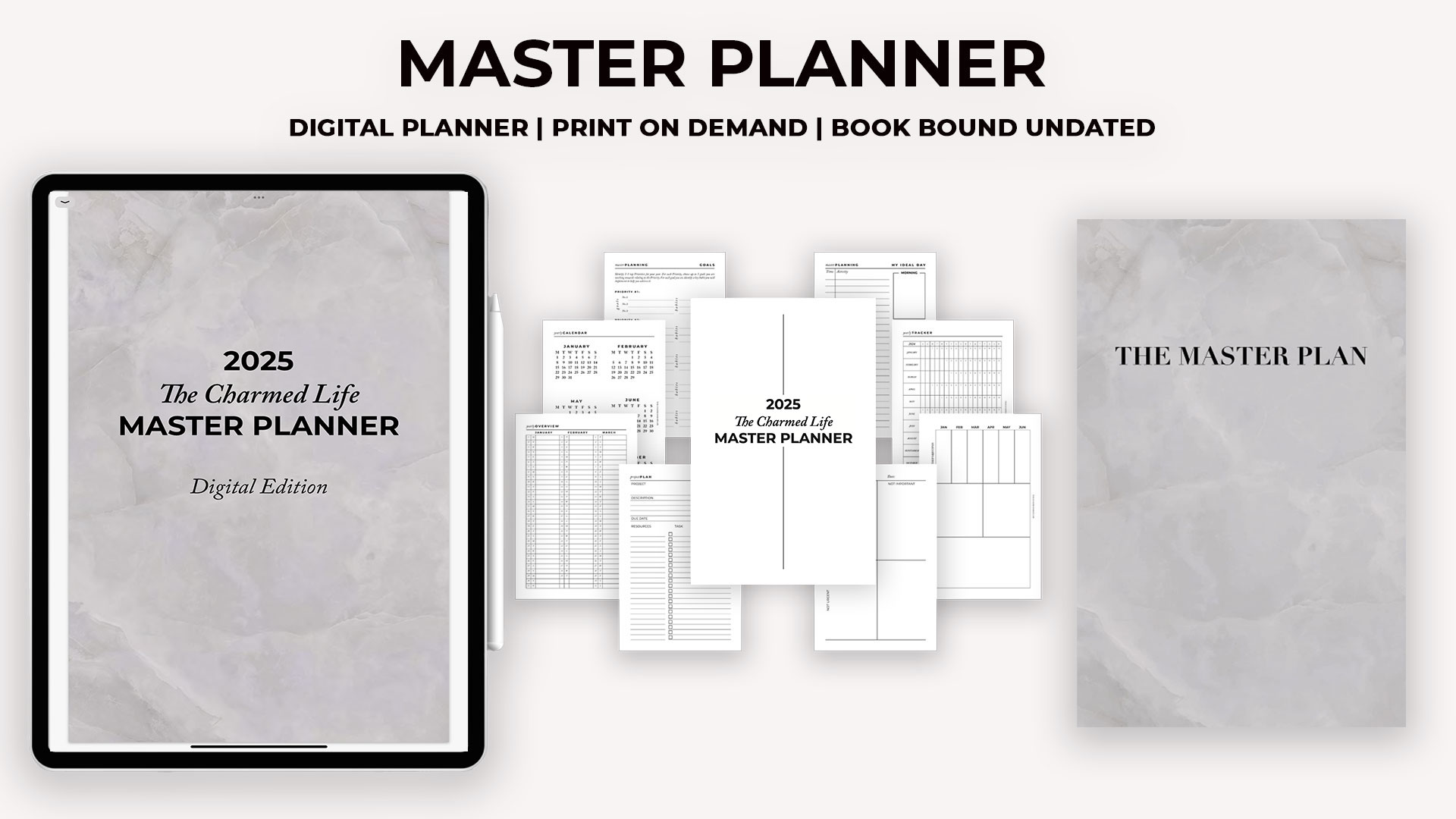
The Charmed Life Master Planner is my planner of choice because it provides a comprehensive system to help you manage your time, tasks, and goals. With tools like Brain Dump Inserts, Project Planning Pages, and Daily and Weekly Agenda Spreads, this planner ensures that everything you need is in one place—no scattered notebooks, no missing pieces.
2. Functional Planning Routines The second essential element is creating consistent planning routines. I sit down to plan almost every single day, but I don’t follow the same process every time. Instead, I use different routines for yearly, quarterly, monthly, weekly, and daily planning.
These routines allow me to break down my big-picture vision into small, actionable steps that I can tackle each day. By following these routines, I ensure that I stay on track with my goals and always know what to focus on next.
When you combine a functional planner with these routines, you’ll have the tools and structure you need to plan consistently and make meaningful progress toward your goals.
The Essential Functional Planning Routines
Consistency in planning isn’t about spending hours each day with your planner—it’s about following a series of routines that align your goals and priorities with actionable steps. These functional planning routines will help you break down your big-picture vision into manageable pieces so you can stay on track, day by day.
Yearly Planning Routine
Purpose: Set the vision and direction for your year.
You can’t create the life you want unless you know what that life looks like and have a plan to get there. My yearly planning routine focuses on clarifying goals and breaking them into actionable steps.
Here’s what I do:
Set my goals for the year.
Break larger or longer-term goals into milestones.
Define objectives for achieving each goal and assign them to specific quarters or months.
Populate my planner with known tasks, events, and due dates.
Quarterly Planning Routine
Purpose: Create a 90-day plan of action and check your progress.
Planning for 90 days at a time gives you enough focus to make progress while staying flexible to adjust your plans as needed.
Here’s what I do:
Check progress toward my goals and milestones.
Adjust plans to account for obstacles or changes.
Generate a quarterly business plan.
Populate action plans for the next quarter’s objectives.
Allocate tasks to monthly trackers and master task lists.
Monthly Planning Routine
Purpose: Set reasonable expectations for what can be accomplished in a month.
Overloading your monthly to-do list is a recipe for frustration. My monthly routine ensures I have enough time to focus on what matters most.
Here’s what I do:
Brain dump new tasks and ideas for the month.
Populate my monthly calendar with important dates.
Check progress on project plans.
Fill in my monthly master task list and tracker.
Assign important projects and tasks to specific weeks of the month.
Weekly Planning Routine
Purpose: Outline a schedule to manage tasks and expectations for the week.
The week is the perfect unit of time for time management—168 hours to allocate instead of being constrained by just 24 hours in a day.
Here’s what I do:
Get clear on the week’s objectives and priorities.
Assign tasks, events, and deadlines across the week.
Create a weekly to-do list.
Ensure I’ve planned for self-care and other essential habits.
Optional but impactful: Check in with key people in my life to align expectations.
Daily Planning Routine
Purpose: Create a prioritized schedule for each day.
At this point, my goals and tasks are already organized, so daily planning becomes about showing up and executing the plan.
Here’s what I do:
Review my ideal daily schedule, scheduled items, and weekly to-do list.
Assign my top 3 priority tasks for the day.
Identify other tasks to work on to fill my time.
Leave white space in my schedule for unexpected items or interruptions.
Each of these routines builds on the one before, helping you move from a clear vision for your year to small, actionable steps for each day. With these routines, you can feel confident in your plans and stay consistently productive.
Tips for Sticking to Your Planner Consistently
Developing routines is essential for consistent planning, but sticking to those routines requires a bit of extra strategy. Here are some additional tips to help you integrate your planner into your daily life and make it a habit:
1. Set a Daily Planning Time Block Dedicate a specific time each day to review and update your planner. Whether it’s first thing in the morning, during lunch, or in the evening, consistency is key. Treat this time as a non-negotiable appointment with yourself.
2. Use Reminders to Build the Habit Set phone reminders to prompt you to plan and check in with your progress throughout the day. A morning reminder can help you set your day’s priorities, while midday and evening reminders ensure you stay on track and reflect on your progress.
3. Keep Your Planner Visible Out of sight, out of mind! Keep your planner open and in a place where you can see and access it easily. This visual cue helps you stay engaged with your plans and reduces the likelihood of forgetting to use it.
4. Start Small If you’re new to consistent planning, start with just one routine—like daily planning—and build from there. As you grow comfortable with the habit, add in weekly, monthly, and quarterly routines to enhance your system.
5. Make It Enjoyable Add personal touches to your planner that make you excited to use it. Use colorful pens, stickers, or motivational quotes. When your planner feels like a tool and a source of inspiration, you’ll naturally want to engage with it more.
6. Reflect and Celebrate Progress Take time to look back on what you’ve accomplished. Reflection not only helps you improve your planning process but also reinforces the value of using your planner consistently. Celebrate your wins—big or small!
By following these tips and pairing them with functional planning routines, you’ll turn your planner into a daily tool for focus, productivity, and progress.
Consistency doesn’t happen overnight, but with these strategies, you’ll soon find your planner becoming an essential part of your day!
Learn More About Planning for a Balanced and Successful Life
Are you ready to take your planning to the next level? If you’ve ever wondered how to balance all your work tasks, personal responsibilities, and the many other priorities in your life, my upcoming workshop is designed just for you!
Mark Your Calendar: How to Plan for a Balanced and Successful Life in 2025
🗓️ Saturday, January 18th at 12pm EST / 9am PST
In this live workshop, I’ll share:
How I juggle work, personal life, and other key priorities without feeling overwhelmed.
Strategies for aligning your daily plans with your long-term goals.
Detailed guidance on how to use your planner to stay productive and focused across all areas of your life.
Actionable tips to balance your tasks while creating time for the things that matter most.
This workshop will give you a deeper understanding of how to plan intentionally and productively, so you can approach your days with clarity and confidence.
✨ Don’t miss this opportunity to start 2025 with a clear plan and the tools you need to succeed!
A functional planner is more than just a place to write down your tasks and appointments—it’s a system designed to help you stay productive, organized, and focused on your goals. If you want your planner to truly support your productivity, here are 10 essential elements you need to include:
1. A Brain Dump Section
Sometimes, the key to productivity is simply clearing your mind. A brain dump section gives you dedicated space to capture all your thoughts, tasks, and ideas in one place, so nothing gets forgotten. This helps reduce mental clutter and allows you to focus on what’s most important.
2. Task Prioritization System
Writing down tasks is a good start, but prioritizing them is essential. Include tools like the Eisenhower Matrix or prioritization inserts in your planner to sort tasks by urgency and importance. This ensures you’re focusing your energy on the right things at the right time.
3. Project Planning Pages
Big projects can feel overwhelming without proper organization. Include sections to break down projects into manageable steps, track progress, and organize resources. This makes tackling long-term goals much more achievable.
4. Yearly Overview and Goal Tracker
A yearly overview helps you see the big picture, while a goal tracker keeps your long-term objectives front and center. Use these tools to map out key milestones and monitor your progress throughout the year.
5. Monthly Calendar and Task List
A clear monthly calendar layout allows you to track important dates and deadlines. Pair this with a task list to get an at-a-glance view of your priorities for the month.
6. Weekly and Daily Agenda Spreads
Weekly and daily agenda spreads are the backbone of any planner. They provide space to plan your schedule, allocate time blocks, and manage your daily to-do lists effectively. These spreads ensure that you’re staying on track day by day.
7. Space for Brainstorming and Idea Development
Great ideas need space to grow. Include mind-mapping or brainstorming inserts to develop raw ideas into actionable plans. This section is perfect for pre-planning and creative problem-solving.
8. Routines and Habit Tracker
Consistency is the foundation of productivity. Add a section to establish and track daily and weekly routines. A habit tracker can also help you monitor your progress toward building positive, consistent habits.
9. Notes and Reference Pages
A well-organized planner includes space for additional information, meeting notes, or random ideas that pop up during the day. Keep everything in one place to avoid losing valuable information.
10. Vision Board or Inspiration Section
Staying motivated is easier when you can visualize your goals. Include a vision board or inspiration section in your planner to align your plans with your aspirations. This serves as a daily reminder of why you’re working toward your goals.
Why These Elements Matter
By including these 10 elements in your functional planner, you’re creating a system that supports every aspect of your productivity. From brainstorming and goal setting to daily scheduling and long-term tracking, these tools will help you prioritize, organize, and achieve your goals efficiently.
If you’re ready to take your planning to the next level, start incorporating these essential elements into your functional planner today. Your most productive self is waiting!
Do you ever feel like no matter how much you plan, you just can’t get ahead? Endless to-do lists, scattered ideas, and that overwhelming feeling of burnout—it’s not you; it’s your system! What if I told you there’s a way to solve these productivity problems once and for all with the right planner?
Most planners on the market aren’t designed to solve real productivity issues. They’re great for jotting down dates and tasks, but they leave out the tools and strategies you need to truly manage your time, tasks, and goals. That’s why today, we’re diving into 10 Productivity Problems That Can Be Solved with a Functional Planner. By the end of this post, you’ll understand how the right system can completely transform the way you plan and get things done.
Problem 1: Endless To-Do Lists
Issue: If you feel like you have a never-ending to-do list, you may struggle to organize or even start on your tasks. Often, people pick tasks they feel capable of doing but leave high-priority items incomplete. Over time, these neglected tasks can create bigger problems.
Typical Planners: Most planners encourage task listing but lack a framework for prioritization. While writing down everything you need to do is a good first step, it often results in overwhelming lists with no clear action plan.
Functional Planner Solution: A functional planner provides dedicated space to capture all your tasks and a method to prioritize them. The Charmed Life Master Planner includes Brain Dump Inserts with the Eisenhower Prioritization Matrix, helping you identify tasks that need immediate attention, those that can be scheduled, delegated, or deferred, and tasks that can be eliminated altogether.
Problem 2: Scattered Ideas and Lack of Focus
Issue: You have lots of ideas and projects floating in your mind, but they lack clarity or a clear path forward. This scattered thinking can make it hard to focus or take actionable steps.
Typical Planners: Most planners don’t offer tools to brainstorm or refine ideas. Without a space to work through raw concepts, you may lose track of creative thoughts or fail to develop them into actionable plans.
Functional Planner Solution: A functional planner includes dedicated Brainstorm Pages for mind mapping and refining ideas. The Charmed Life Master Planner ensures you have space to generate, organize, and turn your raw ideas into actionable strategies.
Problem 3: Poor Project Organization
Issue: Big projects feel overwhelming because you can’t see how the tasks fit together or where to start. Without clear organization, progress stalls, and deadlines loom.
Typical Planners: Standard planners don’t have sections to break down and track projects, making it hard to strategize and stay on top of all the moving parts.
Functional Planner Solution: The Charmed Life Master Planner includes a Project Planning Section with tools like the Yearly Project Matrix to distribute tasks across timelines, Project Tracker to monitor progress, and detailed Project Plans with Notes to clarify objectives and next steps.
Problem 4: Overload and Burnout
Issue: You feel overwhelmed trying to tackle too many tasks or goals at once. Without a plan to distribute your workload, it’s easy to burn out before making meaningful progress.
Typical Planners: Most planners don’t offer tools to spread out tasks and goals over time, leading to an “all-at-once” mindset that creates unnecessary stress.
Functional Planner Solution: A functional planner helps balance your workload with tools like the Yearly Project Matrix in the Charmed Life Master Planner, which allocates tasks across short-term, mid-term, and long-term timelines. This ensures steady progress without overloading yourself.
Problem 5: Lack of Routine
Issue: Without daily and weekly routines, it’s hard to establish consistency and maximize your time. You may find yourself reacting to tasks instead of proactively planning your day.
Typical Planners: Most planners don’t include sections for designing routines, leaving you to figure it out on your own.
Functional Planner Solution: The Charmed Life Master Planner includes a Routines Section to help you create daily and weekly schedules that align with your goals. These routines become the foundation for sustainable productivity.
Problem 6: Lack of Progress Tracking
Issue: Without a way to track your progress, you might feel like you’re spinning your wheels, unsure of how far you’ve come or how close you are to achieving your goals.
Typical Planners: Standard planners lack tools for monitoring milestones or visualizing progress, making it harder to stay motivated.
Functional Planner Solution: The Charmed Life Master Planner provides tools like the Yearly Tracker, Monthly Task Lists, and progress-oriented project inserts, giving you a clear view of where you stand and what’s next.
Problem 7: Disorganized Information
Issue: When notes, tasks, and ideas are scattered across multiple notebooks or apps, valuable information gets lost, and time is wasted searching for it.
Typical Planners: Most planners don’t provide comprehensive sections to keep everything in one place.
Functional Planner Solution: The Charmed Life Master Planner consolidates everything with Notes Pages, Brainstorm Inserts, and project tools, so you can keep all your information organized and accessible.
Problem 8: Inefficient Use of Time
Issue: You find yourself running out of time each day, unsure where it all went. Without a plan to allocate time wisely, it’s easy to waste valuable hours.
Typical Planners: Many planners focus only on daily or weekly schedules without tools to evaluate how you’re actually spending your time.
Functional Planner Solution: The Charmed Life Master Planner includes tools like Daily Agendas, Yearly Trackers, and Routines Pages to help you make the most of your 24 hours and align your time with your priorities.
Problem 9: Lack of Motivation and Goal Clarity
Issue: You lose momentum because your goals feel vague or disconnected from your day-to-day tasks. Without a clear vision, staying motivated is a challenge.
Typical Planners: Few planners include tools to help you define or connect with your goals meaningfully.
Functional Planner Solution: The Vision Board Section and Goal Planning Inserts in the Charmed Life Master Planner help you clarify your objectives and keep your vision front and center for daily motivation.
Problem 10: Feeling Disconnected from Progress
Issue: Without a process to reflect on your achievements, it’s hard to recognize the progress you’re making, leaving you feeling stuck or stagnant.
Typical Planners: Most planners don’t provide tools for reflection or progress review.
Functional Planner Solution: The Charmed Life Master Planner supports reflection with tools like Progress Trackers, Monthly Reviews, and space to celebrate milestones, helping you stay motivated and aware of your growth.
Ready to Transform Your Productivity?
If you’re ready to take your productivity to the next level and finally solve the problems holding you back, the Charmed Life Master Planner is here to help. It’s not just a planner—it’s a complete productivity system designed to prioritize your tasks, organize your projects, and balance your time so you can achieve your goals without the stress.
Whether you’re juggling work, personal life, or big dreams, this planner gives you the tools to stay on track and get more done.
Click the link to learn more and grab your Charmed Life Master Planner today. Let’s make this your most productive and successful year yet!
Does using a planner really make you more productive?
It’s a great question, and the short answer is yes. Yes, your planner can help you become more organized, more productive, and even get more done. But let’s be honest—for many people, this just isn’t happening. Why? Because it all comes down to the system your planner provides.
A planner is more than just a place to write down your to-do list or schedule appointments. At its best, a planner gives you a system or process to manage your time, tasks, and goals effectively. Unfortunately, most planners on the market don’t offer a great system—and that’s where the problem lies. Let’s break this down.
The Problem with Typical Planners
Think about the planners you’ll find at Target or your local office supply store. Most of them include:
A few mini calendar pages at the beginning for reference.
Monthly spreads with boxes big enough for reminders or appointments.
Weekly agenda pages where you can list a handful of tasks per day.
A few notes pages or maybe a contact list tucked in the back.
Sound familiar? Now ask yourself: what system or process is this type of planner encouraging you to follow when you use it?
From what I’ve seen—and I’ve researched and designed systems as a core part of my business—this type of planner guides you to take two main actions:
Write down important dates on your calendar.
List out your daily to-do list.
These are certainly useful steps, but they’re just the basics. A system like this leaves out solutions for crucial productivity challenges:
Prioritizing tasks: Without a way to decide what matters most, you’re stuck trying to tackle an endless to-do list with no plan.
Brainstorming raw ideas: There’s no space to develop ideas or refine solutions.
Organizing projects strategically: You’re left wondering which tasks belong together or how to approach bigger objectives.
Distributing goals over time: You may feel pressure to do everything all at once, leading to burnout.
Building routines: These planners don’t help you manage your time beyond the limits of a single day.
The result? A planner that solves a few basic problems but leaves much to be desired when it comes to supporting your productivity in a meaningful way.
Introducing the Charmed Life Master Planner
When I noticed these gaps, I knew there had to be a better way. That’s why, in 2014, I began developing the Charmed Life Master Planner. This isn’t just another planner—it’s the first Functional Planner, designed to bridge the gap between a typical planner and a fully supportive productivity system.
Unlike standard planners, the Charmed Life Master Planner is built around a three-phase system that turns ideas into actionable plans, helping you balance your time and workload while staying focused on your goals. With over a dozen unique inserts, this system was designed to make planning smarter, not harder.
Overview of the Three-Phase System
Phase 1: Capture Brilliant Ideas
The first phase helps you clear your mind, prioritize tasks, and organize raw ideas into plans. The tools include:
Brain Dump Inserts: Write down everything on your mind, then prioritize tasks by urgency and importance. This helps you cut down an overwhelming list into a manageable size.
Brainstorm Pages: Dedicated space for pre-planning and mind mapping, allowing you to refine ideas into actionable solutions.
Notes Pages: A convenient place to capture extra details and reference information, all within your planner.
Phase 2: Organize Your Work
Once you’ve captured your ideas, the next step is to organize and strategize your goals and projects. Tools include:
Yearly Project Matrix: Distribute your objectives across short-term, mid-term, and long-term timeframes so you’re working methodically throughout the year.
Project Tracker: Track all your projects and their statuses at a glance.
Project Plans with Notes: Clarify goals, outline resources, and create strategic action steps for each project.
Phase 3: Track and Allocate Your Time
In the final phase, you track your progress and manage your time effectively. Tools include:
Yearly Calendar, Tracker, and Overview: Plan your year with clarity and forward-plan key dates and milestones.
Monthly Calendars and Task Lists: Keep your schedule and tasks organized at a monthly level.
Weekly and Daily Agenda Spreads: Manage your time and stay focused on your priorities day by day.
Routines and Vision Board Pages: Build consistent routines and keep your goals front of mind for motivation.
Why This System Works
The Charmed Life Master Planner isn’t just about tracking tasks—it’s about creating a process that makes productivity achievable. Here’s what makes it different:
It prioritizes effectively: Helps you focus on what matters most.
It strategizes intentionally: Aligns your daily actions with long-term goals.
It balances workloads: Distributes tasks across time to prevent overwhelm.
It builds habits: Supports routines that create sustainable productivity.
It works smarter, not harder: Backed by research to ensure every feature serves a purpose.
Ready to Transform Your Productivity?
So, does using a planner really make you more productive? Yes—but only if it provides the right system. The Charmed Life Master Planner is your partner in achieving more with less stress, helping you turn your ideas into action and your goals into reality.
If you’re ready to use a planner that will finally improve your productivity,it begins here.
It’s easy to feel guilty when your to-do list is longer than a novel, and you haven’t checked off every item. But here’s the truth: guilt is often more paralyzing than it is motivating. If you’re ready to ditch the shame of “not doing enough,” here are seven ways to overcome productivity guilt and start making real progress—without sacrificing your peace of mind.
Recognize What “Enough” Means for You
Why it Helps: Productivity guilt often comes from comparing your accomplishments to an unrealistic standard—usually someone else’s or society’s.
Action Step: Define your personal “enough.” This might mean completing three major tasks a day, or dedicating a certain amount of focused time on projects. When you hit your personal benchmark, let yourself feel accomplished.
Focus on Priority Tasks, Not Every Task
Why it Helps: The temptation to tackle every single item on your to-do list leaves you overwhelmed. Instead, target the tasks that are most aligned with your goals or values.
Action Step: Use methods like the Eisenhower Matrix or the 1-3-5 rule (1 big task, 3 medium tasks, 5 small tasks) to prioritize what truly matters and let the rest go guilt-free.
Stop Counting the Wrong Metrics
Why it Helps: Productivity is about outcomes, not activity. Doing more tasks doesn’t always mean you’re moving forward.
Action Step: Track progress on important milestones or goals, rather than the number of tasks completed. This shift helps you see quality over quantity.
Acknowledge the Work You Already Do
Why it Helps: When you dwell on what’s left undone, you ignore what you’ve achieved. This perpetuates the cycle of guilt and drains motivation.
Action Step: Try a nightly “win list” where you quickly jot down what you accomplished or overcame that day. Seeing real evidence of what you have done combats negative self-talk.
Set Realistic Boundaries Around Your Time
Why it Helps: Overcommitting yourself creates a constant sense of failure. By underestimating the time tasks take, you set yourself up for stress.
Action Step: Be honest about how long projects realistically require, and leave buffer time between tasks to accommodate life’s unpredictability. This buffer reduces guilt when things don’t go exactly as planned.
Give Yourself Permission to Delegate or Delay
Why it Helps: You may feel guilty if you can’t do everything on your own, but no one achieves productivity alone. Delegation and delay can free up your schedule to do what only you can do best.
Action Step: If a task isn’t essential to your unique skills or immediate goals, see if a family member, coworker, or automated system can handle it. Eliminating or delaying non-urgent tasks prevents overload.
Reframe “Failures” as Growth
Why it Helps: When you inevitably miss a deadline or skip a workout, guilt can snowball into harsh self-criticism. But failure is simply feedback—it shows you what to adjust next time.
Action Step: The next time you stumble, ask yourself what lesson you can take from the experience. Maybe you planned too many tasks for the day or underestimated a project. Adjust for tomorrow, and move on with compassion.
Final Thoughts
Productivity guilt can become a relentless cycle—one that leaves you feeling you’re always behind or not enough. By prioritizing tasks that genuinely matter, tracking real progress, and embracing self-compassion, you’ll find yourself free to enjoy the wins (big and small) that come your way. Remember: your worth isn’t defined by the number of checked-off boxes but by the meaningful strides you take toward your goals—and the grace you show yourself along the way.
Try these steps out and watch your productivity guilt melt away. Because once you learn to let go of what doesn’t serve you, you open the door for what truly matters to flow in.
Ready to Take Your Productivity to the Next Level? If you found these habits helpful and want to dive even deeper into creating a life that feels truly balanced, I invite you to join my upcoming How to Plan for a Balanced and Successful Life in 2025 workshop. In this live session, I’ll walk you through practical strategies for setting meaningful goals, aligning your daily habits with your bigger vision, and simplifying your planning routine to reduce overwhelm.
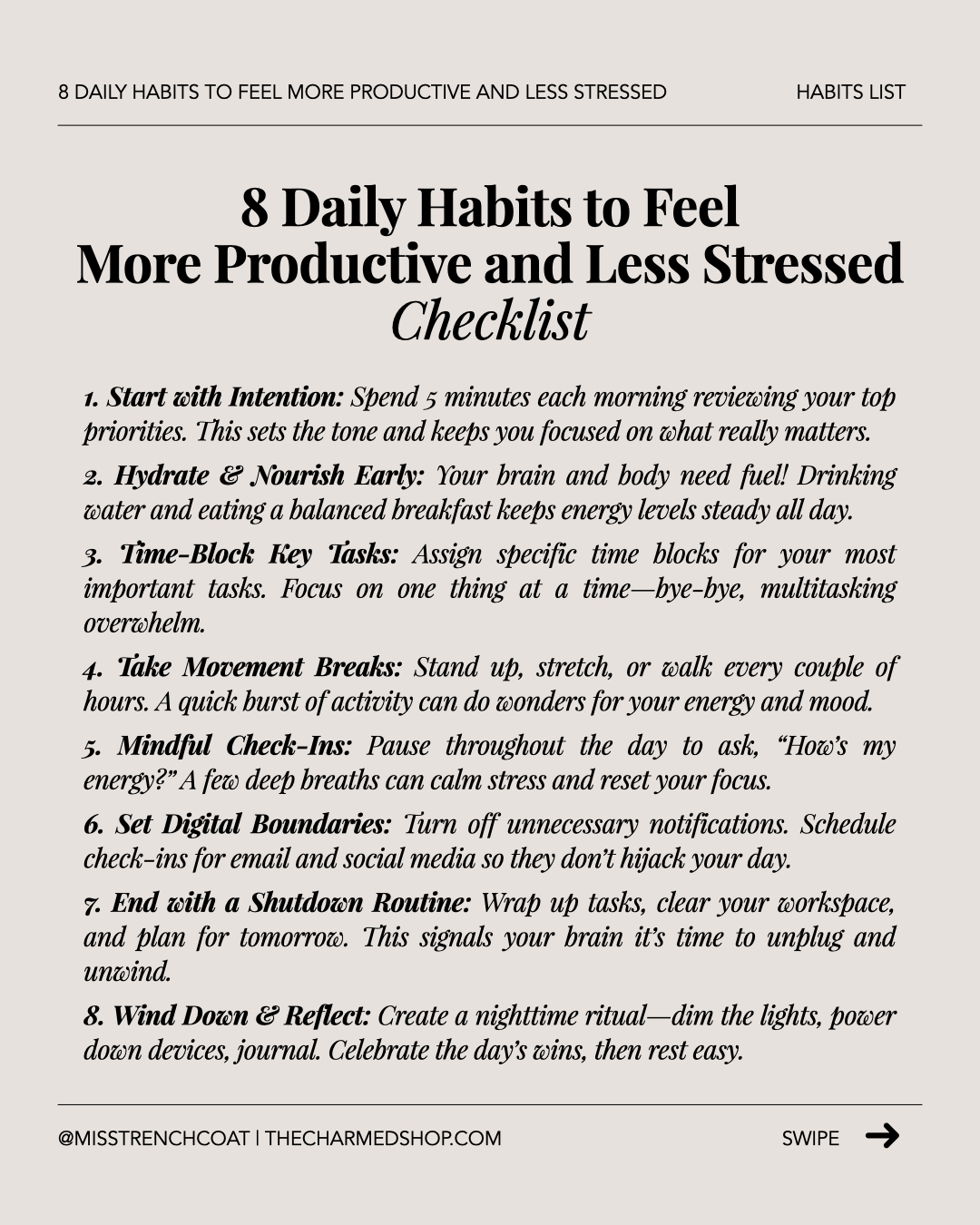
Feeling overwhelmed by your daily to-do list? You’re not alone. The pace of modern life can leave us juggling countless priorities—often at the expense of our health and peace of mind. Fortunately, by making a few simple changes and building small habits into your daily routine, you can regain a sense of calm and focus. Below are eight tried-and-true habits designed to help you stay productive without burning out.
1. Start Your Day with Intention
How often do you wake up and jump right into a flurry of tasks—checking emails, skimming social media, and gulping down coffee on the run? Instead, spend 5–10 minutes setting a clear intention for the day. Visualize how you want the day to go and jot down your top priorities. This simple practice grounds you in a positive mindset and gives you a roadmap for success.
Quick Tip: Choose a quiet spot (even if it’s just the kitchen table before the family wakes up), close your eyes, take a few deep breaths, and think about one word that represents the energy you want to carry with you—like “calm” or “focused.”
2. Hydrate & Nourish Early
Your brain and body need fuel to function optimally, so start the day by giving them the basics. Drinking water first thing in the morning rehydrates you after hours without fluids. Follow up with a balanced breakfast—think protein, complex carbs, and healthy fats—to keep your energy stable and your mind sharp. Skipping meals or relying on caffeine alone can lead to energy crashes and make you more susceptible to stress.
Quick Tip: Keep a glass of water beside your bed and drink it as soon as you wake up. Then plan a quick, nutritious breakfast—overnight oats, a protein shake, or eggs and whole-grain toast are all efficient, energizing options.
3. Time-Block Your Key Tasks
If you’ve ever ended the day thinking, “Where did the time go?”, time-blocking might be your lifesaver. Break your day into dedicated segments for your most important tasks, whether that’s project work, answering emails, or personal errands. By focusing on just one task at a time, you reduce the mental clutter that comes from constant multitasking.
Quick Tip: Set alarms on your phone or calendar to signal the start and end of each time block. When the alarm rings, move on to the next segment—this helps keep you on schedule.
4. Take Movement Breaks
Sitting for extended periods can drain your energy and escalate stress. Your body thrives on movement, so integrate short bursts of activity—like stretching or a brief walk—every couple of hours. These mini-breaks promote better circulation, ease tension in your muscles, and re-energize your mind, helping you return to work refreshed.
Quick Tip: Try doing a quick set of squats, lunges, or a simple yoga pose during your break. Even a two-minute stretch can make a noticeable difference in how you feel.
5. Practice Mindful Check-Ins
Stress often creeps up on us when we’re not paying attention to our mental state. Pause every few hours to take a quick inventory: How is my energy level right now?Am I feeling stressed or anxious? If you’re feeling off, it’s a sign to take a brief break, grab some water, or just breathe deeply. These mindful moments help prevent overwhelm and keep you grounded.
Quick Tip: Set a reminder on your phone that says “Mindful Check-In.” When it goes off, close your eyes, inhale deeply for four counts, hold for two, then exhale for four. Repeat until you feel centered again.
6. Set Boundaries Around Digital Distractions
Smartphones, social media, and constant notifications can be productivity killers. Decide ahead of time when you’ll check email or scroll through social feeds, rather than letting them dictate your day. Turning off non-essential notifications and closing distracting tabs during work hours can have a profound impact on how efficiently (and peacefully) you operate.
Quick Tip: Schedule “communication windows” at specific times. Outside those windows, silence your phone or place it face-down so that you’re not tempted to respond to every buzz.
7. End Your Workday with a Shutdown Routine
Without a clear boundary between work and personal time, stress has a way of leaking into your evening. Spend the last 10–15 minutes of your workday wrapping up tasks, reviewing any unfinished business, and planning your top goals for tomorrow. That way, you’ll give your mind permission to unplug from work-mode when you’re done.
Quick Tip: Physically “closing the day” can be as simple as tidying up your desk, logging off your computer, and saying out loud, “Work is done for today.” This signals your brain that you’re transitioning out of work mode.
8. Wind Down & Reflect
Racing thoughts about tomorrow’s tasks can sabotage a good night’s sleep. Create a relaxing bedtime ritual—dim the lights, turn off screens at least 30 minutes before sleep, or read something that calms your mind. Taking a few minutes to journal about your day—what went well, what didn’t—can help you process events and release any lingering stress.
Quick Tip: End your journal entry with a brief gratitude list. Focusing on what you appreciate can shift your mindset to a more positive place, setting you up for better rest and a brighter morning ahead.
Putting It All Together
The key to a more productive, less stressful life lies in weaving small, consistent habits into your day. By starting each morning with intention, maintaining steady energy levels, limiting distractions, and finishing your day with a clear wrap-up, you build a strong foundation for long-term balance and success. These daily actions may seem minor on their own, but together they can create a powerful ripple effect that leaves you feeling more in control and less overwhelmed.
Remember: Productivity isn’t about doing more; it’s about doing what matters most—and doing it with clarity, calm, and intention. So, pick a few of these habits (or all eight!) and integrate them into your routine. Over time, you’ll notice a significant shift in both your output and your mental well-being.
Ready to Take Your Productivity to the Next Level? If you found these habits helpful and want to dive even deeper into creating a life that feels truly balanced, I invite you to join my upcoming How to Plan for a Balanced and Successful Life in 2025 workshop. In this live session, I’ll walk you through practical strategies for setting meaningful goals, aligning your daily habits with your bigger vision, and simplifying your planning routine to reduce overwhelm.
Which one of these habits feels most crucial for your current lifestyle? Share in the comments below—I’d love to hear how you plan to adopt these tips and make 2025 your most productive (and least stressed) year yet!
Have you ever felt like you’re carrying the weight of the world on your shoulders—juggling work, family, relationships, and personal goals—yet still feel like it’s never enough? If so, you’re not alone. I firmly believe women today have a major productivity problem! We’re running our homes, holding down one (or two) jobs, managing endless responsibilities, and still find ourselves feeling guilty, overwhelmed, and stressed that we haven’t done more.
And here’s the kicker: We’re already the most productive people on the planet. Between raising children, caring for loved ones, tending our homes, volunteering in the community, and excelling at our careers, we often end up sacrificing our own well-being to meet endless external expectations. The result? Exhaustion, self-doubt, and a nagging sense that we’re failing—when in truth, we just need a new perspective on productivity.
Yes, planning can help, but much of the advice out there sends us down the wrong path, glorifying busy schedules and 4am hustle mindsets. Stickers and washi tape won’t fix overwhelm if we don’t address the deeper issues behind our never-ending to-do lists. We need to shift our focus away from doing “all the things” and learn to set meaningful boundaries, honor our priorities, and create balance on our own terms.
In this post, we’re going to challenge the notion that productivity is about cramming more into your day. Instead, we’ll explore how real balance emerges when you get honest about what truly matters, stop measuring your worth against external “shoulds,” and channel your energy into the tasks, goals, and aspirations that light you up. Let’s dig in and discover how to get more done in 2025—without losing yourself in the process.
Why Women Feel Overwhelmed
Let’s talk about why we, as women, feel so overwhelmed by our obligations—because let’s face it, we wear a lot of hats. We’ve never had so much power, freedom, and opportunity in history, but we’re also facing more expectations than ever before. Women are still expected to be the primary caregivers: raising children, caring for a spouse or aging family, tending the home, and volunteering in the community. And at the same time, many of us work one (or even two) full-time jobs, with more women now serving as head of household or the primary breadwinner.
So, here we are—quite literally running the world—yet we’re still plagued by the sense that we’re failing. We feel like we’re not doing enough, and that constant stress leads us to continue sacrificing our personal energy everywhere else while ignoring our own well-being. That’s precisely where the overwhelm and guilt start to creep in, and why we end up feeling burnt out or resentful.
Adding fuel to the fire is the fact that society often glamorizes “busy” as if it’s a badge of honor. We’re told we should be able to juggle it all—perfect home, perfect job, perfect family life—without ever slowing down. But here’s the truth: none of us can run nonstop without consequences. We end up drained, anxious, and unsure of how to catch up, and the pressure to “do it all” only perpetuates the cycle.
The real problem is that we aren’t just not doing enough—we’re often doing too much of the wrong things, or at least too many things that don’t serve our genuine priorities. This leaves little room for self-care, rest, or joy. That’s why it’s so important to pause, reflect on what really matters, and cut out the tasks, expectations, and obligations that are keeping us in a perpetual state of overwhelm.
The Misconceptions of Hustle Culture
We’ve all heard it: “Eat, sleep, hustle, repeat!” or “The secret to my success is my 4am morning routine.” or my personal favorite, “You can sleep when you’re dead; the bags under my eyes are Chanel!” It’s all around us—this skewed advice that if we just pushed ourselves harder, managed our time better, and sacrificed more of our peace, we’d magically become super-productive.
But here’s the thing: this hustle culture is not sustainable, and it’s not even aligned with what truly drives productivity. Hustle culture glorifies busyness, and for many women, it becomes a never-ending treadmill of feeling like we need to do more—often to our own detriment. We end up comparing ourselves to those who proudly proclaim they work non-stop, which only leads us to burn out faster.
Yes, I’ve bought into these stereotypes before—and even perpetuated them at times—but not anymore. The truth is, women are already doing so much, and the hustle mindset only piles on additional stress and unrealistic expectations. We end up exhausted, questioning our worth, and wondering why we can’t keep up with this mythical ideal of “doing it all.”
Instead of subscribing to a 24/7 hustle, we need to focus on the results we want to achieve rather than ticking off endless tasks we think we “should” be doing. We have to stop should’ing ourselves to death—because that’s what hustle culture demands: an endless “should” list that never acknowledges our real capacity, needs, or well-being.
By letting go of the hustle mindset, we make space to prioritize, plan effectively, and set boundaries that safeguard our energy. After all, if we’re already working so hard, shouldn’t we ensure that our efforts align with what truly matters to us? Hustle culture doesn’t teach us that—we need to learn it for ourselves.
The Truth About Finding Balance
Let’s set the record straight: balance doesn’t mean you give equal time and energy to every area of your life. True balance comes from clarity on your priorities and the willingness to make intentional decisions about what you’ll focus on—and what you won’t. It means making space for the work and personal tasks that matter most, rather than running yourself ragged trying to be all things to all people.
The reality is, you don’t need to do everything by yourself. You don’t need to chase every new project or say “yes” to every request that lands on your plate. In fact, trying to play superhero usually results in more stress, less joy, and missed opportunities to do the things that truly fulfill you. It’s easy to get caught up in external pressures and the ever-present fear of letting someone down, but if you never pause to consider your own goals and well-being, you’ll never find that elusive sense of “balance.”
A big piece of this puzzle is self-reflection—taking the time to understand what makes you happy, which tasks are aligned with your authentic values, and where your energy is best spent. That process isn’t always easy, especially if you’ve spent years chasing someone else’s definition of success. But once you recognize that your life is yours to shape, you unlock a powerful truth: you already have permission to prioritize what matters most to you.
Remember: balance doesn’t mean perfection. It doesn’t mean your schedule will always run like clockwork or that you’ll never feel pulled in different directions again. It means you have a compass guiding your decisions, and you can confidently say “no” to demands that don’t serve you. When you learn to stop should’ing yourself and start getting clear on who you are and what you want, real balance becomes a natural outcome—one that empowers you to get more done without sacrificing your well-being in the process.
Shifting Your Mindset to Embrace Your Worth
One of the biggest roadblocks women face on the path to productivity is not believing we’re enough. We tend to measure our worth by how many tasks we accomplish, how perfectly we juggle roles, or how consistently we meet everyone else’s expectations. But here’s the truth: you are already incredibly productive and capable, and no to-do list will ever define your value.
It’s time to give yourself credit for all that you do. You’ve been comparing yourself to others who might have different priorities, resources, or even support systems—yet you never stop to acknowledge the magnitude of what you alone handle every single day. When you’re constantly looking around and thinking “I should be doing more,” you undermine the great work you’re already doing.
Remember, your worth isn’t tied to how many checkmarks appear on your to-do list or how flawlessly you schedule your time. Your worth is inherent. It comes from who you are, not how perfectly you perform. That’s why it’s so essential to stop ‘should’ing yourself to death and start acknowledging that you’re already a strong, capable person who can make your own choices about what truly matters.
One powerful way to shift your mindset is to use daily affirmations—simple, intentional statements that reinforce positive beliefs about yourself. For instance:
> “I am a Smart, Strong, Capable Woman, and I’m Prepared to Get Shit Done!”
Repeating affirmations like this can help rewire your perspective so that, instead of feeling you’re behind or inadequate, you recognize that your productivity and potential are already within you. By embracing your self-worth, you’ll find it easier to filter out unhelpful external expectations, prioritize what genuinely matters, and finally make room for the balanced, fulfilling life you deserve.
Redefining “Getting More Done” in 2025
It’s time to throw out the idea that “getting more done” means adding endless tasks to your day. True productivity isn’t about checking off boxes just to say you did; it’s about aligning your work with what matters most in your life. That’s why I teach a system of defining “Priorities” (with a capital P)—the people, places, and institutions that deserve your focused energy because they help shape the life you truly want to live.
In my system, you limit yourself to 5 Priorities. Why five? Because you can only meaningfully devote yourself to a handful of areas without sacrificing your well-being. And here’s the rule: you must be Priority 1. Think of the airline analogy—if you don’t secure your own oxygen mask first, you can’t effectively help anyone else. It might feel strange to put yourself at the top of the list, but trust me, when you are taken care of, everything else you manage thrives, too.
Your other four Priorities can be anything that genuinely matters to you: your partner, children, job, home, community, religious institution—whatever resonates. But make sure each Priority is something you want to establish, increase, or maintain to a specific standard. The beauty of this approach is that it clarifies where to channel your energy each day. Instead of juggling a million random tasks, you filter your choices based on which Priorities they serve.
Once you have your five, the next step is to set up to three goals per Priority. These goals are tangible benchmarks or outcomes you want to achieve. If “Your Home” is a Priority, maybe one of your goals is to upgrade your living space by decluttering or renovating a particular room. If “Your Business” is a Priority, a goal might be to launch a new product or grow your audience by a certain number.
By defining—and limiting—your Priorities, you’ll see a dramatic shift in how you plan and execute your tasks. You’ll spend less time on meaningless busywork and more time on what truly deserves your attention. That’s how you get more done in 2025: by focusing on the things that deeply matter and giving yourself permission to let the rest go.
Practical Strategies to Bring More Balance
So, how do we take all these insights—about your worth, about redefining “getting more done,” and about setting 5 clear Priorities—and actually put them into practice? The truth is, it starts with getting a handle on the tasks that occupy your days. Here’s a simple yet powerful exercise to guide you toward living in alignment with your true Priorities rather than letting overwhelm rule your life:
1. Identify Your Top 5 Priorities
Write them down in order, with you as Priority 1. (Remember, you can’t show up for others if you aren’t showing up for yourself!)
2. Brain Dump Your Tasks
Under each Priority, list out every task or responsibility you’re managing—or would like to manage—to establish, increase, or maintain that area of your life. Don’t hold back; get it all on paper. This could be anything from scheduling doctor’s appointments for yourself to brainstorming a new marketing campaign for your business.
3. Apply the Eisenhower Matrix
Now, review each task and decide which quadrant of the Eisenhower Matrix it falls into:
– Important + Urgent: These tasks go on your to-do list right away; they matter to your Priority and need timely action.
– Important + Not Urgent: Schedule these tasks for a later date. They still matter, but there’s no immediate deadline or crisis.
– Not Important + Urgent: Delegate these tasks to someone else or find a system to handle them automatically. If it’s urgent to someone else but not significant to your Priority, it’s better not to let it derail your day.
– Not Important + Not Urgent: Delete or defer these tasks guilt-free. If they don’t move the needle for you, they’re just cluttering your schedule.
4. Delegate and Delete with Confidence
One of the biggest challenges women face is the guilt of handing off or ignoring tasks. But when you see, in black and white, that a task isn’t serving your Priority (or maybe anyone’s priority), it becomes much easier to let it go. The goal is to free up precious time and energy for the tasks that really matter to you.
5. Plan Your Next Moves
Finally, reorganize your “Important and Urgent” tasks into your planner or calendar to ensure you’re giving them the attention they deserve. For the “Important but Not Urgent” ones, set realistic deadlines or time blocks in your planner so you can chip away at them without panic.
By following this exercise—especially the Eisenhower Matrix step—you’ll be shocked at how many tasks you’ve been carrying around that don’t truly align with your 5 Priorities. Suddenly, you have permission to delegate, delete, or defer those tasks that aren’t pushing you closer to your goals. And that’s the key to genuine balance: focusing on the few activities that genuinely matter while confidently releasing the clutter that’s been weighing you down.
Finding genuine balance in your life isn’t about pushing yourself to do more. It’s about realigning your mindset around what truly matters, giving yourself permission to focus on fewer things—the right things—and confidently letting go of everything else. You already are a highly productive and capable individual; it’s simply a matter of recognizing your worth, honoring your 5 Priorities, and planning in a way that respects your time and energy.
If you need a quick reminder of just how powerful you are, repeat this affirmation:
> “I am a Smart, Strong, Capable Woman, and I’m Prepared to Get Shit Done!”
Let it guide you as you cultivate new habits, establish better boundaries, and set meaningful goals that push your life forward without burning you out.
Ready to Take the Next Step?
Join My How to Plan for a Balanced and Successful Life Workshop
If you’d like deeper, hands-on instruction for balancing personal items, work tasks, and everything in between, I invite you to sign up for my training workshop, How to Plan for a Balanced and Successful Life. In this workshop, you’ll learn:
– Practical methods for combining personal and professional priorities in your planner
– Step-by-step strategies for creating plans that accommodate all areas of your life
– Techniques to ensure you’re focusing on your most meaningful goals rather than getting lost in busywork
As the end of the year approaches, I often hear this question from my community:
“How do I set goals that I will actually achieve?”
It’s a question that speaks to the heart of effective planning—wanting not only to dream big but to create a plan you’ll follow through on. If you’re feeling stuck or unsure about how to set goals that truly work, I want to break down some common reasons you aren’t achieving your goals and walk you through the goal setting method I teach and avoids these common pitfalls.
Let’s start with a thought-provoking question: What if the reason you haven’t achieved certain goals before wasn’t due to a lack of motivation or discipline but simply because your goal-setting process wasn’t designed to truly work for you? Many people struggle to reach their goals because they unknowingly fall into common pitfalls:
Setting Arbitrary Goals: Many goal-setting methods encourage us to set goals in predefined categories, like health, career, or finances. While these areas are generally important, focusing on arbitrary categories often leads us to set goals based on what we think we “should” do rather than on what truly matters. When a goal isn’t personally meaningful, it’s difficult to stay committed. My process focuses instead on defining your true priorities, which are unique to you, and using those as the categories to set your goals against.
Mistaking Habits for Goals: It’s common to set habits, like “drink more water” or “work out daily,” as primary goals, but these habits are actually objectives or action steps to take that support a larger goal. For example, if your overarching goal is improved health, drinking more water is a strategy to support that. Reading a specific number of books a year isn’t a goal itself, rather it’s a reflection of the type of person you want to be who may be more informed or considered well read- which is the actual goal you desire. Identifying and linking these habits to a big-picture goal makes it easier to stay motivated and see meaningful progress because you have correctly identified the reason why the habit itself is crucial to your success and self-image.
Relying on Goals to Create Change: Many believe achieving a goal will magically create a sense of accomplishment or transform them into a better version of themselves. The version of themselves who eats right, works out, is great with money etc. In reality, change begins internally and must happen before you achieve the goal. Start by embodying the person you want to become, taking the actions that person would take and then your goals will happen as a natural result of the changes you’ve made.
If you resonate with any of these common mistakes or have used a goal setting method in the past that encouraged these errors to begin with, I am here to tell you that with the right goal setting system you can achieve your goals. Today I want to give you a brief overview of my method and process which has helped hundreds of women set goals they actually end up achieving.
Women like Rose who started using my method years ago and after the first month reported back to me “so far January has been my best month ever regarding productivity, focus, and goal achievement.”
She has been loyal to my method ever since and even purchased the workshops to share with her team because she swears by my method for goal setting and planning!
And Peyton who messaged our accountability group: “I’ve been truly struggling with identifying priorities and narrowing down my goals. I watched the master class and it was game changing for me. Something finally clicked and I was able to identify my true goals and priorities based off my current life situation and I am so proud of this! I think Alexis is a true subject matter expert and I’m so glad I decided to join the master mind!”
Or Karmon who ended up achieving all her goals much earlier than expected one year due to my method and had this to say: “I think this is the 4th of 5th year I’ve goal planned the year with Alexis. The process evolves and refines each year. The break out sessions with the other attendees was a great addition – the additional perspectives and glimpses into others’ goals were inspiring. Definitely the kick start I needed to work on my annual plans. Thanks, Alexis.”
I’m sure you are thinking now, Alexis, what is this unique goal setting process?!
Here’s the step by step process I have used for the last 10 years to set goals that I can achieve and get so much more done than most solo business owners.
Step 1: Choose 1-5 Priorities for the Year The first step in any goal-setting journey is identifying what matters most to you. Think about the core aspects of your life that bring you joy, fulfillment, and purpose—these are your priorities. It could be family, your home, career, or a passion project. By narrowing your focus to 1-5 key priorities, you create a strong foundation for meaningful and impactful goal-setting.
Step 2: Set 1-3 Goals per Priority For each priority, establish up to three specific goals. Each goal should represent an outcome that either raises, changes, or maintains a standard in your life. Make sure these goals are clear and measurable so that you can track your progress. This clarity not only gives you direction but also ensures that every goal aligns with your most valued priorities.
Step 3: Define Objectives for Each Goal With goals in place, now it’s time to create objectives—these are the specific actions that will lead you to your desired outcomes. Think of objectives as your action steps. They should be chosen based on your strengths and interests, so the journey feels engaging and rewarding. And remember, your path can be unique to you; it doesn’t have to follow a conventional approach if there’s a better way that suits you.
Step 4: Assign Objectives Across the Months of the Year Goal-setting is a marathon, not a sprint. Instead of trying to do it all at once, assign your objectives to different months, focusing on just a few at a time. Be realistic here—no more than three objectives per month will allow you to make steady progress without feeling overwhelmed. This pacing is key to creating a sustainable rhythm throughout the year.
Step 5: Use a Functional Planner to Track Your Tasks Finally, your plan will only be as good as your follow-through, so tracking is essential. Using a functional planner (like the Charmed Life Master Planner) allows you to map out each objective, month by month, and track tasks daily and weekly. This approach keeps your goals top of mind, ensuring you make consistent progress toward achieving them.
Why this method works
You are setting goals based on your priorities and where you want to go in life next, not arbitrary goals you feel like you “should” be setting but may not be meaningful for you.
You have a clear roadmap put in place at the start of the year so you can confidently show up in the short term to take actions knowing that by the end of the year everything will add up to the completion of your goal, instead of trying to do it all at once, getting overwhelmed and giving up.
You are limiting the amount of new tasks you can apply to a given month so you don’t take on too much and then fail to complete any single one objective.
You have room for changes and adjustments because your future objectives are penciled into your roadmap but not planned out in depth until you reach the month they belong to. I can’t see the future and neither can you, so our forward planning needs to be a point of reference, not detailed instructions.
Now, it’s one thing to read about the process, but it’s another thing to actually see the activities and steps as you would be performing them all together.
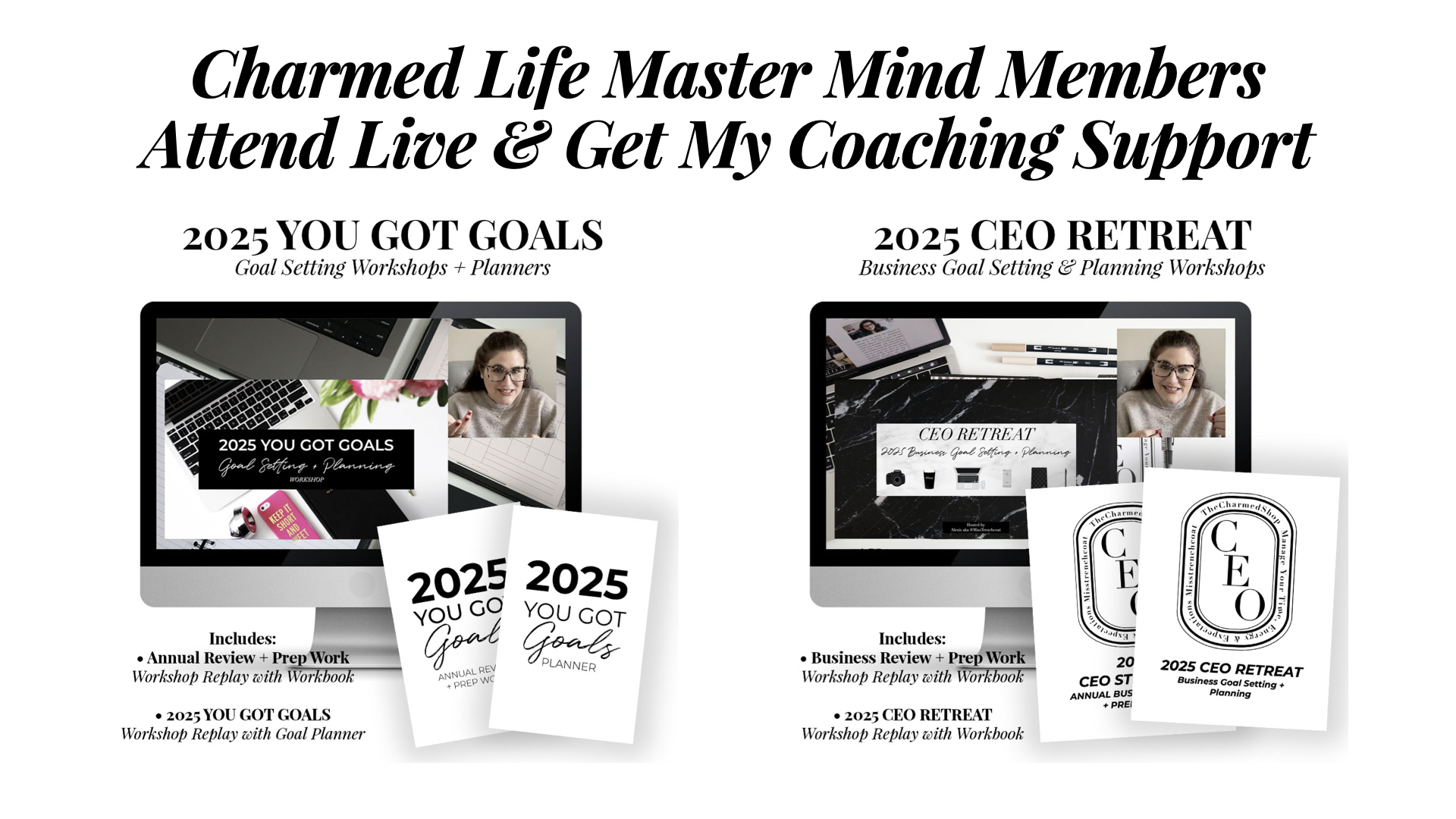
That’s why today I want to give you a look inside my YOU GOT GOALS Planner, including the Annual Review & Goal Prep Workbook!
The video is going to answer another major question I am often asked about my goal planning system…
“Is the YOU GOT GOALS Workshop + Planner only for personal goals or can you also use it for business goals?”
Answer: No, this system isn’t just for personal goals, you can also use it for business goals as well. However, because business goals require more specific types of annual planning including strategic projects, marketing and campaigns, I use another system that is designed specifically for reviewing business data and breaking down business related goals, called the CEO RETREAT!
Both systems are available as on-demand workshops to purchase from my shop individually or as a special bundle.
But of course, Charmed Life Master Mind members get these workshops included in their membership subscription. Master Mind members get to attend the live workshops for direct coaching from me during our class and also get on-demand goal setting support through our private Slack community.
So, if you want to use a goal setting method that increases your chances of success instead of setting you up for unnecessary expectations and failure, I’d love for you to get your hands on one or both of these guided goal planning systems.
It’s Holiday Gift Giving Time and if you are looking for some gift ideas for yourself or the other ladies in your life, you have come to the right place. I know gift giving is a challenge for some people, but I was born with the gift. My friends and family know that I am very anti-gift card and cash presents. If that’s more to your taste, awesome, but for me, I look at gift giving as an art and an opportunity to surprise and delight my loved ones by finding something amazing they didn’t even know they couldn’t live without! Throughout the year when I come across interesting items that remind me of someone close to me, I keep track of it. Sometimes, I don’t have one specific person in mind. Sometimes the person I’m buying for is myself. But I’ve been told many times over that I find great gifts and things most people just wouldn’t think to buy for themselves. So much so that people come to me looking for ideas for gifts to give their circle. And the best part is, my gifts are usually quite affordable. Of course, what is considered affordable varies person to person and budget to budget, but on this gift list you are going to find some great everyday luxuries that retail from $10-$200, most being under $50 with just a handful of items over $100. Each item on this list has been chosen with a specific woman in mind- the one who loves functionality and beauty, and appreciates any little way she can improve or upgrade her life.
I recently upgraded to the iPhone 16 Pro Max from a very old iPhone 8 Plus, so I have been spending an unnecessary amount of time and energy thinking about and browsing iPhone cases. I know I might be in the minority here, but I like my phone to have a wardrobe of gorgeous case options for different scenarios. In researching cases for my new phone, I ended up back with a brand I have used in the past with my last iPhone and was subsequently one of my favorite cases. That brand is Burga. You have probably seen their cases on Instagram, they do lovely designs and a few varieties of protective case styles. Here is the thing, they are expensive, dare I say overpriced, especially when you consider they come from outside of the US- Lithuania I believe- and are not made from any significantly more expensive materials than most cases. In the past I’ve had issues with shipping. My most recent order arrived in a little less than two weeks which is good. But all that being said, the cases are elegant and I love them. Sure, you could find dupes of the patterns online for less, but I couldn’t find any cases that had similar patterns and had MagSafe compatibility. These cases are definitely one of those splurge treats, but also make an unexpectedly fun gift for a friend as long as you know her taste and pick a pattern she’ll love!
Newsflash, diamonds are no longer a girls best friend, in 2024 it’s portable chargers. They are lifesavers and I cannot leave home without one or two thanks to the variety of gadgets we now rely on to live and work. The first type of charger I think we all need to have is a portable wired charger- one with those built in wires and different port heads compatible with a variety of gadgets. I have been using and loving this Veger charger because it’s slim, has a nice sized battery for charging multiple items, and works with most of my gadgets. Yes, I bought the lilac purple version because it’s my favorite color.
Now, the second type of charger I think we all need to have is a portable MagSafe Charger as long as you have a MagSafe compatible phone and case. Now that I have the iPhone 16 Pro Max, I can use this amazing feature. So, all I have to do is stick this Anker charger to the back of my phone, turn it on and viola, I can charge while on the go, while talking on the phone and I don’t have any wires or bulky charging apparatus’ to deal with.
Whoever came up with these wireless LED touch control lamps is an absolute genius. I have never been one to gravitate to table lamps because they just seem so impractical. You have to make sure you have a plug for them in the vicinity of where you want the lamp, and if you don’t, you are either out of luck or need to use an ugly extension cord. On top of that, they just sort of permanently live where you put them, but what if you want to move it around? Or you only need a lamp in a specific place sometimes? Impractical. But these wireless lamps are fantastic. I own a few varieties of these lamps, but this is my favorite because it’s pretty tall compared to some other wireless lamps and a chic silhouette that manages to look both classic and modern at the same time.
For the longest time, I did not understand why people used body oils until I discovered oils like this that came in a spray form. Regular bottles of oil that come with a pump or even no dispenser at all can get messy and make it hard for you to evenly distribute product on your skin. Spray oils are fantastic and easy to use and now I get why people use body oil. I’ve just recently started using this Caudalie oil because I love the brand and the smell was so delightfully herbaceously bougie.
If you’ve been following me for a while you may know I don’t use fillers or botox (at least not yet- if ever). I prefer using manual tools for facial massage to lift, tighten and stimulate collagen production naturally. One of the newer tools in my routine are these Cryo Sticks. You keep them in the fridge and use them to de-puff your face and tighten your pores. Icing your face has become such a big thing in the last few years and it does really seem to make a difference in the short term to the quality of your skin.
When it comes to home decor, one element I always feel like I don’t have enough of are trinket dishes. How often do you put little things down on the table or countertop and they get misplaced, knocked off or simply roll away and you can’t find them. Trinket dishes are necessary, but of course basic ones will not do, I need lovely little works of art like this cloud trinket dish. I love that it comes in silver and gold chrome finishes because I think those will stand out gorgeously.
I am not exaggerating when I say that these hair pins by Deborah Pagani have been the find of the decade for me. They are elegant but sturdy, and are the single hair accessory that I can use to hold my hair in place for the whole day without worry. Hair ties always fail me, but the DP Hair Pin does not! I credit these pins for how I got my hair to grow out so long so quickly, because once I switched away from using elastics on my hair, length just kept accumulating unchecked! They are just so safe and gentle on my hair and help me create an easy protective style for my locks.
While everyone else is busy fighting over Stanley tumblers, I am living in my bliss bubble with my Simple Modern 50oz mugs. Yes, I own a couple, but for good reason- they keep my water amazingly cold for what feels like forever, they are more spill proof than Stanley’s, and I can fill it up once and drink it all day and feel like I got all the hydration I needed. Okay, sometimes I drink two in a day. The only downside to the 50oz size is that it’s more for home than travel because it doesn’t fit into a cup holder. And that’s why I also have a 40oz tumbler for on the go, but I use my 50oz by far the most.
Are you interested in getting the best sleep of your life? Trick question, of course you are, and that’s why you need a pair of sleep headphones. This option is one part sleep mask and one part bluetooth headphone. Put it on at night, connect it to your phone or tablet, and play some relaxing sleep music with delta waves from either Youtube or Spotify and you will have the best quality sleep. When I wear mine, I fall asleep quicker, I stay asleep longer, and I wake up less frequently.
I’m ashamed to admit it, but until recently, I did not keep my jewelry organized in one central location. I had bits and pieces all over, usually kept in their original bulky boxes and I couldn’t see everything I owned in one place. So, I finally purchased one of these travel jewelry cases and I love it. What is great about this specific style, because there are many options you can buy, is that this size and shape is great for home use or travel. It fits a good amount of jewelry inside comfortably and it looks pretty discreet.
I actually own three Marshall Speakers. An Acton III, an Emberton II and this Willen. Some might think this is overkill, but each speaker serves a distinct purpose in my life. The Acton is a great non-portable home speaker that I can connect with my devices including my smart TV, but I mostly use it to listen to music that fills my house with a great quality sound. The Emberton is a portable model that I have used in the past as my office speaker to listen to music while I work, but right now I have it wirelessly connected to the smart TV in my bedroom and it acts as a soundbar which is great because you know how bad the sound is on most flat screen televisions. The speakers are normally in the back, which means the sound is pointing the wrong direction, and so you need something like a soundbar or sound system to get great front facing audio. My Emberton does the trick and can still serve other uses for me. But the Willen, this little guy is my portable little champ. I always travel with it. I take it to the beach, the pool, to other people’s homes. I’ve taken it to restaurants and used it while sitting out on their patio seating where you can barely hear the music playing from the interior of the restaurant (genius). Although the Emberton is another portable model, the Willen is more portable. It has a strap on the back which means you can attach it to things like a beach chair, or the strap of your bag. It’s awesome, I love it and it connects to your phone and you can take bluetooth calls through it as well. It’s also water and dust proof (so is the Emberton) so you don’t have to worry about it. Plus the battery life is solid, I think something like 15 hours. Charges with USB-C, it’s like essentially perfect.
What woman could say no to a luxury lip balm? I love the Baume Essentiel because it’s more than just Chanel’s normal lip balm. First it’s huge so you get a lot for the price and it lasts forever. Second its a multi use stick, so it can be lip balm, and a face highlight or a blush and even an eye shadow. I normally stick to the color Transparent and use it as my lip balm and a sheer but glowy highlight, but if you choose one of the colorful shades it can be a blush and shadow.
I am so glad that minimal clean looking nails are back in fashion. Technically, they never went out of fashion because they are classic, but with the rise of the quiet luxury aesthetic, neutral nails are back in. Nothing says quiet luxury, clean girl, neutral classic nails like Chanel’s Ballerina, the perfect wash of nude pink that gives you that your nails but better vibe.
I am not a gym girlie. In the past when I had a gym membership, I used it for the unlimited tanning and massage beds. I much prefer home workouts. I don’t mean I want to build a home gym, instead I prefer to have a few key pieces of equipment at home that I can use to do a variety of exercises. In the past, this equipment was your standard run of the mill hand weights and kettle bell. I try to get them in a cute color so I don’t hate the sight of them, but the options are limited. That’s why when I found Bala I was in shock and awe. If you aren’t aware, Bala is a brand of workout equipment that is beautiful and functional at the same time. I have a few of their pieces, but the two I love the most and recommend are the Power Ring and the Beam. The Power Ring is a reimagined kettle bell that is so much more functional because you can use it with one hand or two, and because of the shape it sits and fits on various areas of your body during different workouts. I might put it around my neck and sit it on my shoulders to add weight while lunging. I might lay it on my abdomen while doing bridges. I can put my arm and leg through it so I’m not limited to holding it in my hand. It’s a very flexible and functional piece of workout gear. Next, the Bala Beam, this is essentially an EZ Bar, so I can use it as a dumbbell, one or two handed. Its ergonomic design means it also sits on my shoulders, hips or legs for different workouts in a circuit. The best part of these pieces are that you can just leave them out if you want almost like home decor, because they don’t look like what they are, they look like sculptural decor elements.
I don’t use an alarm clock to wake up in the morning but if I did, it would be this one! These sunrise alarm clocks wake you up gently with both sound and light which really helps you manage your circadian rhythm. If you have a hard time waking up in the morning, or wake up startled by a fog horn of an alarm on your phone, you could definitely benefit from this sunrise alarm clock. I know you may already have something you use, and this might feel like an unnecessary purchase, but sleep is so important to your productivity and an alarm like this can really help you build more positive sleep and wake habits.
My beloved Le Cruset Enameled Cast Iron Braiser is by far my most used piece of cookware. You can use it like a frying pan or like a dutch oven. Alas, Le Cruset is a heritage brand with a premium price tag, so my next best pick for you is from the brand Lodge. Still great quality cookware, similar shape and of most important it’s enameled cast iron (not the same as regular cast iron) so it’s easier to care for and retains heat beautifully. I fully believe that food cooks and tastes better when it’s prepared in enameled cast iron.
I avoided purchasing an electric kettle for the longest time. It felt like an unnecessary kitchen gadget when I could boil or microwave water. But oh my goodness, an electric kettle really upgraded my life. You’d be surprised how often they come in handy. I use mine for tea, instant coffee, powdered drink mixes, making stock from bouillon, sterilizing, heating milk, and making hot compresses. I definitely get my use out of that kettle and I can’t wait to upgrade mine to this charming gooseneck version.
When I think of luxury items, I don’t necessarily think of designer labels and high price tags. I think about what items would be a benefit to my life, that will be versatile and last me a long time. This Cashmere wrap definitely checks all the boxes for a fabulous luxury addition to your wardrobe. A wrap like this is a great wardrobe staple that will never go out of style, and bonus, it’s not just a wrap! You can use this as an oversized scarf or blanket, great for traveling or just getting cozy on the sofa. Cashmere is such a warm, luxurious fabric, and with proper care it’s long lasting, unlike many other wraps or blankets made from synthetic materials that feel fabulous on day one, but after use and cleaning become an itchy, shedding mess.
As part of my productive, healthy lifestyle, I take vitamins and supplements! And using a pill organizer is a great way to keep on track of the habit and ensure you take your pills daily. Most pill organizers and pill planners as they are often called are basic and plastic. But this compact is chic and elevated. Great for travel or just leaving at home. I adore it and it’s not necessarily something you would think to pick up for yourself or give as a gift.
I hope this Charmed Life Gift Guide has inspired you to add a little everyday luxury to your gift-giving this season! Whether you’re shopping for the beauty enthusiast, the productivity lover, or the woman who just enjoys a touch of elegance in her daily routine, these carefully chosen items are sure to make her feel seen, special, and pampered. Each item on this list was selected with the goal of blending beauty and functionality—gifts that are delightful, practical, and unique enough that she might not even know how much she needed them until now. So, as you wrap up your holiday shopping, remember that the best gifts come from the heart, with a little added charm.