
As we approach a new year, many of us are inspired to set ambitious goals and resolutions for 2026. The idea of a fresh start is exciting, but the truth is, achieving those goals isn’t about luck or sheer willpower—it’s about planning the right way.
Here’s the difference: successful women don’t just set goals—they follow a proven process that keeps them focused, motivated, and on track. They know that having clear intentions, effective systems, and the right support makes all the difference.
In this post, I’ll share the 7 rules successful women follow when planning their goals. These aren’t just tips—they’re the principles that separate dreamers from achievers. Whether you’re pursuing personal growth, career milestones, or business success, these rules will help you create a plan that works and turn your aspirations into reality.
If you’re ready to make 2026 your most productive and fulfilling year yet, stay with me and discover how you can adopt the strategies, systems, and accountability that successful women rely on to achieve their dreams.
Rule 1. They Set SMART Goals With Clear Expectations
Successful women make their goals specific, measurable, actionable, realistic, and time-bound (SMART). They know that clarity is power, and they avoid vague ambitions by clearly defining what success looks like and how to achieve it.
Imagine you’re planning a dinner party. You know the goal is to host a fabulous evening, but if you don’t have clear expectations, things can quickly spiral into chaos. Instead of just saying, “I’m going to have a dinner party,” you need to define every detail to ensure it’s a success.
First, you set a specific menu: “I will make lasagna, salad, and a homemade dessert” instead of just saying, “I’ll make food.” You know exactly what you need to buy and prepare.
Next, you make it measurable: “I’ll prepare the lasagna by 3 PM, and my guests will arrive at 6 PM.” You can track your progress to make sure you’re on schedule.
You also ensure the plan is actionable by breaking it down further: “I’ll chop vegetables at 2 PM,” “Preheat the oven at 4 PM,” and so on. Each task is manageable and doesn’t leave you scrambling.
Then, you check that the goal is realistic: If you’re only working with an hour to prepare, you’ll adjust your menu or your timeline to make sure it’s achievable. Maybe you decide to make a simpler dessert or ask a friend to bring wine.
Finally, you set a time-bound deadline: “Dinner will be served at 6 PM,” so you know exactly when everything needs to be ready.
By following a clear, step-by-step plan, you won’t waste time figuring out what to do next. Your dinner party is well-organized, and the evening goes smoothly. The same applies to your goals—setting SMART goals gives you a clear direction, measurable milestones, and a realistic timeline to ensure you’re not just hoping for success but actively creating it.
When you use the SMART framework for your goals, you’re setting yourself up for success, just like you would plan a dinner party with purpose and precision. Each action you take is aligned with your goal, and by sticking to the plan, you increase your chances of a successful outcome.
Rule #2. They Create a Strategic Plan for the Year Ahead
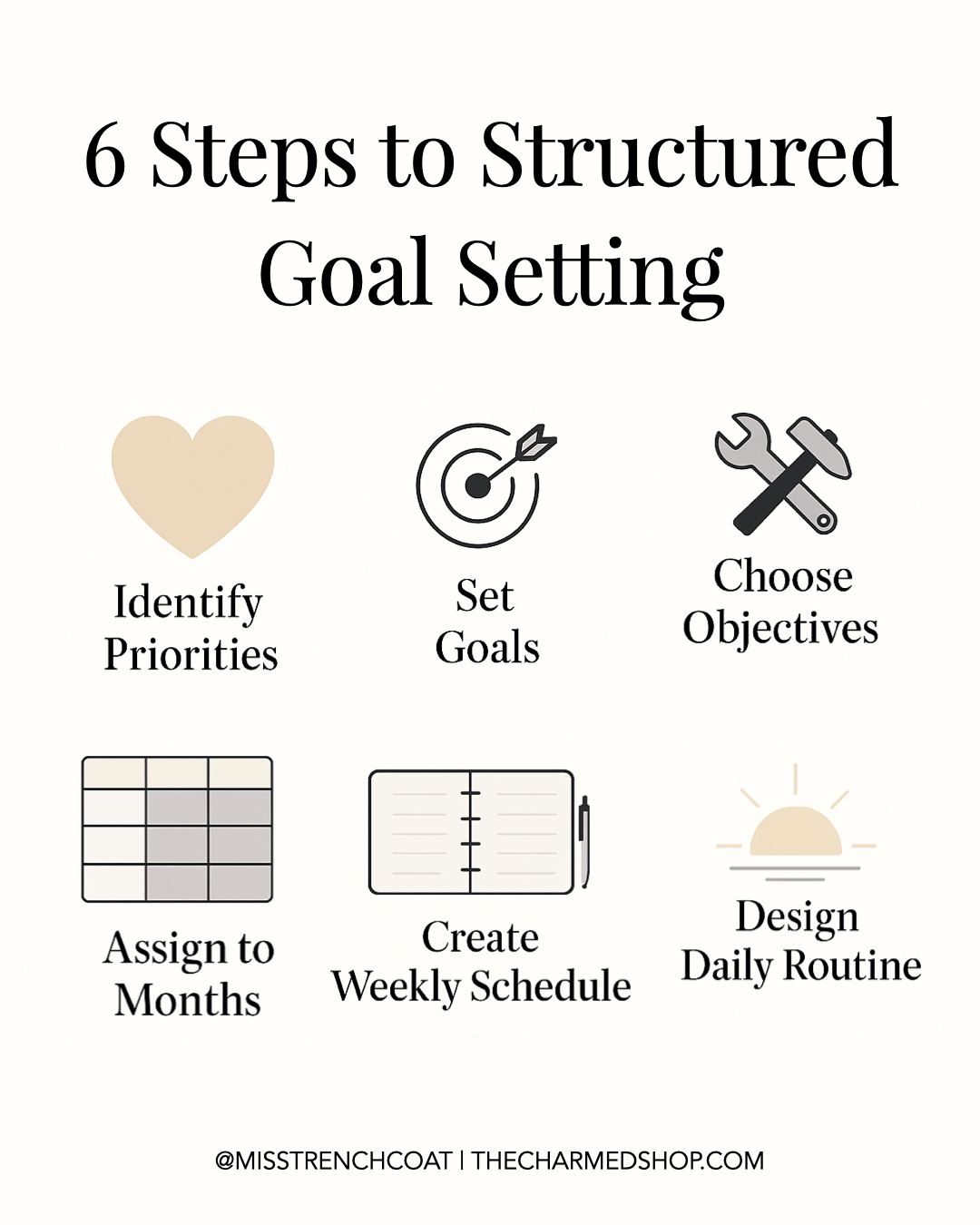
They don’t wing it or piecemeal their efforts. Instead, they map out a year-long plan that includes the habits, systems, routines, or projects they need to act on, ensuring every step builds momentum and keeps them on track.
Imagine your goal-setting process like going to the grocery store. You know your destination — to get food (your goal) — but if you don’t have a list prepared in advance, things quickly become chaotic. You end up walking around the store aimlessly, forgetting key items, buying duplicates of things you already have at home, and making impulse purchases you didn’t need. Plus, you waste time backtracking to the aisles you missed, all while feeling frustrated and overwhelmed.
Now, picture having a grocery list that’s organized by the layout of the store. With your list, you know exactly what you need and where to find it. You move through the aisles in a logical sequence, picking up everything you need without doubling back or wasting time. You get in and out efficiently, making the process smoother and faster, and you leave the store feeling confident that you’ve got everything you came for.
This is how goal-setting works when you have a strategic plan in place. Instead of wandering through the year, trying to figure out what to do next or wasting time on unimportant tasks, you’ve already broken down your big goal into clear milestones and objectives. By planning your actions ahead of time and laying them out across the months, you create a logical, step-by-step roadmap for success. This ensures you stay on track, build momentum, and avoid the frustration of wasted time or missed opportunities.
Rule #3. They Prioritize Time for What Matters
Successful women don’t let their goals get buried under the weight of their busy lives. They create time for their priorities by implementing systems like an Ideal Daily Routine and a Default Weekly Schedule, ensuring their goals always have a place in their day.
Think of your time like a suitcase you’re packing for a trip. You know you have limited space, so you can’t fit everything in. If you just start tossing things in randomly—like clothes, toiletries, and random items—you’ll end up with a stuffed, disorganized suitcase. You’ll struggle to find what you need, and even worse, you may forget essential things that matter, like your phone charger or favorite sweater.
Now, imagine you lay out everything you want to pack ahead of time and prioritize what’s most important. You start with the essentials—the items you absolutely can’t leave behind, like your clothes, toiletries, and any important documents. Then you use the remaining space for the things that matter but aren’t as critical. By organizing and prioritizing your packing, you’re able to fit everything in neatly and efficiently, without wasting time or overloading your bag.
This is what prioritizing time for what matters looks like in your life. Instead of cramming in tasks and allowing daily distractions to take over, you consciously decide what’s most important and make room for those activities first. Once you’ve packed the most essential goals and tasks into your schedule, everything else—like errands or spontaneous activities—can fit around it.
When you use systems to prioritize your time, you stop feeling like you’re running out of space or constantly struggling to “fit everything in.” You’ll feel more in control, more organized, and more confident that you’re investing your time in what really matters, helping you make steady progress toward your goals without overwhelm.
Rule #4. They Anchor Goals in a Deeply Personal Why
They don’t pursue goals out of societal pressure or to chase someone else’s dream. Instead, they reflect on their true desires and align their goals with a purpose that deeply motivates them to act.
Think of your goal like planting a tree. The tree itself—whether it’s to grow your business, improve your health, or reach any other goal—is important, but the roots are what truly sustain it. If the roots are shallow or weak, the tree might grow tall at first, but it won’t have the strength to weather storms, survive a drought, or stand the test of time. It could easily topple or wither when things get tough.
Now, imagine if the roots of your tree are deeply connected to something meaningful—your values, your passions, or a larger purpose. For example, maybe you plant the tree in honor of your family’s legacy, for the future generations to enjoy the shade, or because it aligns with your love for nature and preserving the earth.
The deeper those roots are, the stronger the tree becomes, able to withstand any storms or dry spells. You’re more likely to nurture it, care for it, and keep it thriving because you’ve connected it to something that truly matters to you.
This is how your goals work when they are anchored in a deeply personal “why.” Just like a tree with strong, meaningful roots, your goals need to be grounded in something that fuels you emotionally and ties into your core beliefs. When the journey gets tough—and it will—your “why” is what keeps you going. It’s the reason you’ll persevere and stay committed, even when challenges arise, because that deeper connection gives you the energy and focus to keep growing, no matter what.
Rule #5. They Cultivate a Winning Mindset
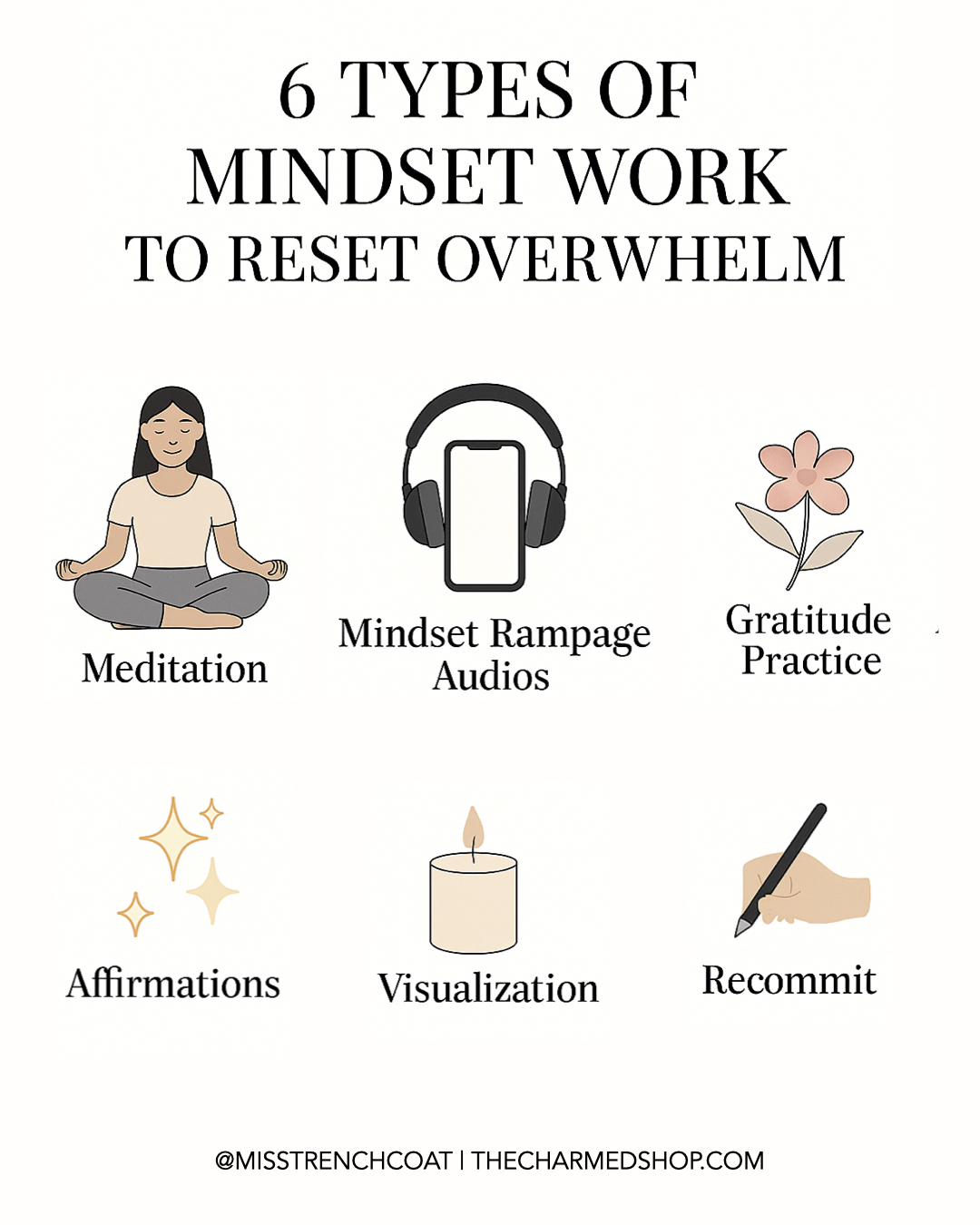
Successful women don’t let past failures or self-doubt hold them back. They actively work on building belief in their abilities, reprogramming limiting beliefs, and approaching challenges with resilience and optimism.
Think of your mindset like your wardrobe. When you were younger, or maybe in a different phase of your life, you likely wore clothes that fit who you were at the time—both in style and size. Perhaps you had a wardrobe full of trendy outfits, but now, looking back, those clothes no longer suit your current life or the person you’ve become. They might not fit the way they once did, or they simply don’t reflect the version of yourself that you are today. Holding onto those old clothes can make you feel uncomfortable, out of place, and disconnected from who you are now.
Now, imagine that your new mindset is like investing in a fresh, updated wardrobe. You’ve grown, and your style has evolved. You’ve stepped into a new version of yourself—whether it’s as a career woman, a mother, or a person with bigger goals—and your mindset needs to reflect that. A new mindset is like choosing clothing that fits your current body and your future aspirations. It’s about shedding the outdated beliefs that no longer serve you and embracing beliefs that empower you to step into your best self.
Just like picking out a new wardrobe that makes you feel confident and ready for anything, adopting a new mindset gives you the tools to face challenges with strength and grace. The old clothes—those old doubts, fears, and limiting beliefs—are no longer needed. By making room for this new mindset, you create space for growth and transformation. You’re ready for the next chapter, and just like a wardrobe update, your new mindset will help you feel more aligned, confident, and empowered to take on whatever comes next.
So, it’s time to donate that outdated wardrobe of self-doubt and old limiting beliefs, and treat yourself to a mindset makeover that helps you look and feel your best as you achieve your goals.
Rule #6. They Feel Successful Before It Happens
They know transformation starts from within. Successful women embody the habits and mindset of the person they want to become, taking actions that align with their goals, which naturally leads to their desired outcomes.
Imagine you’re deciding what to make for dinner. You have a variety of ingredients in your kitchen—pasta, chicken, vegetables, rice—but the question is, what are you in the mood for? You don’t just start cooking randomly with what’s available. Instead, you think about what you truly want to eat, what will satisfy your cravings, and then choose the dish that matches that desire.
This is similar to achieving your goals. You have all the ingredients—skills, resources, time—but you need to decide how you want to feel first. Do you want to feel confident, accomplished, or empowered?
Once you recognize the feeling you’re craving, it helps you choose the right goal to pursue and the actions to take. Just like deciding on a meal, the feeling comes first, and from there, the goal becomes clear. When you know what you’re truly in the mood for, the steps to create it—like choosing the right recipe—fall into place naturally.
Rule #7. They Leverage Accountability for Consistency
They recognize the power of external accountability to stay on track. Whether through trusted confidants or communities of like-minded individuals, successful women use accountability to maintain focus and progress toward their goals.
Think of accountability like having a workout buddy at the gym. On your own, it’s easy to hit the snooze button, skip a session, or tell yourself you’ll work out tomorrow. But when you have someone waiting for you, or a coach keeping track of your progress, you’re much more likely to show up, put in the work, and keep going even on days you feel tired or unmotivated.
Just like a workout buddy helps you stay consistent, accountability partners or systems push you to stick to your goals. When you know someone is checking in on you, or when you have clear milestones and deadlines in place, you’re less likely to procrastinate or drop the ball. It helps you keep the momentum going, break tasks into manageable pieces, and ensure you’re consistently progressing toward success.
Accountability is the force that keeps you going, even when motivation fades, just like how a workout buddy helps you push through that last set, even when you’re tempted to quit.
Achieve Your Goals in 2026 by Planning Like a Successful Woman
If you’re struggling to achieve your goals year after year, it’s time to do something different. They say the definition of insanity is doing the same thing over and over again, expecting different results — and that’s exactly what many of us do. We stick to the same process that didn’t work for us in the past, blaming external circumstances for why we didn’t hit our goals, when in reality, we’re relying on a broken system that we expect to magically work for us this time.
Successful women know that achieving their goals requires more than just wishful thinking. They approach goal-setting and planning differently — with clarity, strategy, and consistency. They don’t wait for the “perfect time” to take action. They have the systems, mindsets, and accountability to stay on track and overcome challenges.
If you’re ready to stop repeating the same cycle and want to learn from women who have mastered their goals, 2026 can be your year. By joining the Charmed Life Master Mind, you’ll be part of a community that supports your growth, provides you with proven systems, and helps you develop the mindset of a successful woman.
Now is the perfect time to make 2026 your year of productivity, success, and goal achievement. Inside the Master Mind, you’ll gain access to the YOU GOT GOALS goal-setting workshops and planner, the CEO Retreat annual business planning workshops, dozens of productivity, time management and mindset classes, and a supportive accountability community to keep you on track.
This is everything you need to create a strategic, actionable plan for your year, build the mindset of a successful woman, and make your biggest goals happen. Don’t wait for the perfect moment — the time is now. Let’s make 2026 your most successful year yet.
Join the Charmed Life Master Mind today and take advantage of the lowest price of the year for the annual membership subscription. Get the tools, resources, and support you need to achieve your goals and live your best life.
xoxo,