
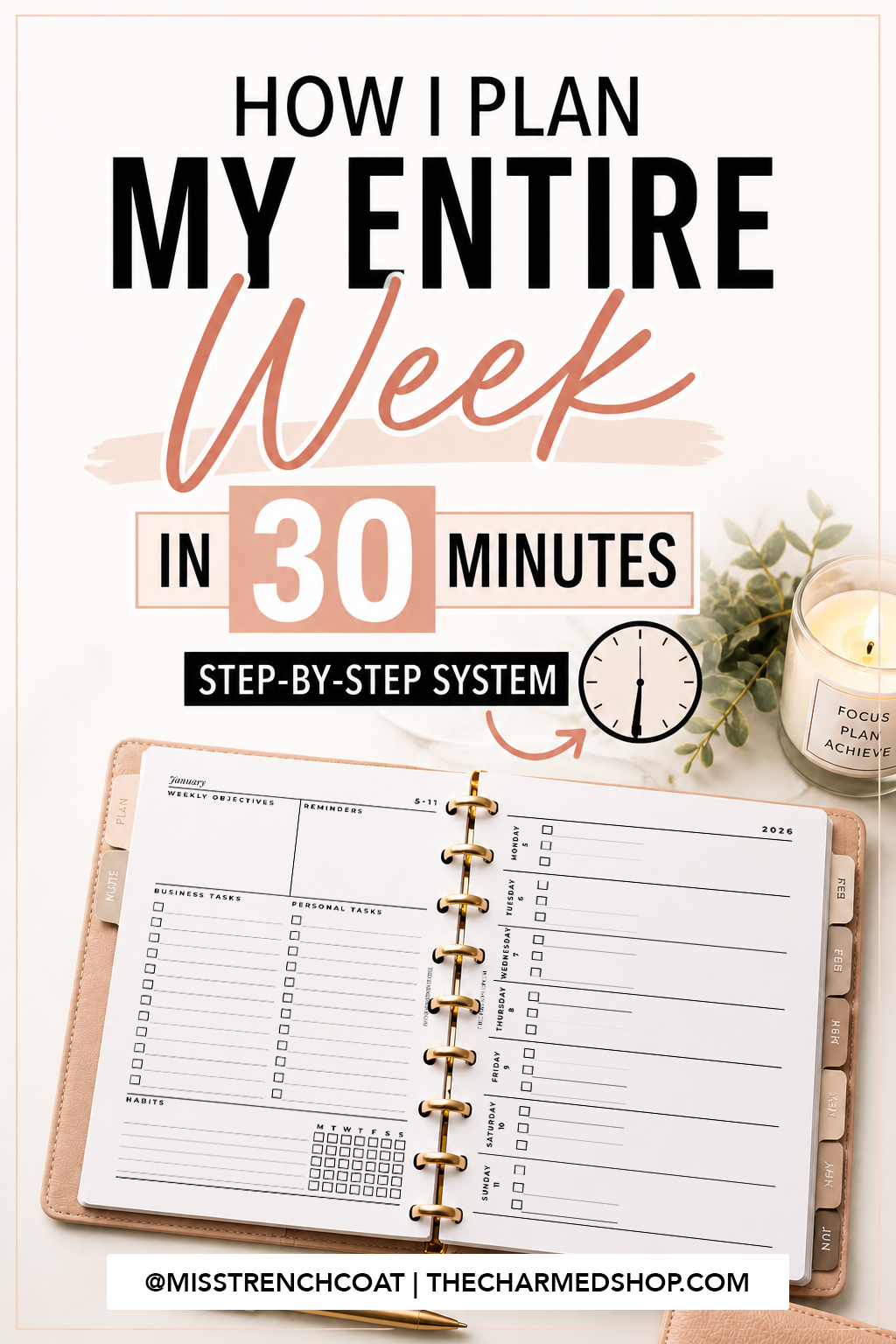
There was a time when the start of every week felt heavier than it should have. I would sit down with the intention to get organized, look at everything I needed to do, and almost immediately feel behind before I had even begun. It wasn’t a lack of motivation or discipline. It was something much quieter, but far more disruptive—everything I needed to manage was living in too many places at once, without any real structure holding it together.
What I’ve come to understand is that most women are not struggling with productivity because they aren’t capable. They’re struggling because they don’t have a system that supports how they think, plan, and move through their lives. When everything stays in your head, or scattered across lists and notes, it creates a constant background noise that makes even simple decisions feel overwhelming.
Once I shifted my focus from trying to “be more productive” to building a planning system that actually worked, everything began to feel different. Now, I plan my entire week in about thirty minutes. Not in a rigid or overly structured way, but in a way that gives my week shape, direction, and clarity.
Why Most Weekly Planning Doesn’t Work
Most planning routines fail not because they’re wrong, but because they’re incomplete. They focus on writing things down without ever organizing them in a meaningful way.
Planning without structure tends to look like:
- Long to-do lists with no clear priority
- Tasks that get moved from day to day
- Constantly deciding what to do next
This creates decision fatigue before the work even begins. Planning should reduce mental load, not add to it. What’s missing is a system that allows you to see your time clearly and make intentional decisions about how you use it.
The 30-Minute Weekly Planning System
The process I use is simple, but it’s built on a deeper principle: everything needs a place. Once your tasks, priorities, and time are organized within a system, execution becomes much more natural.
Step 1: Capture Everything
The first step is always to clear your mind completely. Before organizing anything, take a few minutes to write everything down.
This includes:
- Tasks you need to complete
- Ideas that have been lingering
- Personal and work responsibilities
- Things you’ve been putting off
There is no need to filter or prioritize at this stage. The goal is simply to move everything out of your head and onto paper. When you can see everything in one place, the pressure to remember it disappears, and clarity begins to take its place.
Step 2: Define What Actually Matters
Once everything is captured, the next step is to bring intention into the process. Instead of treating every task as equally important, take a step back and decide what truly matters for the week ahead.
A helpful way to approach this is to identify a few key areas of focus:
- Personal priorities
- Work or business goals
- Life administration and maintenance
From there, begin grouping your tasks into these categories. This transforms your list into something more purposeful, where each task supports a larger objective. Rather than trying to do everything, you are choosing what deserves your time and attention.
Step 3: Allocate Your Week
With your priorities defined, you can begin mapping them into your week. Start by placing any fixed commitments—appointments, meetings, or events—into your schedule.
Then, begin assigning tasks around them.
This step works best when approached with flexibility. Instead of trying to fill every hour, focus on giving each day a general direction. Some days may be more work-focused, while others are lighter or more personal. Allowing your week to have variation makes the plan feel more realistic and easier to follow.
A few guiding principles to keep in mind:
- Spread tasks across the week instead of overloading one day
- Group similar tasks where possible
- Leave space for flexibility and unexpected changes
Step 4: Set Your Daily Top Three
The final step is where planning becomes actionable. For each day, identify three tasks that matter most.
These should be:
- Aligned with your weekly priorities
- Realistic for your time and energy
- Meaningful enough to move things forward
Having a clear “Top Three” removes the need to constantly decide what to focus on. It gives your day structure without making it feel rigid, allowing you to move through your work with more clarity and less friction.
What Changes When You Plan This Way
The shift that happens with this system is subtle, but powerful. Productivity stops feeling chaotic and starts to feel intentional.
You’re no longer:
- Wondering what to do next
- Trying to remember everything
- Feeling behind before the day begins
Instead, you move through your week with a sense of direction. Even when plans change, you are adjusting from a place of clarity rather than starting over.
This is what most women are actually looking for—not more productivity, but a calmer, more grounded way of managing their time.
Making This Your Weekly Ritual

Planning your week doesn’t need to be complicated or time-consuming. With the right structure, it becomes a simple ritual that supports everything else in your life.
If you’re ready to build this into your own routine, the Well Planned & Productive Woman Essential Planning Guide will walk you through the process step-by-step, helping you create a system that fits your life.
And if you want a tool designed to hold everything in one place, the Charmed Life Master Planner acts as your second brain—so you can stay organized, focused, and consistent without overthinking it.
Remember: You don’t need more time. You need a way to see your time clearly.
When you have that, everything begins to feel lighter, more manageable, and more aligned with the life you’re creating.
And it all begins with how you plan your week.
xoxo,