I turned 40 last week.
And instead of having some dramatic midlife crisis or feeling the pressure to reinvent myself, I’ve found myself doing something… a little unexpected.
I’ve started collecting toys.
Not luxury items.
Not productivity tools.
Not things that make me more efficient or successful.
Actual toys.
Plush dolls.
Digital pets.
Video games.
If you had told me even a year ago that this would be part of my life at 40, I probably would have laughed. But the truth is, these hobbies have quietly become some of the most enjoyable, calming, and mentally refreshing parts of my day.
So yes, I’m basically 40 going on 14 right now.
And honestly? It feels pretty great.
But the funny thing is, fourteen-year-old Alexis probably wouldn’t even recognize this version of me.
Because she didn’t really get to be a kid.
The “Old Soul” Kid Who Grew Up Too Fast
If you were a parentified oldest child, you probably know the exact kind of compliments I’m talking about.
The ones adults love to give children who seem unusually mature:
“She’s so wise beyond her years.”
“She’s such a joy to have in class.”
“She’s so mature.”
“She’s such an old soul.”
At the time, those things sound like praise. They make you feel special. Responsible. Capable.
But what those compliments often mean is that a child learned very early how to behave like an adult.
That was me.
As the oldest child, I believed it was my job to take care of things. To help my parents. To look out for my younger siblings. To be the good kid who did well in school and impressed teachers. I tried very hard to do everything right.
I believed that growing up quickly was the goal.
Being mature was the achievement.
Being responsible was the identity.
What that didn’t leave much room for… was play.
There wasn’t much time for toys or silly hobbies. I wasn’t the kid building collections or spending hours absorbed in games just for fun. I was busy trying to be good, capable, impressive.
So it doesn’t surprise me at all that forty-year-old Alexis is suddenly rediscovering something she skipped over earlier in life.
Play.
Real Hobbies… For the First Time in a Long Time
One of the things I’ve noticed recently is that I actually have hobbies again.
Not productivity hobbies.
Not “this could become content” hobbies.
Not “maybe I can monetize this” hobbies.
Just hobbies.
Things I do because they are enjoyable and relaxing.
And some of them are admittedly a little childish.
Right now my cozy hobby lineup includes:
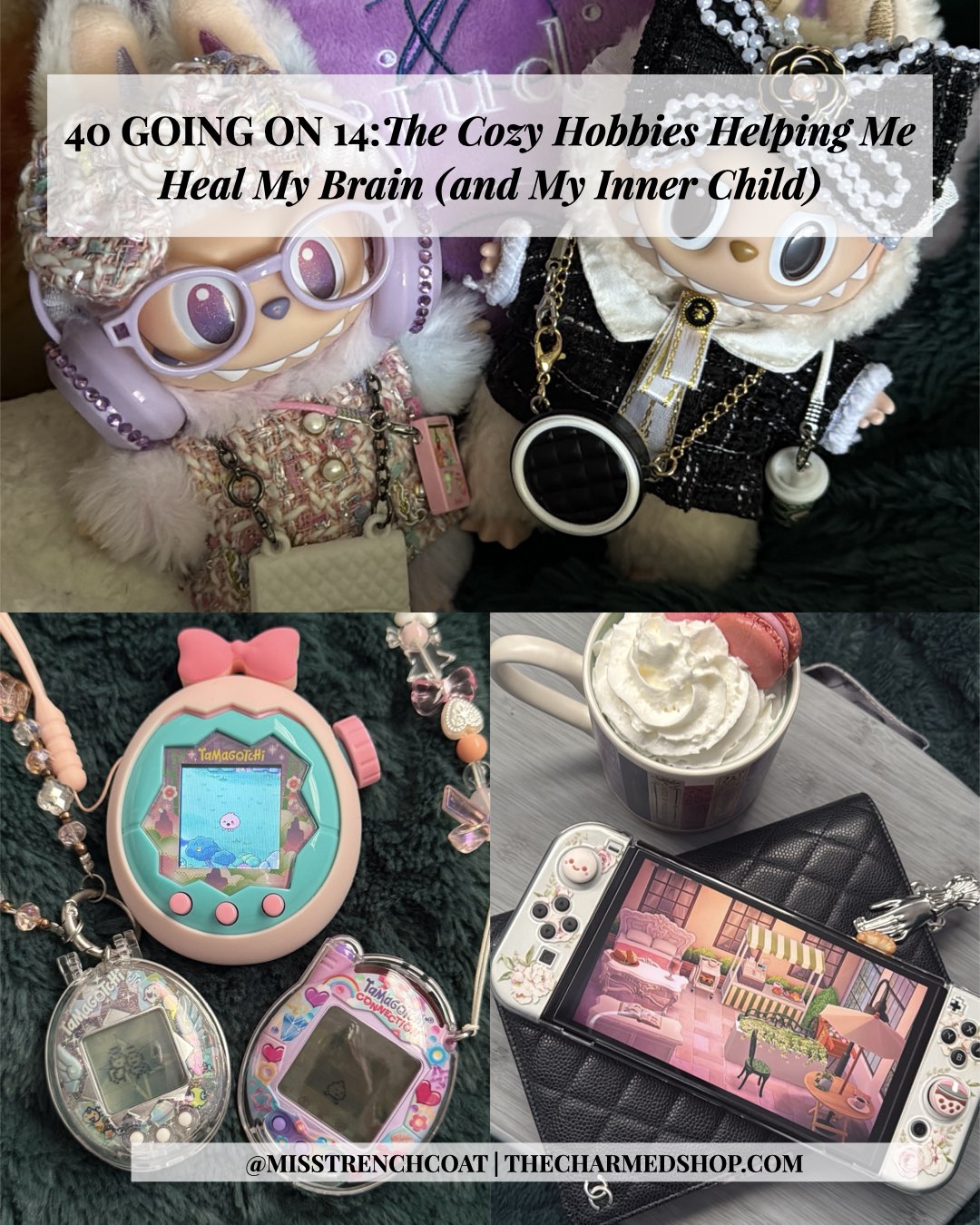
• Labubu plush dolls
• Tamagotchi digital pets
• Video games on my Nintendo Switch OLED
When I first realized this, part of me wondered if it was a little random. Or maybe even a little silly.
But the more I thought about it, the more I realized these hobbies are actually doing something really important for my brain.
They aren’t just distractions.
They’re restoration.
Fighting Brain Rot and Doom Scrolling
We live in a time where it’s incredibly easy to spend hours consuming content without even realizing it.
Scrolling.
Short videos.
News.
More scrolling.
Even when you know it’s not making you feel good, it’s hard to stop. The algorithms are designed to keep you hooked, and the constant novelty fragments your attention.
This kind of passive content consumption can leave your brain feeling strangely tired and overstimulated at the same time.
What I’ve noticed about my cozy hobbies is that they break that pattern completely.
They are either analog or mostly offline.
They are contained.
They have clear boundaries.
Instead of endlessly consuming random content, I’m interacting with something intentional. I’m focused on one small activity at a time.
And the result is that my overall screen time has actually gone down.
Even though technically some of these hobbies involve screens.
The difference is how they engage my brain.
And interestingly, each one seems to activate a slightly different kind of mental reward.
Labubu Dolls and the Power of Oxytocin
One of my newest little obsessions is Labubu plush dolls.
If you’re not familiar, Labubu is a whimsical character with a mischievous little smile and a surprisingly expressive personality. The plush versions are soft, cuddly, and honestly just really delightful to look at.
They sit on my shelves, my desk, and sometimes next to me while I’m working.
And yes, I know that sounds a little ridiculous.
But every time I look at them, I feel a tiny spark of happiness.
That warm, fuzzy feeling.
It’s the same feeling you get when you hug a pet or spend time with someone you love.
There’s actually a chemical explanation for that feeling: oxytocin.
Oxytocin is often called the “bonding hormone.” It’s released when we experience closeness, comfort, and affection. It’s associated with relationships, caregiving, and emotional safety.
But interestingly, our brains can also release oxytocin when interacting with comforting objects—especially ones that trigger feelings of warmth or nostalgia.
And oxytocin is incredibly protective for the body. It helps regulate stress, supports emotional resilience, and promotes overall well-being.
So these little plush toys that seem childish on the surface?
They’re actually giving my nervous system something it missed earlier in life.
Comfort.
Tamagotchi and Non-Productivity Dopamine
Another one of my favorite little daily joys right now is my Tamagotchi.
If you grew up in the 90s or early 2000s, you probably remember them. Tiny digital pets that you feed, clean, and take care of throughout the day.
At first glance, it seems like the most random hobby for an adult.
But it’s actually become one of the most useful little mental breaks in my workday.
When you’re working on something challenging, your brain naturally wants a break every so often. The problem is that most breaks are dangerously distracting.
You pick up your phone to check something quickly… and suddenly you’ve been scrolling for twenty minutes.
Tamagotchi work differently.
They require about three to five minutes of interaction.
You check on your pet.
Feed it.
Play a tiny game.
And then you’re done.
It’s a quick little reset.
What I love about it is that it gives me a small dopamine hit that has nothing to do with productivity.
Most adults only get dopamine from finishing tasks, completing projects, or achieving goals. But our brains actually benefit from small, low-stakes sources of enjoyment too.
These little moments help my brain reset so I can return to work more focused.
Video Games and the Satisfaction of Progress
The third hobby in my cozy trifecta is video games.
Specifically, cozy games on my Nintendo Switch OLED.
And the feeling I get while playing them is different from the quick dopamine of something like social media.
It’s slower.
More satisfying.
When I advance in a game, complete a puzzle, or finish a quest, the feeling is closer to contentment than excitement.
It feels like the quiet satisfaction of progress.
That feeling is likely connected to serotonin, a neurotransmitter associated with mood regulation, confidence, and a sense of accomplishment.
Video games create small cycles of challenge and completion.
You solve problems.
You explore environments.
You learn new mechanics.
And your brain gets to experience the reward of finishing something.
Video Games Are Actually Good for Your Brain
This month inside The Charmed Life Master Mind, I taught a masterclass called Optimizing Your Brain.
I spent quite a bit of time researching evidence-based strategies for improving focus, memory, and long-term brain health.
One of the things that kept coming up in the research was something that surprised a lot of people:
Video games can actually be beneficial for your brain.
Certain types of games improve:
• problem solving
• strategic thinking
• hand-eye coordination
• reaction time
• working memory
Many games also involve puzzles, resource management, or exploration, all of which challenge the brain in different ways.
Activities like these stimulate neuroplasticity, which is the brain’s ability to form new connections and adapt over time.
In simple terms, they keep your brain flexible and active.
So yes, technically I’m playing video games.
But in a very real way, I’m also giving my brain a workout.
Maybe 40 Going on 14 Isn’t a Bad Thing
So when I say I’m 40 going on 14, I don’t mean that I’m regressing.
I mean that I’m rediscovering something.
I’m collecting toys.
I’m playing games.
I’m taking care of digital pets.
But those little hobbies are also doing something much bigger.
They’re helping me:
• protect my attention
• balance my brain chemistry
• stimulate my mind
• heal my inner child
• and honestly… enjoy life more
For someone who spent childhood trying to be an adult as quickly as possible, it feels surprisingly healing to finally do the opposite.
To slow down.
To play.
To allow a little whimsy back into my life.
Play Is Not a Waste of Time
One of the strange messages adulthood teaches us is that play is childish.
That if something isn’t productive, profitable, or impressive… it must be a waste of time.
But play is actually incredibly important.
Play restores your creativity.
Play regulates your nervous system.
Play gives your brain space to breathe.
And sometimes the most productive thing you can do is step away from the seriousness of adult life for a little while.
Sometimes the best thing you can do is press start on a game, check on a tiny digital pet, or smile at a silly plush toy sitting on your desk.
A Little Birthday Gift From Me to You
Since last week was my birthday (March 13th 🎉), I wanted to celebrate turning 40 by sharing a little gift with you.
You can get 40% off almost everything in my shop right now.
Just use the code:
Birthday40
The discount works on my planners, digital systems, and courses (excluding The Charmed Life Master Mind).
Because if turning 40 has taught me anything, it’s that the best life isn’t built by constantly pushing harder.
It’s built by creating systems that give you space to think, grow, and yes…
Play.
xoxo,